


Mould Removal and Treatment Manor Park
Specialist mould removal solutions using advanced techniques to eliminate contamination, treat hidden spores, and prevent future growth.

Specialist mould removal solutions using advanced techniques to eliminate contamination, treat hidden spores, and prevent future growth.
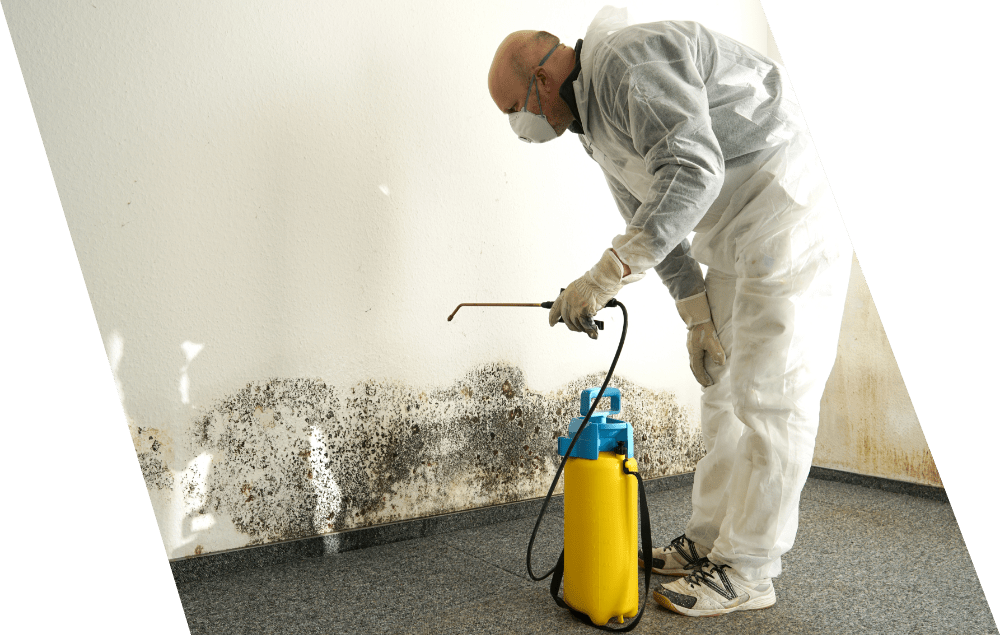
The cost of mould removal depends on the size of the affected area and the type of treatment required. After a detailed inspection a clear, personalised quote is provided based on the scope of work.
| Small mould area (e.g. around a window or corner) | Medium mould area +£100 (large section of a wall affected) | Large mould area +£150 (more than one wall or ceiling) | ||||
|---|---|---|---|---|---|---|
| Room | Standard | Fantastic Club* | Standard | Fantastic Club* | Standard | Fantastic Club* |
| Bedroom | £350 | £320 | £450 | £420 | £500 | £470 |
| Bathroom | £350 | £320 | £450 | £420 | £500 | £470 |
| Kitchen | £350 | £320 | £450 | £420 | £500 | £470 |
| Living / Dining room | £350 | £320 | £450 | £420 | £500 | £470 |
| Hallway / Landing | £350 | £320 | £450 | £420 | £500 | £470 |
| Utility room | £350 | £320 | £450 | £420 | £500 | £470 |
| Paid inspection | £50 | |||||
| *Price for members of the Fantastic Club. The Fantastic Club is a yearly subscription of £89. | ||||||

Our mould removal service in Manor Park is designed to provide a thorough inspection and moisture assessment, enabling us to recognize the extent of mould contamination and its root causes. Mould often results from factors like high humidity, condensation issues, inadequate ventilation, or prior water damage. Identifying these triggers is essential for effective mould cleaning Manor Park and ensuring long-term prevention of mould growth. We target structural areas like walls, ceilings, and floors that are commonly affected, while soft furnishings such as carpets and textiles are not included in our service.\/p>
During our mould remediation in Manor Park, we go beyond surface cleaning to manage airborne mould spores, which are a critical aspect of improving indoor air quality. This specialized treatment helps in preventing future growth and safeguarding your health from the hazards associated with mould. Our approach to damp and mould removal ensures that the environment remains safe and sound, protecting your property from potential structural damage while promoting a healthier living atmosphere. Trust our expert team to provide long-lasting solutions to your mould issues in Manor Park.\/p>
Mould remediation in Manor Park starts with a detailed inspection and moisture assessment carried out with the help of professional hygrometers. This critical first step allows us to detect hidden damp conditions contributing to mould issues. By carefully identifying excess moisture, we take proactive measures to prevent recurrence. The use of HEPA filtration systems and air scrubbers is integrated into our process to ensure that airborne mould spores are effectively captured, maintaining a safe indoor environment throughout the remediation.
We apply HOCl (Hypochlorous Acid) treatment, a powerful, professional-grade, non-toxic solution that effectively neutralizes mould, bacteria, and mycotoxins on a microscopic scale. Additionally, our ULV (Ultra-Low Volume) fogging technology ensures that treatment is evenly dispersed to hard-to-reach areas such as cracks and corners. For the physical removal of mould, we use specialized equipment equipped with H-Class filtration to safely contain contaminants. After the removal process, we focus on final air purification and ongoing protection, leading to a significant reduction in airborne spores and considerably improved indoor air quality in Manor Park.

Booking mould cleaning is quick and designed to get results without unnecessary delays.
Share what you’re dealing with, whether it’s visible mould, damp patches, or a recurring problem. This helps determine the right approach, from mould cleaning to full mould remediation.
A specialist checks the affected areas and identifies what’s causing the mould, such as excess moisture, condensation, or poor ventilation. This ensures the issue is treated properly, not just on the surface.
You’ll get a straightforward quote based on the level of contamination and the type of mould removal required. The service is tailored to ensure effective results and long-term protection.
The treatment removes mould and improves indoor air quality, helping to prevent future growth and create a healthier living space. It also targets the root cause of the problem for longer-lasting results.
Mould removal requires more than basic cleaning, which is why it’s handled by trained mould remediation specialists experienced in treating both visible and hidden contamination. Each specialist assesses the full extent of mould growth, including underlying causes such as excess moisture, condensation, and ventilation issues, ensuring the problem is addressed properly rather than just on the surface.
Number of bookings: 123
With Fantastic Services for: 2 years
Other specialities:
Number of bookings: 8301
With Fantastic Services for: 6 years
Other specialities:
What the reviews say
"Quick and effective rodent control service. Their timely response and efficient methods resolved the problem with expertise."
Number of bookings: 205
With Fantastic Services for: 3 years
Other specialities:
Alongside professional mould removal and mould cleaning, a range of additional property care services is available to help maintain a healthier indoor environment.


























Mould can spread quickly and impact both health and property if not treated in time. Book a service today to remove mould, improve indoor air quality, and restore a cleaner and healthier living environment.

When mould has been in a room for a season, the walls are often the easier half of the problem. The harder half is everything in the room: coats in a fitted wardrobe against an external wall, a mattress pushed into a corner, cardboard boxes under a bed, books on a shelf, a leather jacket, the back of a headboard. Manor Park's Edwardian terraces are frequently at high occupancy with heavy storage in every room, and in those conditions household belongings act as the mould's reservoir long after the plaster has been treated.
Fabric, leather, paper, cardboard, foam and untreated timber are absorbent and slightly warmer than the wall behind them, so they draw and hold moisture from room air. Cotton and wool in particular provide a food source as well as a substrate. Growth starts on the face nearest the cold wall, which is why the first sign is a musty smell and a bloom on the back of something rather than the front. Anything stored hard against an external wall in an unheated room is at risk regardless of how clean the room is.
The split is largely about structure. Smooth, washable and non-porous items clean reliably. Clothing and household textiles usually recover with appropriate laundering or professional cleaning, provided the growth has not stained the fibre. Foam mattresses and upholstered pieces with visible growth through the filling, water-damaged cardboard, chipboard furniture that has swollen, and paper-faced plasterboard within the room are all better discarded, because there is no way to verify what remains inside them. Books and documents sit between the two and depend on how far the growth has gone.
Moving mouldy belongings is the point at which a single-room problem becomes a whole-home problem. Items are bagged in the affected room rather than carried through the house, waste goes out by the shortest route, the room is kept under extraction while it is emptied, and anything being retained is cleaned before it goes back rather than after. Vacuuming with an unfiltered domestic machine will push spores straight back into the air, so a filtered unit is used throughout.
Built-in cupboards against an external wall are the worst case: no air movement, no heating, a cold rear surface and a dense load of textiles. Where growth is found inside one, the back panel and any lining generally has to come out so the masonry behind can be treated and dried. Reinstating with a ventilation gap, a vented plinth or louvred doors, and leaving a clear gap between stored items and the wall, is what stops a treated cupboard reoccurring.
Once a room has been remediated it is worth changing how it is used. Keep furniture a hand's width off external walls, avoid stacking anything in the coldest corner, store seasonal clothing in a heated part of the home rather than an unheated back bedroom, and use vented rather than sealed containers in a cool room, because a sealed box with slightly damp contents becomes its own humidity chamber.
Wardrobe backs removed and rebuilt with a ventilation gap, shelving refitted, plasterboard renewed, a vent cut into a cupboard, an extractor installed in the adjoining bathroom: Manor Park handyman service takes on that work, and it is what makes the storage usable again. Damp textiles left undisturbed are also where clothes moths and carpet beetle establish, and their larvae do the damage attributed to the mould, so the service in full deals with that while the room is empty. Comparable properties in the greener streets nearby are covered by Wanstead mould removal services, professional end of tenancy cleaning services in Leyton handles the full clean where a tenancy is ending and a property has to be handed back, and treatment method sits on the fully insured mould remediation page.
A contents-heavy room takes longer to assess than an empty one, and it is worth deciding in advance whether the household wants belongings assessed item by item or in categories. Somewhere to stage retained items outside the affected room is useful, as is a decision about disposal, since waste is removed under a duty of care and has to be documented. Pricing reflects the room area treated, the volume of contents handled and any disposal involved, with cleaning of salvageable items quoted separately from the remediation itself.
Skip the line, request and
book a service online

