Mould Removal and Remediation Services in Wanstead
Our certified mould removal specialists use professional-grade equipment and safe treatments to neutralise mould spores and prevent regrowth.

Our certified mould removal specialists use professional-grade equipment and safe treatments to neutralise mould spores and prevent regrowth.

The cost of mould removal depends on the size of the affected area and the type of treatment required. After a detailed inspection a clear, personalised quote is provided based on the scope of work.
| Small mould area (e.g. around a window or corner) | Medium mould area +£100 (large section of a wall affected) | Large mould area +£150 (more than one wall or ceiling) | ||||
|---|---|---|---|---|---|---|
| Room | Standard | Fantastic Club* | Standard | Fantastic Club* | Standard | Fantastic Club* |
| Bedroom | £350 | £320 | £450 | £420 | £500 | £470 |
| Bathroom | £350 | £320 | £450 | £420 | £500 | £470 |
| Kitchen | £350 | £320 | £450 | £420 | £500 | £470 |
| Living / Dining room | £350 | £320 | £450 | £420 | £500 | £470 |
| Hallway / Landing | £350 | £320 | £450 | £420 | £500 | £470 |
| Utility room | £350 | £320 | £450 | £420 | £500 | £470 |
| Paid inspection | £50 | |||||
| *Price for members of the Fantastic Club. The Fantastic Club is a yearly subscription of £89. | ||||||
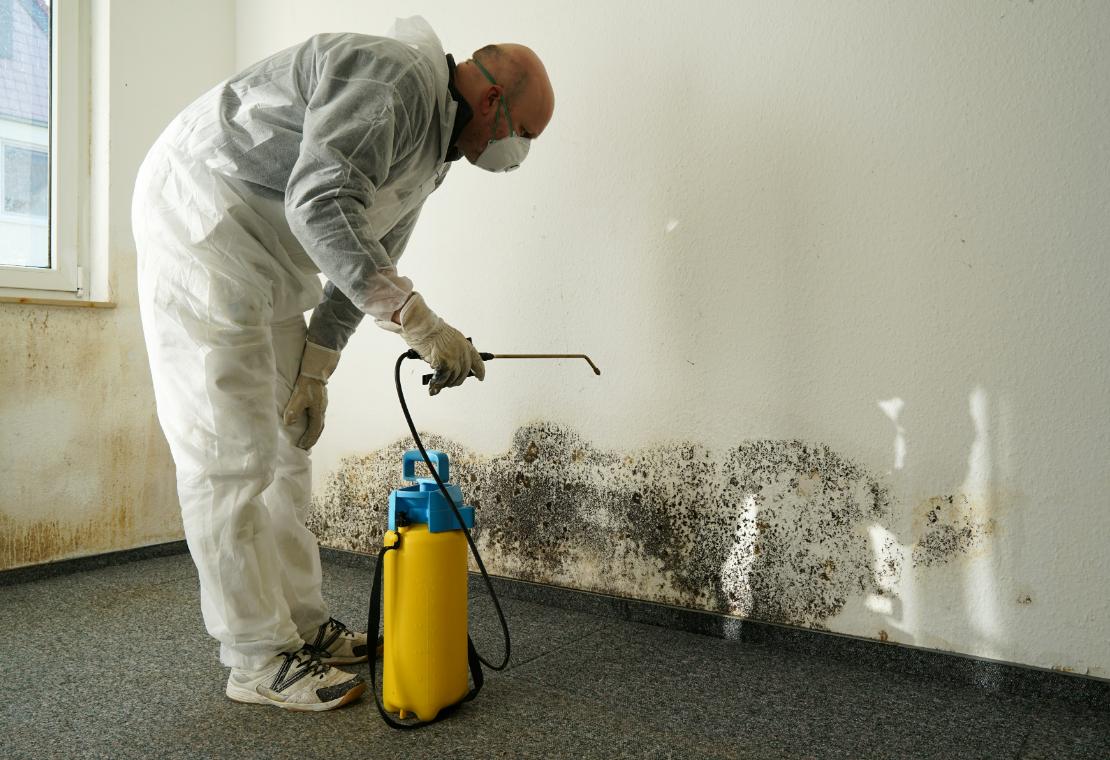
Local mould removal in Wanstead begins with a detailed inspection and moisture assessment by our expert specialists to uncover the root causes of your mould issues, which may range from condensation and damp to inadequate ventilation or water damage. This meticulous approach allows us to effectively evaluate the level of contamination throughout your property. Our mould cleaning service in Wanstead is designed to treat structural surfaces such as walls, ceilings, and floors, where mould is often present, while soft furnishings remain untreated to preserve their integrity.
Our mould remediation efforts in Wanstead entail not just surface cleaning but also address airborne mould spores to prevent regrowth. Equipped with HEPA filtration systems, we effectively capture spores in the air. Utilizing HOCl (Hypochlorous Acid), we neutralise mould and bacteria on a microscopic level. Additionally, our ULV fogging technology ensures that even hidden and hard-to-reach corners are covered, improving indoor air quality and safeguarding your health while protecting your property from potential structural damage.
In Wanstead, professional mould remediation starts with meticulous inspection and moisture assessment, employing state-of-the-art equipment. This process reveals both visible and hidden damp spots that can lead to mould growth. Recognising and eliminating excess moisture plays a crucial role in our strategy, as it prevents recurrence, promoting healthier living environments. Understanding local factors contributing to dampness enhances our tailored approach.
During the mould removal process near Wanstead, we implement HEPA filtration systems and air scrubbers extensively to trap airborne mould spores, safeguarding indoor air quality. Our use of Hypochlorous Acid (HOCl) effectively neutralises contaminants at a microscopic level without harmful effects. We incorporate ULV fogging technology to ensure that every nook is treated, even the most concealed corners. With professional-grade equipment and H-Class filtration for physical mould removal, our team ensures that contaminants are thoroughly contained. As a closing effort, we conduct thorough air purification, offering not just a clean environment but also long-term protection against possible future mould growth.
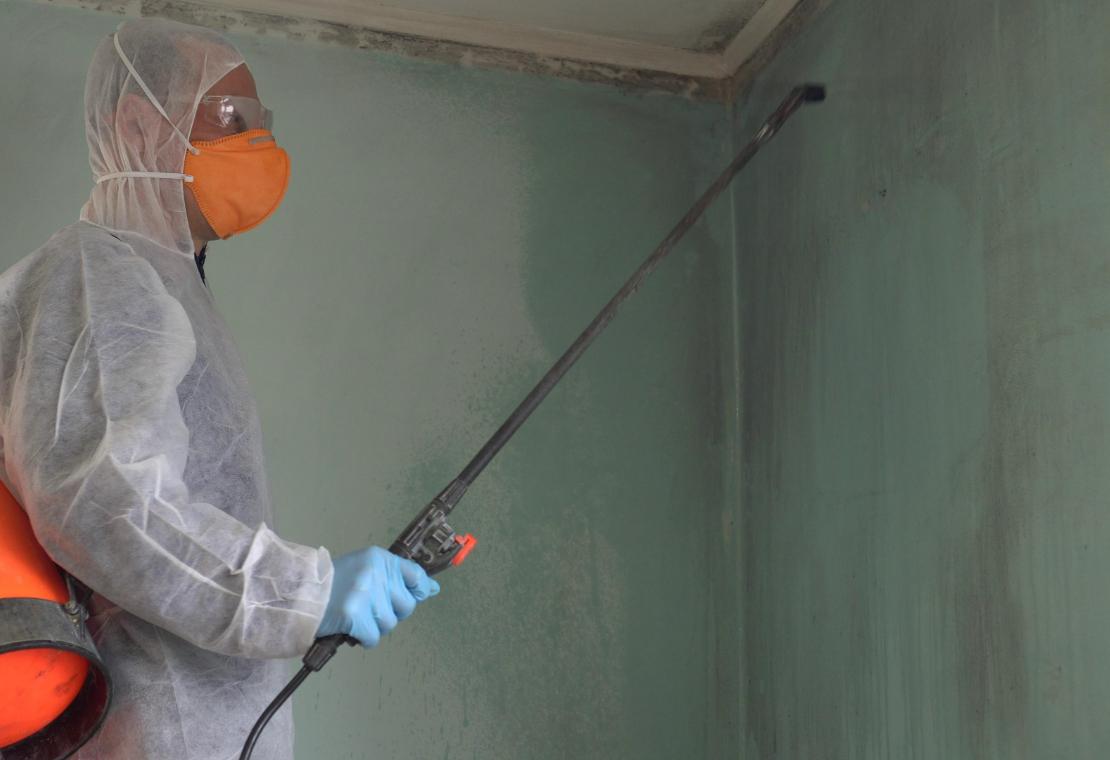
Booking mould cleaning is quick and designed to get results without unnecessary delays.
Share what you’re dealing with, whether it’s visible mould, damp patches, or a recurring problem. This helps determine the right approach, from mould cleaning to full mould remediation.
A specialist checks the affected areas and identifies what’s causing the mould, such as excess moisture, condensation, or poor ventilation. This ensures the issue is treated properly, not just on the surface.
You’ll get a straightforward quote based on the level of contamination and the type of mould removal required. The service is tailored to ensure effective results and long-term protection.
The treatment removes mould and improves indoor air quality, helping to prevent future growth and create a healthier living space. It also targets the root cause of the problem for longer-lasting results.
Mould removal requires more than basic cleaning, which is why it’s handled by trained mould remediation specialists experienced in treating both visible and hidden contamination. Each specialist assesses the full extent of mould growth, including underlying causes such as excess moisture, condensation, and ventilation issues, ensuring the problem is addressed properly rather than just on the surface.
Number of bookings: 213
With Fantastic Services for: 2 years
Other specialities:
Number of bookings: 139
With Fantastic Services for: 2 years
Other specialities:
Number of bookings: 8301
With Fantastic Services for: 6 years
Other specialities:
What the reviews say
"Quick and effective rodent control service. Their timely response and efficient methods resolved the problem with expertise."
Alongside professional mould removal and mould cleaning, a range of additional property care services is available to help maintain a healthier indoor environment.



Mould can spread quickly and impact both health and property if not treated in time. Book a service today to remove mould, improve indoor air quality, and restore a cleaner and healthier living environment.
Heavy tree cover is the defining feature of the housing around E11's greener streets, and it has a direct and underappreciated effect on damp. Mature limes, planes and oaks drop a substantial volume of leaf litter into gutters and hopper heads every autumn, they shade north and east elevations so that brickwork never fully dries between rain events, and their canopies hold moisture over a property for hours after a shower has passed. Mould inside these houses very often begins with water on the outside that has nowhere to go.
Once a gutter is holding leaf mould, water overtops it in every downpour and runs down the face of the wall instead of into the downpipe. On a solid Victorian or Edwardian wall, that saturates the masonry over a strip perhaps a metre wide, and the internal face of that strip becomes permanently cold and damp. The internal evidence is characteristic: growth in a vertical band, worst at the top of the wall and in the ceiling corner, on the elevation where the gutter runs. It gets blamed on the bedroom and is caused at eaves level.
Hopper heads on rear additions fill with leaf debris and then overflow directly against the wall, often above the junction with a lower roof. Downpipes split at the back where nobody sees them and discharge into the wall behind. Where two houses share a valley or a downpipe at the boundary, a blockage affects both properties and neither owner notices until staining appears inside. Checking rainwater goods in heavy rain, rather than on a dry day, is the only reliable way to find these faults.
At the base of the wall the same principle applies. Leaf litter builds up against brickwork, gullies silt up, and soil and mulch creep above the damp-proof course until water can bypass it entirely. Tree roots lift paving so that it falls towards the house instead of away, and shaded paving stays green and slippery because it never dries. Correcting a fall, digging a bed back and clearing a gully are small jobs that change internal readings measurably.
An elevation that gets no direct sun in winter behaves differently from one that does. It dries slowly after rain, it runs colder, and it supports algal growth on render and paint. Internally, a room behind such a wall needs either a warmer surface, through insulation, or better air movement, because it will never benefit from solar drying. This is one of the few situations where which way a room faces genuinely changes the specification.
Reducing the canopy is not always an option. Many mature trees in the area are protected by tree preservation orders or sit within a conservation area, both of which require consent from the local authority before pruning or felling, and work during the nesting season carries its own restrictions. Sensible recommendations therefore focus on managing water and ventilation rather than assuming a tree can be cut back.
Gutters cleared and rehung to the correct fall, a hopper replaced, a split downpipe renewed, a gully unblocked, a bed dug back below the damp-proof course, pointing made good on a saturated strip: fully insured minor repairs in Wanstead carries out that work, and it is nearly always cheaper than the internal remediation that follows if it is left. Leaf-packed gutters and dense ivy also make attractive nesting sites for squirrels and birds, whose nest material blocks outlets and vents entirely, so local specialists handles that where access at roof level is involved. Comparable terraced stock a district west is covered by Leytonstone mould removal team, experienced house cleaning in North East London deals with cleaning once internal works are complete, and the remediation method is set out on the our mould removal and remediation team page.
The external inspection is the substantial part here: gutters, hoppers, downpipes, valleys where visible, ground levels, gullies and paving falls, alongside internal readings on the affected wall. Where a gutter cannot be seen from the ground, access equipment may be needed and that is priced separately. Internal treatment is quoted by area and substrate, and it is normal for a report to recommend the external corrections first and a short delay before treating inside, so that the wall has begun to dry.
Skip the line, request and
book a service online