Two surveyors can put a meter on the same wall in IG6 and come away with different conclusions, which says more about the instruments than about the wall. Barkingside mixes interwar semis of solid and early cavity construction with later estate housing built in entirely different materials, and the tool that gives a reliable answer on one of those walls gives a misleading one on the next. Knowing what each device is physically measuring is the difference between a diagnosis and a confident guess.
Why one reading proves nothing
A number on a handheld meter has no meaning without a comparison. Every diagnosis worth relying on includes control readings taken on a wall in the same property that is known to be unaffected, at the same height and in the same construction, on the same day. Without that baseline there is no way to tell whether a figure is high for this building or merely high for the scale printed on the instrument.
What a moisture meter actually measures
Pin-type meters pass a current between two probes and infer moisture from electrical resistance. That works well in timber and badly in salt-contaminated plaster, because dissolved salts conduct whether or not the material is genuinely wet - which is exactly why old chimney breasts read alarmingly high in dry weather. Capacitance meters, used in search mode, read a shallow depth without leaving holes, and are easily confused by foil-backed plasterboard, metal lath, pipes and fixings behind the surface. Both are useful for mapping the extent of something quickly. Neither gives a true moisture content.
The tests that give a real figure
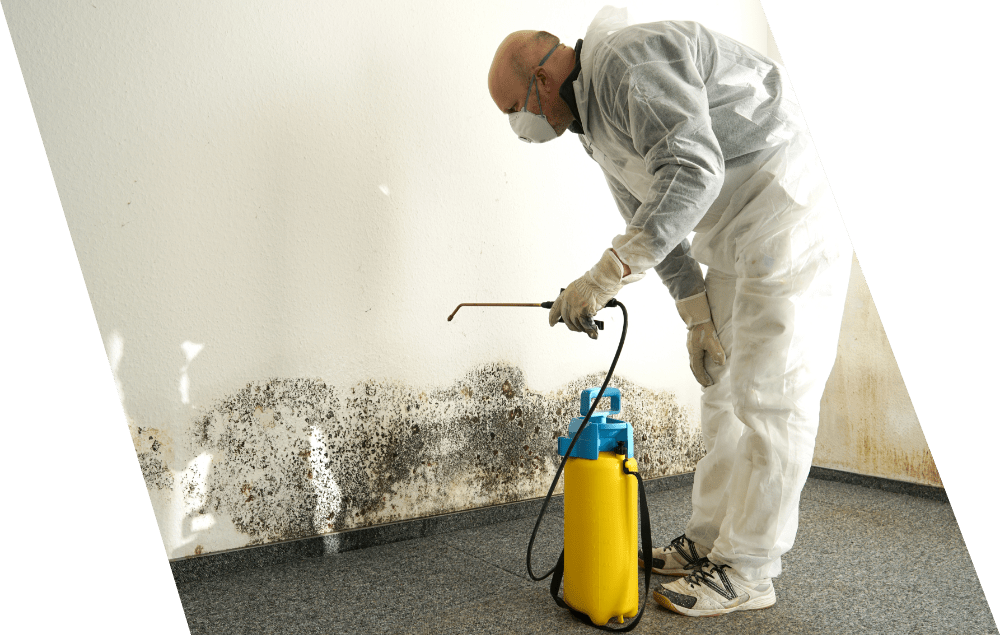
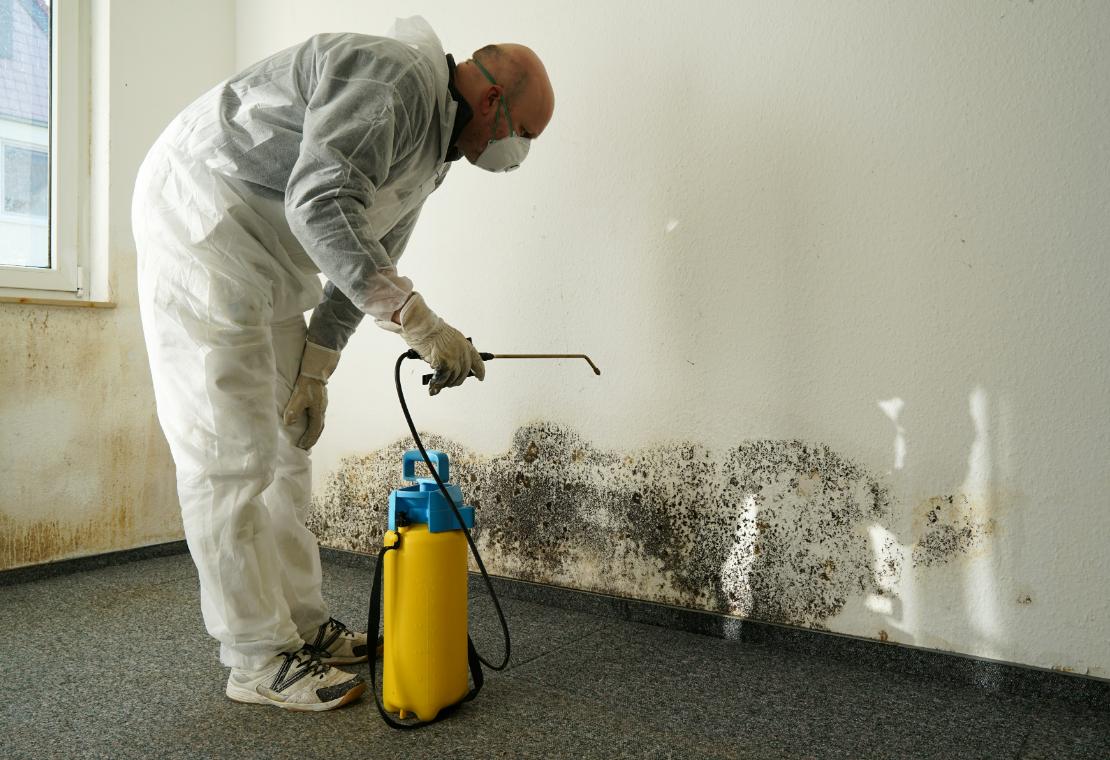
Where the answer has to be defensible, a physical sample is taken. The calcium carbide method crushes a masonry sample with a reagent in a sealed vessel and reads the pressure of the gas produced, giving moisture content by weight on the spot. Laboratory oven-drying of a drilled sample does the same more precisely. A salts analysis on the same sample identifies nitrates and chlorides, which is what separates a hygroscopic wall from a genuinely wet one. These tests take longer and are used selectively, where a dispute, a claim or an expensive specification depends on the outcome. The protocol followed is set out on nationwide mould removal and remediation services.
Thermal imaging, and what it cannot see
An infrared camera maps surface temperature. It does not detect moisture, and any report that claims otherwise is overstating what the equipment does. Read properly it is extremely useful: it shows thermal bridges, missing insulation, the line of a cold slab, and the cooler signature of an evaporating surface. Read carelessly it produces false positives, because a cold patch can equally be a draught, a metal fixing or a shaded corner. Occasionally it shows something else entirely - a warm mass in a ceiling void that turns out to be a nest rather than a defect, in which case Barkingside pest control team is the appropriate next call.
Logging over a fortnight
The single most informative piece of equipment in intermittent cases is the cheapest: a small data logger left in the affected room for one to two weeks, recording temperature and humidity at intervals. A snapshot reading taken at eleven in the morning tells you almost nothing about conditions at six on a winter evening when four people are home, the shower has run twice and the washing is on an airer. The trace shows the daily cycle, how high humidity climbs, and how long it stays there, which is what determines whether ventilation or insulation is the answer. Properties on the adjoining roads are assessed the same way, covered under trusted damp and mould treatment in Woodford Green.
Air sampling and verification
Spore sampling has a narrow but real use: establishing conditions where a household member is medically vulnerable, and verifying a completed remediation by comparing indoor counts against an outdoor control. It cannot identify the cause of a problem, and a count taken before any work has begun rarely changes what needs doing. Verification sampling is worthwhile after the work, once the area has been cleaned down, which is why professional cleaning services in Woodford is normally scheduled between the works and the check.
What a report contains
A usable report has a sketch with numbered reading positions, a table of figures including the controls, the instrument used for each, the logger trace where one was left, photographs referenced to the sketch, and a stated conclusion with the reasoning visible. That format allows a second opinion to be tested against the same evidence rather than starting again. Surveys are priced as a standalone visit and by the number of laboratory tests required. Where a report recommends physical works, the local team covers the building side of the specification.