


Mould Removal and Remediation Services in Kennington
Expert mould remediation solutions using advanced HOCl treatment to remove visible mould, neutralise airborne spores, and prevent recurrence in residential properties.

Expert mould remediation solutions using advanced HOCl treatment to remove visible mould, neutralise airborne spores, and prevent recurrence in residential properties.
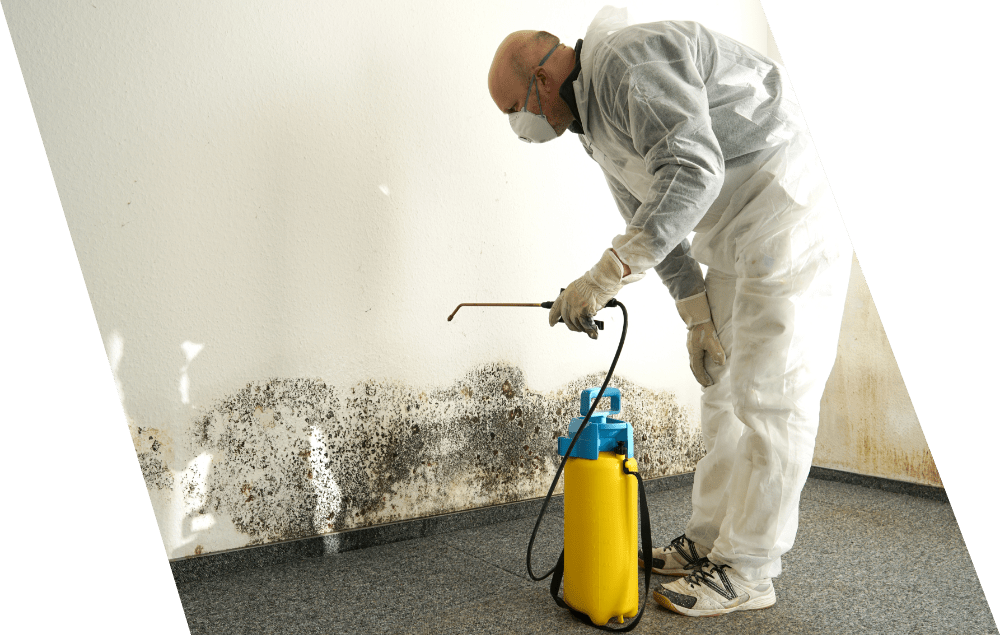
The cost of mould removal depends on the size of the affected area and the type of treatment required. After a detailed inspection a clear, personalised quote is provided based on the scope of work.
| Small mould area (e.g. around a window or corner) | Medium mould area +£100 (large section of a wall affected) | Large mould area +£150 (more than one wall or ceiling) | ||||
|---|---|---|---|---|---|---|
| Room | Standard | Fantastic Club* | Standard | Fantastic Club* | Standard | Fantastic Club* |
| Bedroom | £350 | £320 | £450 | £420 | £500 | £470 |
| Bathroom | £350 | £320 | £450 | £420 | £500 | £470 |
| Kitchen | £350 | £320 | £450 | £420 | £500 | £470 |
| Living / Dining room | £350 | £320 | £450 | £420 | £500 | £470 |
| Hallway / Landing | £350 | £320 | £450 | £420 | £500 | £470 |
| Utility room | £350 | £320 | £450 | £420 | £500 | £470 |
| Paid inspection | £50 | |||||
| *Price for members of the Fantastic Club. The Fantastic Club is a yearly subscription of £89. | ||||||

In Kennington, tackling mould effectively involves comprehensive mould removal techniques that begin with identifying and remedying the root causes of mould proliferation. Mould cleaning procedures involve targeted mould remediation Kennington that treats structural components like walls and ceilings, as well as floors, to ensure complete eradication of mould spores. Recommendations also extend to soft furnishings, indicating a need for special attention to avoid harbouring mould that leads to recurrent issues.
Experts employ precise methods, utilising specialised equipment to assess humidity, check ventilation, and identify any water damage present. This meticulous evaluation informs strategies for mould removal in Kennington, primarily focusing on controlling moisture levels and preventing condensation. The goal of mould remediation is not only visible removal but also encompasses a broad-spectrum approach to mould prevention, helping to maintain a healthy living space.
The mould remediation process in Kennington begins with a detailed inspection, which reveals the extent of the mould contamination and moisture problems. The integration of HEPA air filtration systems during this phase captures airborne spores, creating a safer environment. Following this, the treatment focuses on HOCl (hypochlorous acid) to neutralize the mould effectively and safely, with ULV fogging technology ensuring that the treatment solution reaches all surfaces and airspaces uniformly, vital for thorough mould removal.
To physically eliminate mould, professional teams use equipment with H-Class filtration, ensuring comprehensive removal while minimizing the risk of spreading spores. After the physical removal process, final air-cleaning measures are deployed to assure the highest air quality and provide long-term protection from potential mould resurgence. The robust mould remediation services in Kennington not only prevent future growth but also enhance air quality and ensure lasting stability in your environment, making professional mould removal services a worthwhile investment.

Booking mould cleaning is quick and designed to get results without unnecessary delays.
Share what you’re dealing with, whether it’s visible mould, damp patches, or a recurring problem. This helps determine the right approach, from mould cleaning to full mould remediation.
A specialist checks the affected areas and identifies what’s causing the mould, such as excess moisture, condensation, or poor ventilation. This ensures the issue is treated properly, not just on the surface.
You’ll get a straightforward quote based on the level of contamination and the type of mould removal required. The service is tailored to ensure effective results and long-term protection.
The treatment removes mould and improves indoor air quality, helping to prevent future growth and create a healthier living space. It also targets the root cause of the problem for longer-lasting results.
Mould removal requires more than basic cleaning, which is why it’s handled by trained mould remediation specialists experienced in treating both visible and hidden contamination. Each specialist assesses the full extent of mould growth, including underlying causes such as excess moisture, condensation, and ventilation issues, ensuring the problem is addressed properly rather than just on the surface.
Number of bookings: 123
With Fantastic Services for: 2 years
Other specialities:
Number of bookings: 298
With Fantastic Services for: 3 years
Other specialities:
Number of bookings: 8301
With Fantastic Services for: 6 years
Other specialities:
What the reviews say
"Quick and effective rodent control service. Their timely response and efficient methods resolved the problem with expertise."
Alongside professional mould removal and mould cleaning, a range of additional property care services is available to help maintain a healthier indoor environment.





























Mould can spread quickly and impact both health and property if not treated in time. Book a service today to remove mould, improve indoor air quality, and restore a cleaner and healthier living environment.

How long it took to come back is the most useful piece of information a household can offer. A patch of mould that reappears within a week, one that returns in the second month and one that arrives again the following November are three different failures with three different explanations, and in Kennington — where much of the stock is early nineteenth-century terraces, many subdivided into flats with bathrooms fitted into former closets and landings — all three are common. Treating recurrence as a mystery wastes the clearest diagnostic signal available.
Growth that reappears almost immediately means the colony was never removed, only decoloured. Bleach and most household cleaners lighten the pigment and leave living material in the plaster behind, so what returns is the same colony becoming visible again rather than a new one arriving. The tell is that it comes back in exactly the same outline. The remedy is proper removal of the affected material rather than a stronger product applied to the same surface.
A room that is cleaned thoroughly and correctly, then regrows in a slightly different pattern over a month or two, has had its surface fixed and its moisture left alone. The extraction still does not work, the wall is still the coldest surface in the flat, the furniture is still hard against it, the washing is still drying in there. Remediation without a change to one of those is a maintenance subscription, and a competent inspection will say so before any work is priced.
A clean surface all summer and the same patch in November points at something that only operates in cold weather — a cold junction, unheated rooms, glazing, an air path that only matters when there is a heating-driven pressure difference. It can also point at rainfall if the seasons coincide. This is the pattern most often misread as success, because eight months of a clear wall feel like a cure and the return feels like a new problem.
Growth on new plaster or new paint within a few months of the work means the substrate behind it was still giving up water when it was covered. This is the most expensive form of recurrence, because the new finish has to come off again. It is also the most avoidable — readings taken in the masonry at consistent points, visit after visit, until they stop falling, are what establish that a wall is ready. A surface that feels dry to the hand tells nobody anything about a nine-inch brick wall.
Cause first, then removal, then drying, then decoration. In practice that means: establish the mechanism and prove it; take off the material the growth is inside, wet, with extraction at the working face; treat the surfaces that are staying with a biocide left on for its full dwell time; dry to a measured and stable reading; and only then put a finish back. Every version of recurrence above is the result of taking those four steps out of order or skipping one.
In a converted flat the cause is often not inside the flat. A bathroom stacked above another, a shared soil connection, a communal roof or a neighbour's unheated rooms will all produce growth in a home whose own habits are blameless. Establishing that early prevents the household paying repeatedly for work on a symptom, and gives them something concrete to take to a freeholder or managing agent.
If a wall has already been treated once, bring what is known: when it was done, what was applied, whether anything was removed, and how long the clear period lasted. That history shortens the inspection considerably. Pricing follows the area of finish removed, the drying equipment and the number of monitoring visits, and a case that has been painted over several times generally means more removal rather than less. Refitting skirtings and architraves and adjusting doors after the work is joinery covered by local handyman across Kennington; insects living on established growth are dealt with by the service in full; the room is put back into order with our nearby specialists. The same service in the adjoining district is under Oval mould removal team, and the method in outline is on professional damp and mould treatment.
Skip the line, request and
book a service online

