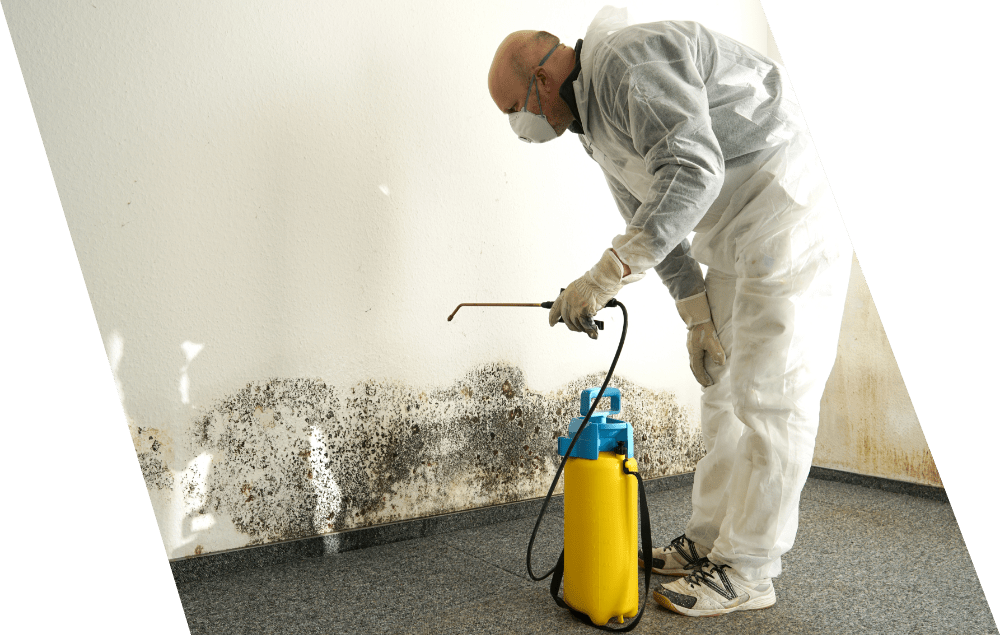
Hard water changes what mould does to a bathroom. Everything supplied to NW6 comes through chalk, and the scale it leaves behind does more than mark a shower screen — it turns a smooth, easily wiped glaze into a rough, absorbent film that growth can key into and that no amount of surface cleaning will properly strip. In West Hampstead this shows up most in the small en-suites and second shower rooms carved out of Victorian terraces and interwar flats, where the surfaces are modern but the water and the ventilation are not.
Scale is a surface, not a stain
A new ceramic glaze is effectively non-porous, and anything growing on it is sitting on top and comes away with a cloth. After a few years of hard water, that glaze is covered in a thin mineral crust with a texture like very fine sandpaper. Black growth in that state is anchored in the crust rather than resting on the tile, which is why it reappears within days of being wiped and why it comes back in exactly the same pattern. Removing the scale is the actual job; the growth leaves with it.
Sealant, grout and the line where they meet
Silicone does not scale, but it does pick up a calcium film along its top edge where water runs and stands. Once that happens the sealant reads as permanently discoloured even when it is sound, and it gets replaced unnecessarily. If cutting back a small section shows clean silicone under a mineral skin, the sealant is sound and the film is the problem. Grout is the opposite case. Cement grout is porous, holds scale within its depth, and where it has gone soft and dark it is raked out and replaced rather than cleaned.
What scale does to extraction
Extract fittings in a hard water area collect a mineral and soap film on the blades and the shutter. The motor keeps running and the noise is unchanged, so nothing seems wrong, but the volume of air actually moved drops steadily. A shower room that cleared in ten minutes when it was new can take an hour once that film has built up, and the moisture spends that hour on cold surfaces instead of leaving. Cleaning or replacing the fitting usually does more for a recurring problem than any treatment applied to the wall.
Where the plumbing comes into it
Scale also collects inside the system it passes through. A furred shower valve drops the flow, which lengthens showers; a scaled immersion or heat exchanger costs efficiency; and a slow weep from a scaled compression joint under a basin wets a floor without ever looking like a leak. Where the recurring damp traces back to pipework, valves or a discharge rather than to condensation, that work belongs with fully insured plumbing services in Cricklewood and needs doing before any surface is treated.
Cleaning method, in order
Descaling comes first, with an acidic product suited to the surface and left long enough to soften the deposit rather than scrubbed at dry — abrasion on a mineral film drives spores into the air and scratches the glaze so the next crust keys in harder. The surface is then neutralised and washed, because acid residue left under a biocide wastes the biocide. Only then is a treatment applied and left to dwell for its full time. Reversing those two steps is the single most common reason a bathroom that was cleaned thoroughly looks the same a fortnight later.
Beyond the bathroom
The same water leaves the same film on kitchen splashbacks, around a utility tap and behind a washing machine, so a house with a scaled shower room usually has two or three smaller versions of the same problem. Fixing a door that no longer closes on a wet room, replacing a soft section of skirting or refitting a loose screen is straightforward joinery handled by our handyman in West Hampstead, and where damp floor edges have already brought insects in, that is dealt with by West Hampstead pest control team. The same terrace stock a little to the west shows the identical pattern and is covered by our mould removal in Queen's Park.
Booking and preparation
A shower room is priced by the area of hard surface to be descaled and treated and by whether grout or sealant is being replaced rather than cleaned, so it helps to say at the point of booking how old the tiling is and whether the sealant has ever been renewed. Clear the shelves and the floor, allow the room to stay unused for the dwell and drying period, and expect a recommendation about extraction rather than a treatment on its own. The broader method is set out on what the service covers.