Heat pumps have started to appear on the larger detached and semi-detached houses around Cockfosters, and they change the conditions that mould depends on. A gas boiler delivers short bursts of very hot water; a heat pump delivers gentle warmth for long stretches. That difference is mostly good news for damp walls, because steady background warmth keeps surface temperatures above the point at which growth can establish. It only works, though, if the whole house has been taken into account, and where mould appears after an installation it is almost always in the rooms the design skipped.
Why continuous warmth suits a damp wall
Mould responds to the temperature of a surface, not to the number on a thermostat. A solid or lightly insulated wall takes hours to warm through, so a house heated in two short blocks a day never gets its walls above the threshold; the plaster face spends most of the day cold and collecting moisture. Run the same house at a lower water temperature for far longer and the masonry stays warm, the surface stops chilling the air against it, and a wall that grew mould every winter can stop doing so without any treatment at all.
Where an installation leaves gaps
Problems cluster in predictable places. A hall or landing left without an emitter because it was warm enough before. A north-facing rear bedroom where the existing panel was reused instead of being upsized for the lower water temperature. A room shut off from the schedule to save money. A utility or boot room outside the design altogether. Pipework crossing an unheated void. In each case the rest of the house is comfortable and one or two surfaces sit cold, and the moisture the whole household produces migrates to them.
The habits that undo it
Households used to a boiler often fight the system. They set deep overnight setbacks, turn rooms off at the valve, close doors on rooms that feel cool and open windows wide for short bursts instead of steady background ventilation. Others, alarmed by running costs, switch the whole thing down and then complain of mould by February. Weather compensation only helps if it is left alone. A technician assessing a house after an installation asks what the schedule actually is, not what it was designed to be.
Taking readings around a heating cycle
A useful survey follows the cycle rather than taking one snapshot. Surface temperatures are recorded in the affected room and in a comparable room that has no problem, early in the morning and again late in the day, alongside room humidity. If the bad room tracks the good one but sits consistently lower, the cause is emitter sizing or a missing circuit. If both are fine and growth persists, the source is moisture production or a defect in the fabric, and the heating is a red herring. Similar assessments nearby are covered by mould removal across Barnet.
Treatment while the system stays running
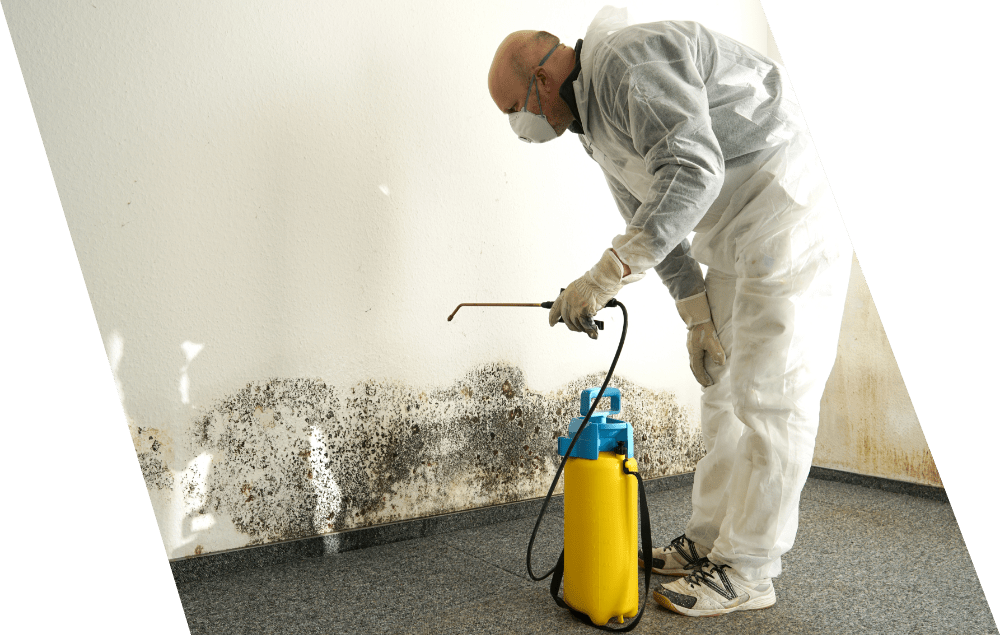
Remediation does not require the heating to be turned off, and it is better left on. Growth is cleaned and treated, finishes that have been repeatedly wetted are cut out, and any insulation work at a cold junction is done before redecoration. Where a radiator is being changed or a valve replaced, small plumbing and fixing tasks around the works sit naturally with local specialists, and cupboards emptied for access sometimes reveal insect activity, which is dealt with by what the service covers.
What a visit involves
Expect the technician to want access to every room including those not complaining, to the controls, and to any cupboard holding pipework. Pricing follows the number of rooms treated, the materials involved and whether any lining or insulation work is included, so a figure follows the inspection. A deep clean after treatment work across several rooms is covered by our local team. The sequence used on site, and the products behind it, are described under fully insured damp and mould treatment.