Most of the useful information about a damp wall in Arkley is outside the house, at ankle height. This western edge of EN5 has larger plots, long drives and deep gardens, and over several decades those surfaces creep upward: a fresh layer of tarmac laid over the old one, block paving bedded on sand and cement, a patio raised to meet a set of French doors, a border built up behind new sleeper edging. Each addition lifts external ground closer to the damp-proof course, and eventually above it.
What a bridged course looks like from indoors
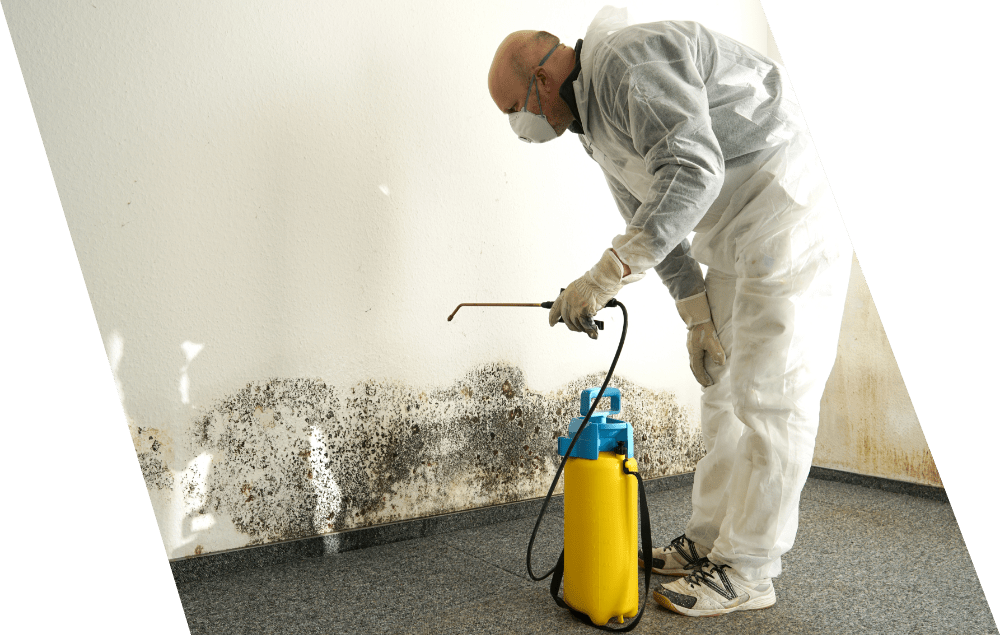
Bridging produces a very particular signature. The dampness runs as a continuous band at skirting level rather than in isolated patches, it affects one elevation and not the others, and its height indoors corresponds roughly to the height of the ground outside. Paint blisters and a faint powdery bloom appear along the top edge of the band where evaporation concentrates the salts. It worsens through a wet fortnight and eases in a dry spell, unlike a plumbing leak, which behaves the same whatever the weather.
Clay ground and where the water actually goes
The subsoil here is heavy clay, which infiltrates very slowly. Rain that falls on a lawn or a paved drive does not sink; it sits, then moves across the surface towards the lowest point, which on a sloping plot is frequently the back of the house. Soakaways dug into clay fill up and stay full. Gullies silt, then overflow against the base of a wall for the rest of the winter. Where a drain run has failed altogether the ground beside it stays saturated, and that is also the classic entry route for rats, so professional pest control in Cockfosters is worth running alongside the drainage work when a survey finds burrows or gnawing at a gully.
Solid walls have nothing to interrupt the path
Older cottages and the earlier houses on this fringe are solid brick with no cavity. There is no gap to break the passage of water across the thickness of the wall, so once external ground bridges the course, moisture travels straight through. Two later additions make it worse: a hard cement render taken down past the damp-proof course to ground level, and a cement fillet formed at the base of the wall to tidy the junction with paving. Both hold water against the brick and stop it evaporating outwards, so it moves inwards instead.
Digging out rather than sealing in
The order of work runs from outside to in. Ground is lowered to at least two courses below the damp-proof course and a free-draining gravel margin formed against the wall. Cement render and fillets below that line come off. A channel drain or a French drain takes surface water away from the elevation, and gullies and downpipe shoes are cleared and re-bedded. Only then is the internal face touched. Tanking the inside first is the common shortcut and the reason so many of these walls are on a third failed repair: the water is still arriving, and reappears higher up or at the edge of the new work.
Drying time, and the urge to redecorate
Masonry that has been wet for years does not dry in a fortnight. Once the external cause is dealt with, a solid wall typically needs months rather than weeks, and the rate depends on thickness, exposure and how warm the room is kept. Progress is measured rather than guessed, with readings repeated at the same points. Redecorating too soon traps the remaining moisture behind the paint film, and the finish lifts within a year. Guidance on interim finishes and on what the guarantee covers during that drying period is set out on the mould removal and remediation service.
External work and nearby cover
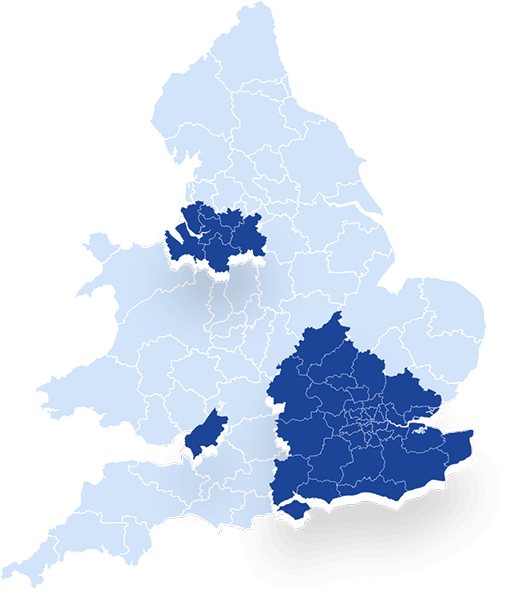
Lowering paving, forming a drainage margin, cutting back render and rehanging a downpipe is groundwork and building work rather than remediation, and experienced minor repairs in Barnet covers it. The same combination of clay, generous plots and creeping ground levels runs east into the town, where the Barnet branch handles it on identical terms.
What to have ready before a visit
Two things save time. Photographs taken during heavy rain, showing where water stands and which way it runs, beat any description afterwards. And clear access around the full perimeter, including behind sheds and along a boundary where a neighbour's ground may be higher, lets the whole elevation be assessed in one attendance. Pricing separates the external works, which depend on lengths and levels, from internal treatment, which depends on the area of plaster affected. Soft furnishings that have sat against a wet wall often need more than an airing, and our team in the area deals with that once the wall is dry.