A recurring slot is really a fixed budget of time, and the difference between a household that feels well served and one that does not usually comes down to how that budget is spent. Three hours cannot cover every surface in a four-bedroom house to the same standard, and pretending otherwise produces a visit where everything is touched and nothing is finished. The alternative is a core of tasks done every single time and a rotating list of deeper items, agreed in advance, that come round on a cycle.
What earns a place in the core
The non-negotiables are the things that degrade fastest and that everyone notices: kitchen worktops, hob and sink, bathroom sanitaryware and screens, floors throughout, bins, mirrors and the touchpoints that get handled daily. Those are done first while the clock is untouched, not last when it is running out. Beds changed and towels swapped belong in the core too if the household wants them there, but they cost real minutes and have to be traded against something else rather than added for free.
Building a rotation that actually comes round
The deep items are the ones that only need attention every few weeks: inside the fridge, the oven door glass, skirtings and the bottom of doors, window interiors, light switches and frames, under beds, the tops of wall units. Spread across four visits each gets proper attention roughly monthly, and nothing is perpetually postponed. Writing the rotation down is what makes it survive a change of cleaner, and it is the single most useful thing a household can do before the first visit.
Tidying is not cleaning, and it costs the same minutes
Every object on a surface has to be lifted, the surface cleaned, and the object replaced. A kitchen worktop with eight items on it takes noticeably longer than a clear one, and a floor strewn with toys can absorb a quarter of a visit before any cleaning starts. None of that is a complaint about how a house is lived in; it is arithmetic. Households that put ten minutes into clearing surfaces beforehand consistently get more out of the same booking.
Consistency, keys and the practical side
The same person attending each time learns a home quickly: which floor cannot take water, where the spare bin liners live, which door sticks. Access is usually a key safe, a set held securely, or someone at home, and whichever it is should be settled before the first visit rather than negotiated on the doorstep. Parking in this part of N1 is permit controlled on most streets, so where a vehicle can legitimately sit for a couple of hours is worth mentioning when the slot is arranged.
The jobs a weekly visit will never fix
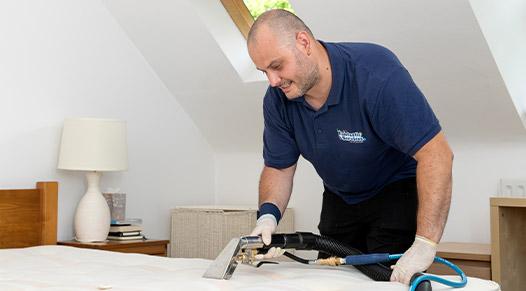
Some things are not a maintenance task at any frequency. Soiling that has gone down into carpet pile needs extraction equipment rather than a vacuum, which is why Islington carpet cleaning services is arranged as its own appointment. A one-off recovery clean after a long gap, a move or building work is also separate work with a different scope, described under cleaning services for landlords in Islington. Neighbouring streets run the same arrangement under the domestic cleaning team in Barnsbury.
How the first few visits usually go
Expect the opening visit to be the slowest and the least satisfying to watch, because it is absorbing a backlog rather than maintaining a standard. By the third visit the rhythm is established and the rotation starts paying off. Pricing runs on duration, so a longer first session is normal and the slot then settles. Products and cloths are brought in; a working vacuum, hot water and somewhere to empty a bucket are what the house needs to supply. The full national picture of what can be booked sits under our cleaning team.