

Mould Removal and Remediation Queen's Park
Expert mould treatment services that target mould growth and airborne spores to ensure comprehensive remediation.


Expert mould treatment services that target mould growth and airborne spores to ensure comprehensive remediation.
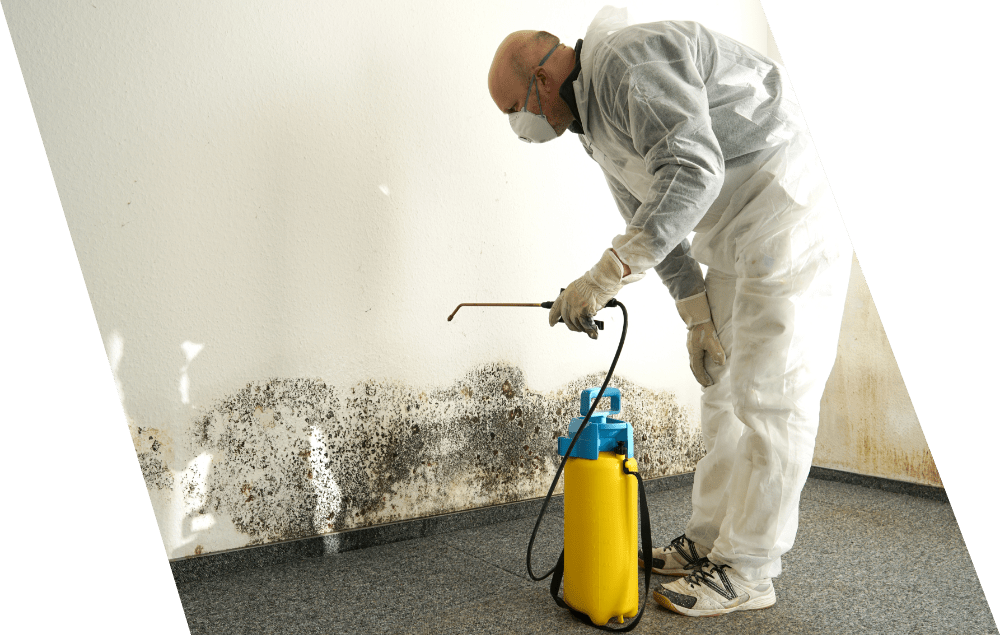
The cost of mould removal depends on the size of the affected area and the type of treatment required. After a detailed inspection a clear, personalised quote is provided based on the scope of work.

Effective mould removal and remediation in Queen's Park are contingent on using advanced technology that addresses both visible and hidden mould contamination thoroughly. Mould spores can easily spread through the air, settling in hard-to-reach areas that standard cleaning cannot effectively address. This is why professional mould cleaning in Queen's Park includes comprehensive airborne treatments along with surface cleaning techniques.
ULV (Ultra-Low Volume) fogging technology ensures that treatment particles are uniformly dispersed throughout the affected area, reaching behind furniture, into cracks, and across ceilings and walls. HOCl (Hypochlorous Acid) serves additionally as a powerful, non-toxic disinfectant that neutralizes mould, bacteria, and mycotoxins at a molecular level without leaving harmful residues. This meticulous approach guarantees total environmental treatment, resulting in better indoor air quality and significantly reducing the risk of recontamination.
Mould remediation in Queen's Park is a thorough and preventive process aimed at removing current mould and thwarting future infestations by regulating the environmental conditions that encourage growth. Professionals conduct a detailed analysis of humidity, ventilation, and moisture intrusion to craft a specific remediation strategy. Once mould removal Queen's Park is achieved, they apply protective measures that bond to treated surfaces, creating long-lasting resistance to mould and decreasing the spread of spores. The implementation of HEPA filtration systems and air scrubbers during the treatment is critical for maintaining clean air both during and after remediation. An effective approach to mould cleaning Queen's Park is vital for protecting your health and property, reducing allergens, preventing structural damage, and enhancing overall indoor air quality.

Booking mould cleaning is quick and designed to get results without unnecessary delays.
Share what you’re dealing with, whether it’s visible mould, damp patches, or a recurring problem. This helps determine the right approach, from mould cleaning to full mould remediation.
A specialist checks the affected areas and identifies what’s causing the mould, such as excess moisture, condensation, or poor ventilation. This ensures the issue is treated properly, not just on the surface.
You’ll get a straightforward quote based on the level of contamination and the type of mould removal required. The service is tailored to ensure effective results and long-term protection.
The treatment removes mould and improves indoor air quality, helping to prevent future growth and create a healthier living space. It also targets the root cause of the problem for longer-lasting results.
Mould removal requires more than basic cleaning, which is why it’s handled by trained mould remediation specialists experienced in treating both visible and hidden contamination. Each specialist assesses the full extent of mould growth, including underlying causes such as excess moisture, condensation, and ventilation issues, ensuring the problem is addressed properly rather than just on the surface.
Number of bookings: 139
With Fantastic Services for: 2 years
Other specialities:
Number of bookings: 213
With Fantastic Services for: 2 years
Other specialities:
Number of bookings: 214
With Fantastic Services for: 3 years
Other specialities:
Alongside professional mould removal and mould cleaning, a range of additional property care services is available to help maintain a healthier indoor environment.
Mould can spread quickly and impact both health and property if not treated in time. Book a service today to remove mould, improve indoor air quality, and restore a cleaner and healthier living environment.

Lift the corner of a fitted carpet in a ground-floor room of a Queen's Park terrace and the story is usually written on the underlay rather than on the wall. The felt or foam is dark in a band that follows the outside wall, the gripper rod nails have rusted, and there is a musty smell that the room itself only hints at. NW6 has a great deal of late Victorian and Edwardian terraced stock where original floors have been patched, screeded, tiled and re-covered several times over, and floor coverings are where a slow moisture problem hides longest before anyone sees a mark.
Carpet and underlay are warm, absorbent and undisturbed. Moisture that would evaporate away from a bare surface sits in the fibre instead, and the pile traps the skin cells and dust that growth feeds on. A wall has air moving across it and gets wiped occasionally; the strip under a sofa never does. The first thing worth checking in a ground-floor room is therefore not the paintwork but the perimeter of the covering.
Many ground floors here are solid — original flagstones or brick, later covered with concrete or a sand and cement screed, often with no effective barrier underneath. A floor like that has always passed a small amount of moisture upwards and has always been able to lose it again through a permeable covering. Lay vinyl, luxury vinyl tile or a foil-backed laminate over it and that route closes. The moisture does not stop arriving; it simply collects under the covering and comes out at the edges, which is why growth so often appears along skirtings and in corners rather than in the middle of a room.
Where the floor is suspended timber, the failure is different. Plank floors were designed to be ventilated from below, and covering them with a continuous impermeable sheet means the underside of the timber is now the coldest and least ventilated face in the room. Growth starts there, out of sight, and by the time the top face is marked the planks are often soft at the ends. Checking whether the void beneath is ventilated, dry and clear of rubble comes before any decision about what goes back down.
Porosity decides it. A wool or synthetic carpet with growth confined to the pile can often be saved, but the underlay beneath it almost never can, because the growth is through the whole thickness rather than on a surface. Chipboard and softwood that have stayed wet long enough to soften are replaced, not treated. Once the room is dry and the cause dealt with, restoring a sound carpet is a job for local specialists, and it is worth doing in that order — cleaning a carpet while the floor under it is still wet simply resets the clock.
Damp floor coverings attract things that eat mould. Booklice and silverfish appear under carpets and behind skirtings where floor-level humidity is high, and they are a reliable sign of a problem that predates anything visible. Where they are already established, treatment for them runs alongside the moisture work and is covered by cockroach control services in West Hampstead, because killing the insects without drying the floor only produces the next generation.
Skirtings, thresholds and gripper rods have to come up to get at the perimeter, and they rarely survive removal intact in a house where they have been painted over repeatedly. Cutting them cleanly, keeping the profile for a match and refitting afterwards is joinery rather than remediation, and that side of the work is handled by West Hampstead handyman team. The same stock repeats a few streets north, and the same perimeter pattern is described under mould removal prices in Kilburn.
Floors are assessed with the covering back before anything is quoted, because the decision rests on what the underlay and the deck beneath it are doing rather than on the visible marks. Pricing follows the area of covering lifted and the amount of material taken away, plus the drying time the floor actually needs, so a room with a sound timber deck costs differently from one where chipboard has to go. Furniture needs to be movable on the day, and the room will be out of use while it dries. Cleaning the rest of the room once the floor is back is arranged through cleaning services team in North West London, and the general order of survey, cause, removal and drying is set out on mould removal and remediation across the UK.
Skip the line, request and
book a service online





