Mould Removal and Remediation St John's Wood
Reliable mould removal and treatment services focused on eliminating contamination, improving air quality, and preventing recurrence.

Reliable mould removal and treatment services focused on eliminating contamination, improving air quality, and preventing recurrence.
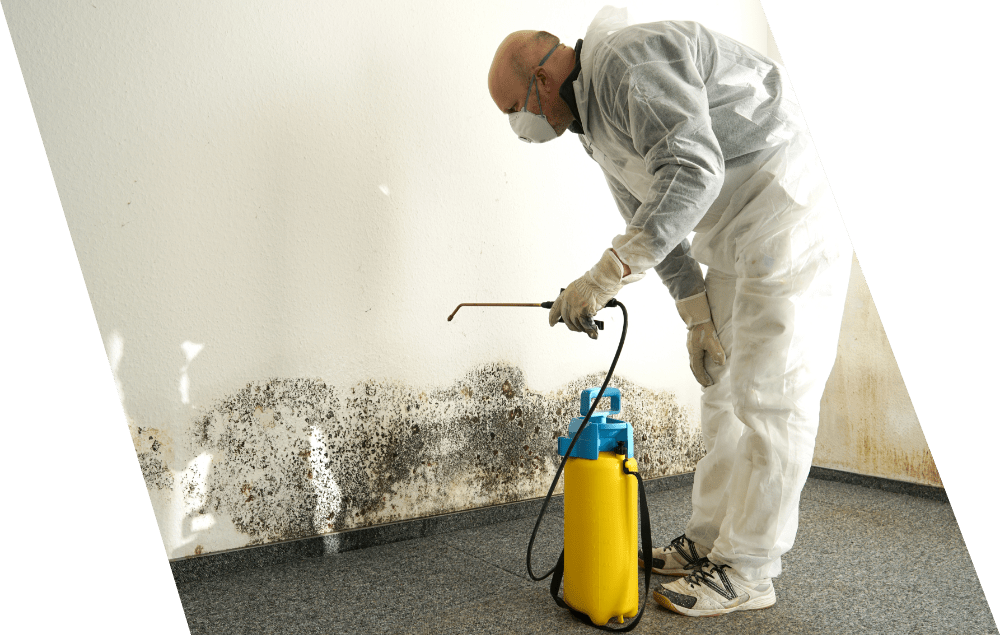
The cost of mould removal depends on the size of the affected area and the type of treatment required. After a detailed inspection a clear, personalised quote is provided based on the scope of work.
| Small mould area (e.g. around a window or corner) | Medium mould area +£100 (large section of a wall affected) | Large mould area +£150 (more than one wall or ceiling) | ||||
|---|---|---|---|---|---|---|
| Room | Standard | Fantastic Club* | Standard | Fantastic Club* | Standard | Fantastic Club* |
| Bedroom | £350 | £320 | £450 | £420 | £500 | £470 |
| Bathroom | £350 | £320 | £450 | £420 | £500 | £470 |
| Kitchen | £350 | £320 | £450 | £420 | £500 | £470 |
| Living / Dining room | £350 | £320 | £450 | £420 | £500 | £470 |
| Hallway / Landing | £350 | £320 | £450 | £420 | £500 | £470 |
| Utility room | £350 | £320 | £450 | £420 | £500 | £470 |
| Paid inspection | £50 | |||||
| *Price for members of the Fantastic Club. The Fantastic Club is a yearly subscription of £89. | ||||||

Professional mould removal and mould remediation in St John's Wood rely on state-of-the-art technology to ensure that all forms of contamination, whether visible or concealed, are entirely addressed. Mould spores have a tendency to circulate in the air, eventually settling in challenging locations where standard cleaning methods may not reach. Therefore, mould cleaning in St John's Wood integrates airborne treatment methods in addition to removing mould from visible surfaces. Utilizing Ultra-Low Volume (ULV) fogging, treatment particles are seamlessly dispersed throughout the environment, ensuring coverage in areas behind furniture and within wall crevices.
The use of HOCl (Hypochlorous Acid) stands out as a professional-grade, non-toxic disinfectant that neutralizes mould, bacteria, and mycotoxins at the molecular level, leaving no harmful residues. This comprehensive methodology guarantees complete environmental treatment, which goes beyond just visible cleaning—ultimately enhancing indoor air quality and minimizing the risk of future mould issues in St John's Wood.
In St John's Wood, effective mould remediation addresses both current mould issues and the prevention of future outbreaks by tackling environmental conditions. Experts conduct detailed assessments of humidity, air flow, and water ingress to devise a customized remediation strategy. This comprehensive approach ensures that mould removal St John's Wood isn’t just a one-time fix, but a long-term solution that mitigates health risks and enhances indoor air quality.
Post-treatment, applying protective solutions to the surfaces not only prevents future mould growth but also decreases airborne spores, contributing to a healthier environment. HEPA filtration systems and air scrubbers play a vital role in maintaining clearer indoor air during and after the process. By opting for professional mould cleaning St John's Wood, you safeguard both your health and property from allergens and potential structural damage, ultimately improving your overall indoor conditions.

Booking mould cleaning is quick and designed to get results without unnecessary delays.
Share what you’re dealing with, whether it’s visible mould, damp patches, or a recurring problem. This helps determine the right approach, from mould cleaning to full mould remediation.
A specialist checks the affected areas and identifies what’s causing the mould, such as excess moisture, condensation, or poor ventilation. This ensures the issue is treated properly, not just on the surface.
You’ll get a straightforward quote based on the level of contamination and the type of mould removal required. The service is tailored to ensure effective results and long-term protection.
The treatment removes mould and improves indoor air quality, helping to prevent future growth and create a healthier living space. It also targets the root cause of the problem for longer-lasting results.
Mould removal requires more than basic cleaning, which is why it’s handled by trained mould remediation specialists experienced in treating both visible and hidden contamination. Each specialist assesses the full extent of mould growth, including underlying causes such as excess moisture, condensation, and ventilation issues, ensuring the problem is addressed properly rather than just on the surface.
Number of bookings: 3178
With Fantastic Services for: 4 years
Other specialities:
Number of bookings: 139
With Fantastic Services for: 2 years
Other specialities:
Number of bookings: 298
With Fantastic Services for: 3 years
Other specialities:
Alongside professional mould removal and mould cleaning, a range of additional property care services is available to help maintain a healthier indoor environment.








Mould can spread quickly and impact both health and property if not treated in time. Book a service today to remove mould, improve indoor air quality, and restore a cleaner and healthier living environment.
A large flat with one thermostat in a warm hallway will grow mould in its quietest bedroom, and no amount of cleaning changes that. St John's Wood has a high proportion of generously proportioned mansion flats and converted villa floors — tall ceilings, deep plans, and rooms that were designed around open fires and are now served by a single heating circuit controlled from the middle of the property. The result is a home that feels comfortable where people walk through it and sits several degrees colder where they sleep, and growth follows the cold.
A thermostat reports only the air immediately around itself. Put it in a hallway with no external wall, warmed by pipework and by doors opening off heated rooms, and it will be satisfied long before a corner bedroom on the exposed side of the building is anywhere near the same warmth. The boiler then shuts off. Every hour that the far rooms spend below the point where their wall surfaces stay dry is an hour of moisture settling into plaster, and in a flat with solid external walls those surfaces respond slowly.
Shutting a radiator valve in a spare room is the most common self-inflicted cause of growth in a property of this size. The room keeps receiving moist air from the rest of the flat — corridors move it under doors far more effectively than people assume — but has lost the heat that let its surfaces shed that moisture. A closed-off room with the door shut and the radiator off becomes the coldest surface in the whole flat, so all the moisture produced elsewhere condenses there. Keeping such a room a little warm costs less than the remedial work.
Heavy masonry and lath-and-plaster partitions take hours to warm through and hours to cool. A programme that runs hard twice a day and off in between suits a lightweight modern flat and suits this stock badly: the fabric never reaches a steady state, so surfaces spend a long stretch of every cycle cool enough to collect moisture. A lower continuous setting through cold weather, with modest boosts, holds the plaster above that threshold and uses the building's mass rather than fighting it.
Where a far bedroom stays cold even with its valve fully open, the cause is often hydraulic rather than behavioural — a long circuit that was never balanced, a radiator sized for a smaller room after a partition was moved, or an index run starved because nearer emitters take the flow. That is measurable work with a real fix, and it sits with what the visit includes. Reconfiguring emitters in a flat with original cornices and panelled joinery also needs care about what the pipe routes will damage.
Once the heating regime is corrected, the affected surfaces are dealt with in a way that respects what they are made of. Growth on distemper or soft lime plaster will not survive scrubbing, and moulded plasterwork and panelled shutters are damaged in seconds by aggressive methods. The approach is controlled wet removal, gentle extraction at the surface, a biocide left for its full dwell time, and decoration only after the wall has proved dry over consecutive visits. Where sections of skirting, architrave or shutter panelling have to come away and go back, that is fine joinery handled by handyman throughout St John's Wood, and matching a profile matters more than speed.
The visit starts with a room-by-room walk and surface readings taken in the cold rooms rather than in the hall, because the difference between them is the whole diagnosis. Pricing reflects the number of rooms treated, the area of finish removed and the drying time required, with any heating work quoted separately. Access arrangements in a managed block — porter, service lift, permitted working hours — are worth confirming when booking, since they set how the day runs. Neglected cold rooms often turn out to have an insect population as well, dealt with by experienced pest control in St John's Wood. The same problem in a different housing type nearby is covered by mould removal specialists in Willesden, and the underlying sequence is set out on fully insured damp and mould treatment.
Skip the line, request and
book a service online