


Mould Removal and Remediation Services in Upper Norwood
Professional mould remediation services that eliminate contamination, restore healthy indoor air, and reduce risks associated with damp environments.

Professional mould remediation services that eliminate contamination, restore healthy indoor air, and reduce risks associated with damp environments.
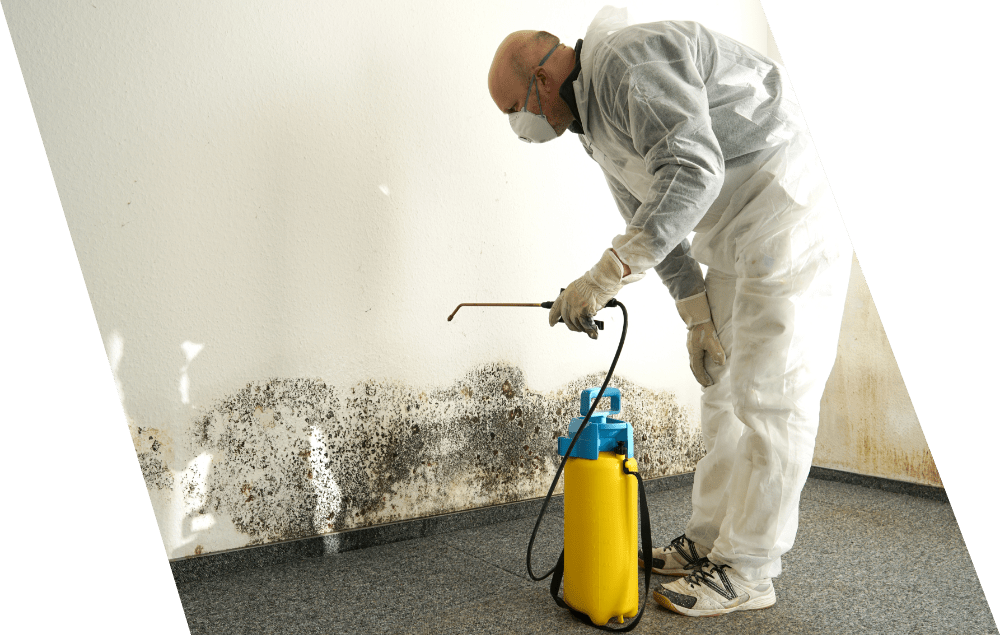
The cost of mould removal depends on the size of the affected area and the type of treatment required. After a detailed inspection a clear, personalised quote is provided based on the scope of work.
| Small mould area (e.g. around a window or corner) | Medium mould area +£100 (large section of a wall affected) | Large mould area +£150 (more than one wall or ceiling) | ||||
|---|---|---|---|---|---|---|
| Room | Standard | Fantastic Club* | Standard | Fantastic Club* | Standard | Fantastic Club* |
| Bedroom | £350 | £320 | £450 | £420 | £500 | £470 |
| Bathroom | £350 | £320 | £450 | £420 | £500 | £470 |
| Kitchen | £350 | £320 | £450 | £420 | £500 | £470 |
| Living / Dining room | £350 | £320 | £450 | £420 | £500 | £470 |
| Hallway / Landing | £350 | £320 | £450 | £420 | £500 | £470 |
| Utility room | £350 | £320 | £450 | £420 | £500 | £470 |
| Paid inspection | £50 | |||||
| *Price for members of the Fantastic Club. The Fantastic Club is a yearly subscription of £89. | ||||||

When searching for mould removal near Upper Norwood, our local mould specialists begin with a thorough inspection and moisture assessment to determine the extent of mould contamination. We identify the underlying causes, whether it’s due to condensation, poor ventilation, dampness, or water damage. Our mould cleaning process in Upper Norwood includes treating structural surfaces such as walls, ceilings, and floors, which are common areas for mould development. However, it is important to note that soft furnishings are not treated as part of our services.
Mould remediation in Upper Norwood goes beyond a simple surface clean; we address airborne mould spores and work to prevent future growth. Our advanced treatment employs HEPA filtration systems to effectively capture airborne spores, while HOCl (Hypochlorous Acid) neutralises mould and bacteria at a microscopic level. Additionally, we utilize ULV fogging technology to ensure thorough coverage in hard-to-reach areas, enhancing indoor air quality and protecting your home from potential health risks and structural damage.
Mould remediation in Upper Norwood begins with a thorough inspection and moisture assessment conducted by local specialists. Using advanced professional equipment, they detect both visible and hidden damp conditions, ensuring that all sources of excess moisture are identified. This critical step is essential in preventing recurrence, allowing the team to address specific areas prone to humidity and leaks. Following the moisture assessment, HEPA filtration systems and air scrubbers are employed throughout the treatment process to capture airborne mould spores, maintaining safe indoor air quality. This comprehensive approach sets the groundwork for effective mould removal near Upper Norwood.
After establishing a safe environment, professional-grade HOCl (Hypochlorous Acid) is applied to neutralise mould, bacteria, and mycotoxins at a molecular level. This non-toxic solution effectively tackles harmful contaminants without endangering occupants. Employing ULV (Ultra-Low Volume) fogging technology ensures complete coverage, reaching hidden areas such as cracks and corners. The physical mould removal process utilizes professional equipment with H-Class filtration, containing any contaminants safely. Finally, thorough air purification and long-term protection strategies enhance the indoor air quality in Upper Norwood, significantly reducing the risk of future contamination and proving reliable and effective mould cleaning.

Booking mould cleaning is quick and designed to get results without unnecessary delays.
Share what you’re dealing with, whether it’s visible mould, damp patches, or a recurring problem. This helps determine the right approach, from mould cleaning to full mould remediation.
A specialist checks the affected areas and identifies what’s causing the mould, such as excess moisture, condensation, or poor ventilation. This ensures the issue is treated properly, not just on the surface.
You’ll get a straightforward quote based on the level of contamination and the type of mould removal required. The service is tailored to ensure effective results and long-term protection.
The treatment removes mould and improves indoor air quality, helping to prevent future growth and create a healthier living space. It also targets the root cause of the problem for longer-lasting results.
Mould removal requires more than basic cleaning, which is why it’s handled by trained mould remediation specialists experienced in treating both visible and hidden contamination. Each specialist assesses the full extent of mould growth, including underlying causes such as excess moisture, condensation, and ventilation issues, ensuring the problem is addressed properly rather than just on the surface.
Number of bookings: 205
With Fantastic Services for: 3 years
Other specialities:
Number of bookings: 139
With Fantastic Services for: 2 years
Other specialities:
Number of bookings: 213
With Fantastic Services for: 2 years
Other specialities:
Alongside professional mould removal and mould cleaning, a range of additional property care services is available to help maintain a healthier indoor environment.
Mould can spread quickly and impact both health and property if not treated in time. Book a service today to remove mould, improve indoor air quality, and restore a cleaner and healthier living environment.

Warm, humid air does not stay where it is produced. In a tall house it rises, and it keeps rising until something stops it. Upper Norwood is full of exactly the houses that exploit that: four-storey Victorian villas on steeply falling plots, many of them with a kitchen at lower-ground level, an open staircase running the full height of the building and a converted room in the roof. Air heated in the kitchen carries the day's moisture up that stairwell and deposits it on the coldest surfaces it can reach, which are almost always two or three floors above the source.
A temperature difference between the bottom and the top of a house creates a pressure difference, and air moves up through the stair void to equalise it, drawing replacement air in through gaps at the lowest level. The taller the house and the bigger the difference, the stronger the movement. Steam from cooking, a shower on the first floor and clothes drying on a landing all join the same current. By the time that air reaches the top landing it has cooled, and it gives up its water on the ceiling, the top of the stairwell wall and in the least-heated bedroom on that floor.
The occupant of the top floor is regularly told they are drying washing indoors and not opening windows, when the moisture arriving at their ceiling was produced in a kitchen they do not use. In a house divided into flats this becomes a genuine dispute, because the growth is in one dwelling and its cause is in another. The evidence that settles it is the pattern: readings that rise as you climb the building, worst at the head of the stairs, with the lower-ground rooms comparatively dry.
An inspection starts at the bottom and works up. What is being looked for is unvented moisture production - a hob with no working extract, a tumble dryer venting into a room, a utility area with a door propped open, laundry on a rack in a stair hall - and any opening at low level that feeds air into the stack, such as a gappy cellar door or an unsealed floor void. Fixing anything at the top of the house while all that continues is treating the symptom at the far end of a pipe. The low-level voids that feed the stack are also where rodent activity tends to be found, and that is dealt with by professional wasp nest removal in Walworth.
The cheapest intervention in a tall house is usually a door. A door at the head or foot of the stairs, kept shut, breaks the current and confines moisture to the level that made it. Beyond that: extract at source in the kitchen and bathroom rather than a single vent somewhere neutral, draught-sealing the low-level gaps that feed the stack, and insulation at the top ceiling so the coldest surface in the house is no longer the one all the moist air arrives at. Door hanging, draught sealing and vent fitting of that kind are covered by professional odd jobs in Crystal Palace.
Top-floor rooms in these houses are often the last to be heated and the first to be shut up. Low background heat in the affected room, rather than a burst of warmth in the evening, raises the surface temperature enough to break the cycle, and costs less than repeated redecoration. Where a room in the roof was converted without adequate insulation at the slopes, that is the fabric repair worth doing, and the growth will keep returning until it is. Affected rooms are worth cleaning down thoroughly once the works are finished, which for Plumstead households is covered by cleaning services prices in Plumstead.
Treatment is quoted per dwelling and per affected area, with surveys booked as standalone visits so a leaseholder or tenant can obtain a written cause without committing to works. In a converted house it is worth arranging the survey for the whole building rather than one flat, because the findings for the top flat depend on what is happening below. Crystal Palace mould removal service covers equivalent work on the Crystal Palace side of the ridge, and the technical approach in full sits on mould removal and remediation prices.
Skip the line, request and
book a service online



