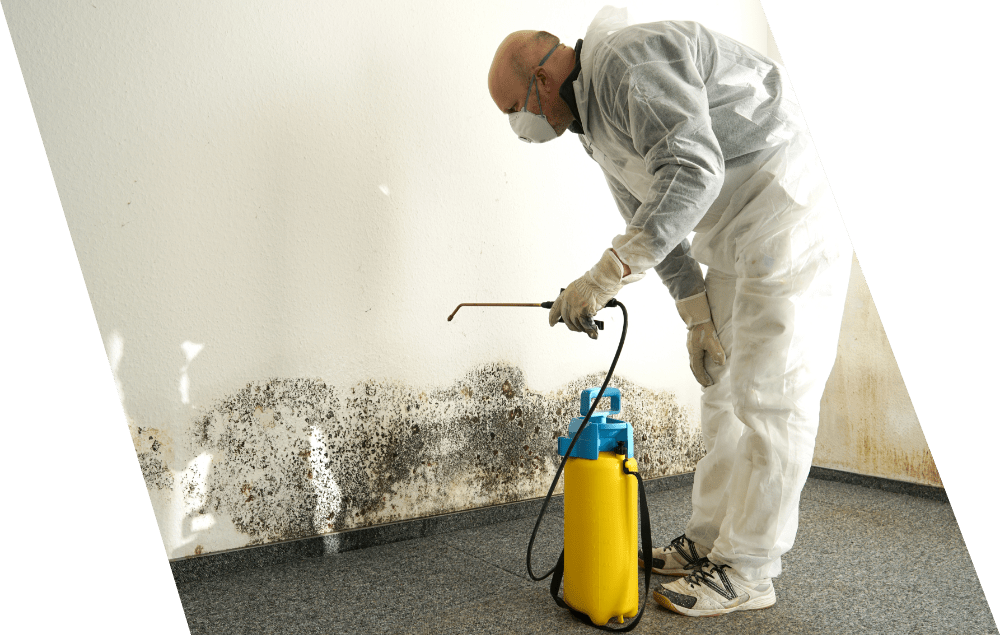
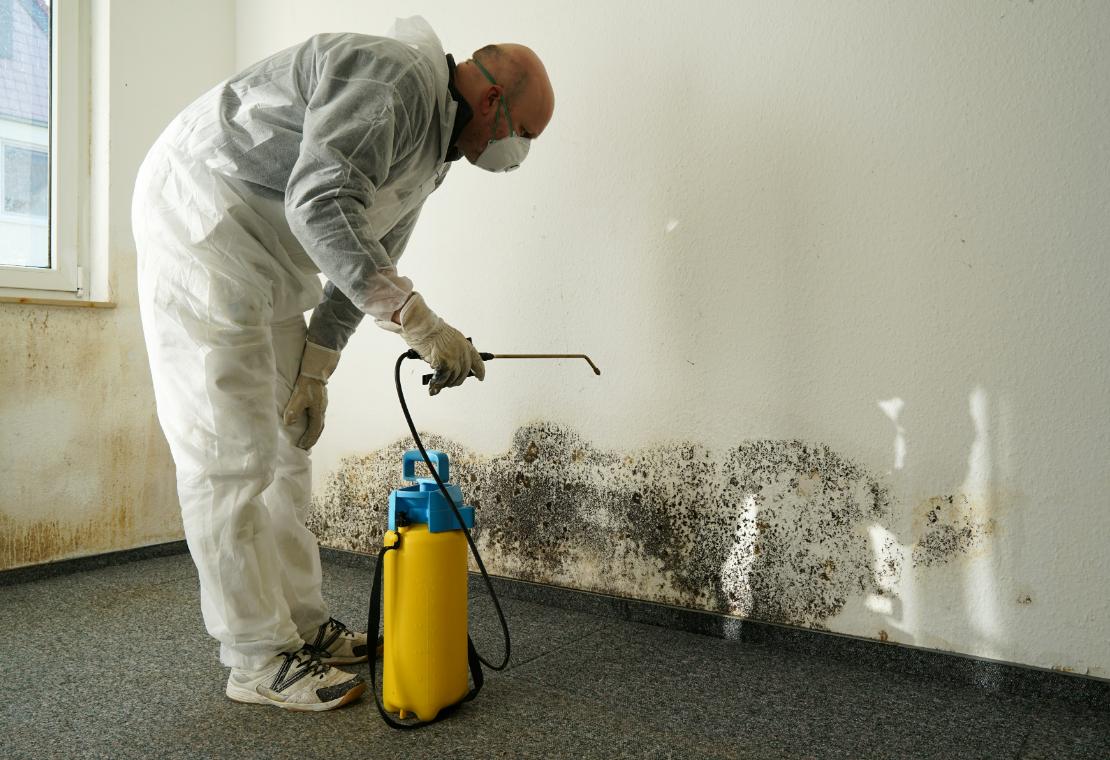
Pulling a wardrobe away from a bedroom wall is how most households first meet the problem, and the shape of what they find is the giveaway: a dark rectangle matching the footprint of the furniture, clean plaster all around it. Anything held flat against an external wall stops room air reaching that plaster and keeps its temperature down near the wall's own, so moisture settles there and nowhere else. Anerley is built largely of narrow Victorian terraces and small conversion flats, where rooms are shallow and furniture has to stand somewhere - and where it stands turns out to matter a great deal.
Why the outline of the furniture appears
Room heat warms a wall by convection, air drifting slowly across the surface. Block that movement with a solid back panel and the surface behind it loses a couple of degrees, which is often the whole difference between a wall that stays dry and one that does not. The effect is strongest on solid brick walls with no cavity, strongest again in the corner where two external walls meet, and worst on the elevation that gets least sun. Growth then develops in the exact shape of whatever is standing there.
Choosing which wall takes the heavy furniture
Party walls and internal partitions stay close to room temperature because there is heated space on both sides, which makes them the right home for a wardrobe, a tall bookcase or a bank of boxes. External walls are better left to things that do not touch them - a low chair, a chest of drawers with legs and an open back, a rug. Where a bed has to sit against an outside wall, a few centimetres of clear space behind the headboard is enough for air to move.
Mirrors, pictures and wall-mounted screens
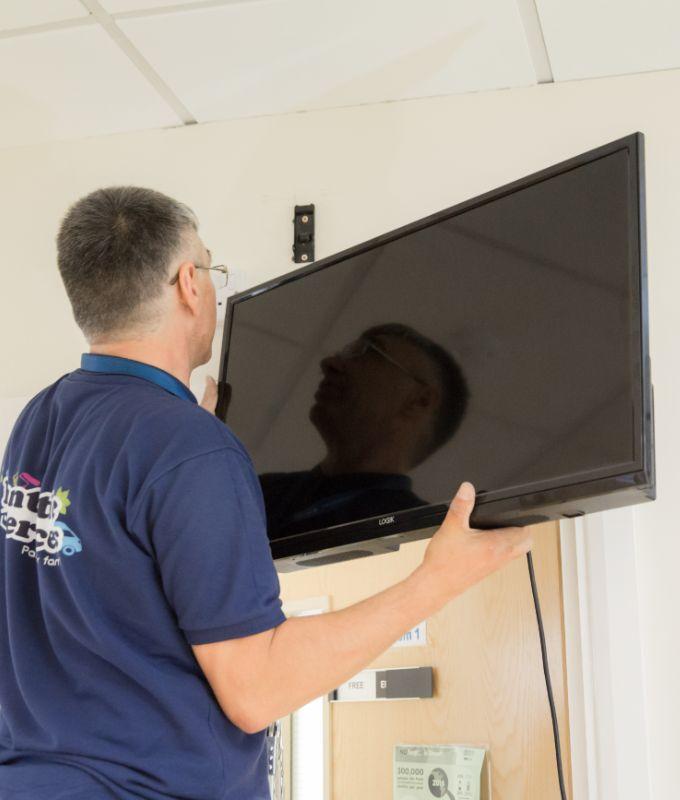
Flat objects fixed directly to an external wall cause the same problem in miniature, and because nobody takes them down, they can hide growth for years. Large mirrors are the worst offenders, since glass is cold in its own right and the backing board traps whatever condenses. A television on a bracket, a framed print with a solid back, and fitted shelving built tight into a chimney alcove all deserve a look when a room smells musty and looks clean.
Treating the wall and the things that stood against it
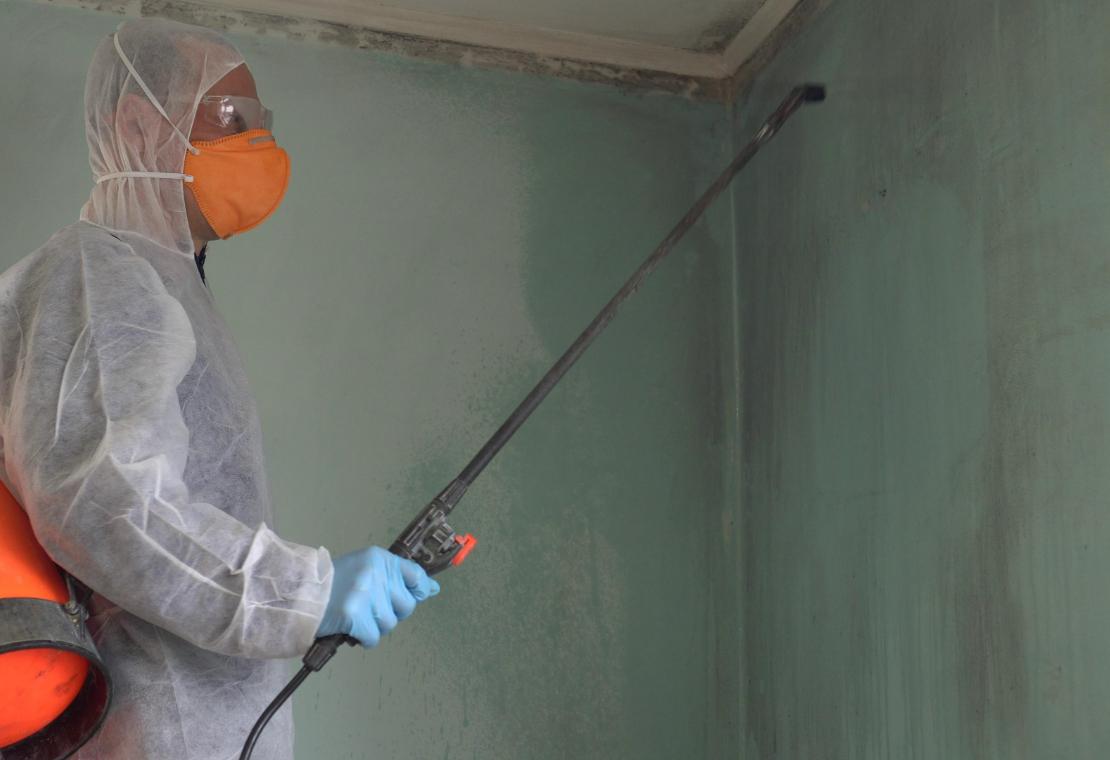
Both sides need dealing with, or the problem simply transfers back. The wall is treated and left to dry before anything returns to it. Furniture backs are inspected: solid timber and laminated boards can be cleaned and dried, but hardboard and untreated chipboard that has been wet for months holds growth in its fibres and is usually better replaced. Cardboard boxes and anything paper-based that has been in contact are a loss. Soft items that were stored there - bedding, rugs, coats - need laundering rather than airing, and in this area that is covered by carpet cleaning throughout Anerley.
When placement is not the whole story
If growth carries on past the outline of the furniture, or the plaster reads damp well below the surface, the furniture was only making a pre-existing problem visible. At that point the questions are about the wall itself and about ventilation: whether there is a working extract in the kitchen and bathroom, whether the window has background ventilation, and whether there is water getting in from outside. The full diagnostic and treatment sequence is described on the full service page.
What a visit involves
Furniture along the affected walls needs to be movable on the day, and it is worth leaving it pulled out for a day or two beforehand so the wall behind can be seen properly. The technician takes readings behind each object, treats the affected plaster, and gives a written note of cause with anything needing repair listed separately. Pricing follows the number of rooms and the area involved, not the hour. Penge addresses are covered by mould removal throughout Penge, and the joinery repairs and shelf refitting that often follow by handyman team in Penge.