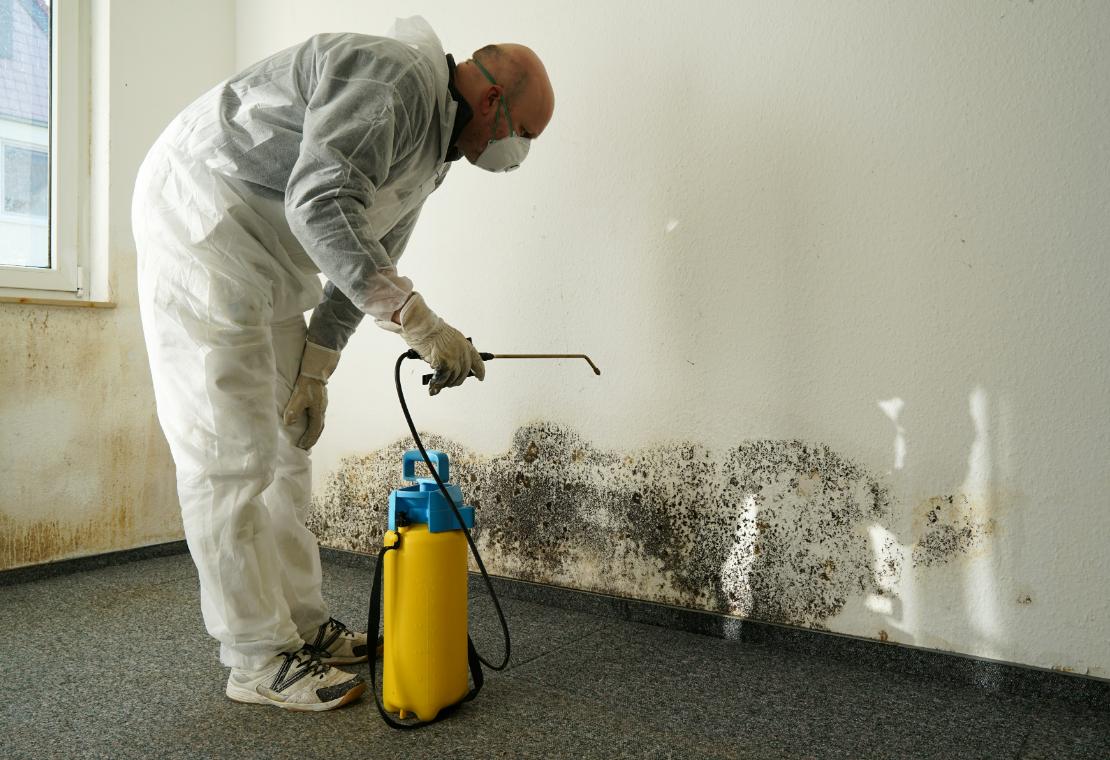
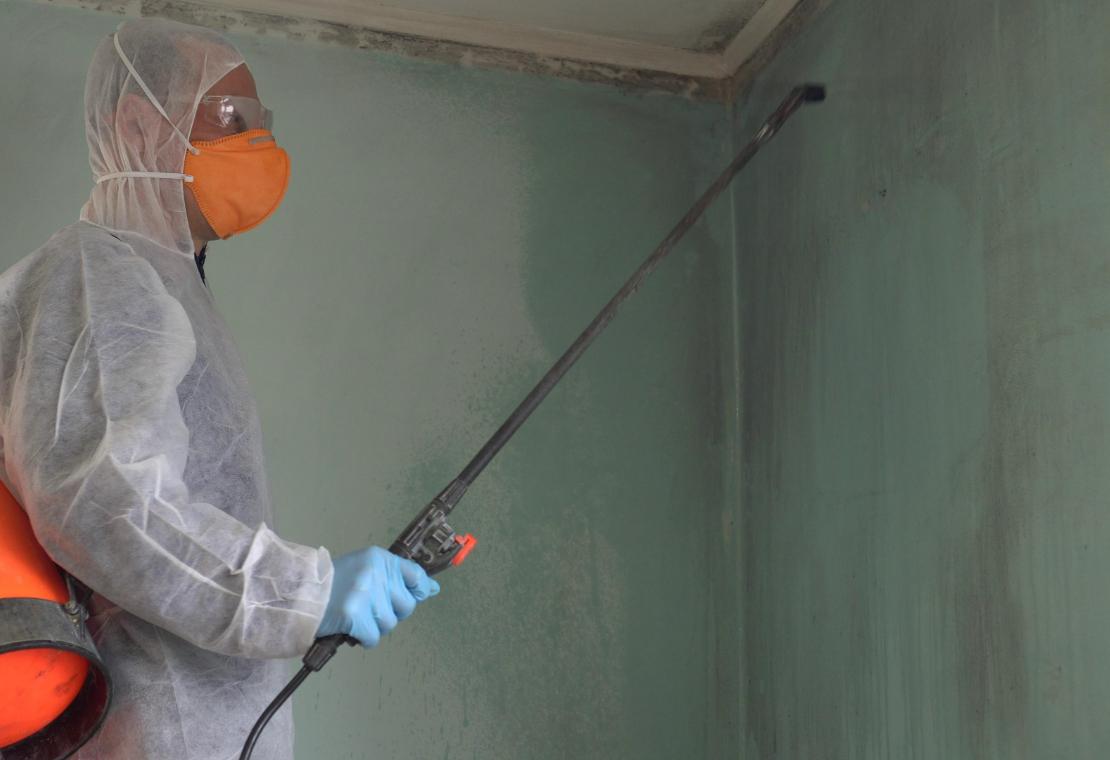
Mould caused by an ensuite is usually found in the bedroom rather than the shower room. That surprises people, and it explains why so many of these jobs in Balham are misdiagnosed. Across the Victorian and Edwardian terraces here, principal bedrooms have had a shower room carved out of a corner, a cupboard or a section of landing, typically with no external wall and no window. The moisture that room produces has to go somewhere, and where it goes is through the door into the bedroom it was taken from.
A wet room inside a dry one
An ensuite formed inside a bedroom shares that bedroom's air. It is separated by a stud partition and a light internal door, neither of which stops water vapour. A shower puts a substantial quantity of moisture into a very small volume in a few minutes; if it is not removed at source within that time, it distributes itself through the rest of the bedroom and settles on whatever is coldest. That is why the growth turns up behind the headboard, in the corner of an external wall and inside a wardrobe.
Extraction that cannot reach outside
With no external wall available, the extract has to be ducted, often through a ceiling void, a wardrobe or a roof space to a terminal some distance away. Long flexible runs with bends and sags move a fraction of what the same fan achieves on a short straight duct, and the low point of a sagging run fills with water. The fan is also working against a closed, well-fitting door with no gap beneath it, so there is nothing for it to draw in and very little actually leaves.
The routine that overloads it
Two people showering one after the other before anyone has opened a window puts the second load of moisture into a room that has not cleared the first. A fan sized for occasional use cannot keep pace with that, and most are switched by the light, so they stop the moment the door closes. An overrun timer that keeps the fan running for a spell after the room is vacated makes more difference than almost any other single change, provided the duct behind it is capable of carrying what the fan is trying to move.
The partition and what is under it
These rooms are frequently built off the existing floorboards, with the tray or the tiled floor sitting on a deck that was never designed to be wet. A small waste run to a macerator crosses the joists and is boxed in. Leaks at the trap, the pump connection or the junction with the tray soak the deck and the ceiling below, and by the time a stain appears downstairs the timber has been wet for a long while. Any survey here opens the boxing rather than guessing.
Sorting out the bedroom as well
Remediation covers both rooms because they are one space. Growth on the bedroom wall and inside fitted furniture is cleaned and treated, the backs of wardrobes and headboards are checked, and any plaster that has repeatedly been wet is cut back rather than painted. In the shower room the sealant at the tray and the grout lines are dealt with, and the extract route is straightened, shortened and sealed where it can be. A gap at the bottom of the door does more good than a bigger fan.
Practical side of a booking
A visit covers both rooms, the ceiling below and any cupboard the duct passes through, with readings taken on the external wall and on the floor deck. Charges follow the area treated, the finishes removed and whether boxing has to be opened, so a quotation comes after the inspection. Clearing the wardrobe beforehand helps. Small repairs to the boxing, the door and shelving are handled by our handyman service in Balham, damp fitted furniture with insects behind it by Balham flea treatment, similar work nearby by our team in the area, soft furnishings and carpets by domestic cleaning in Mortlake, and the method by nationwide mould removal and remediation services.