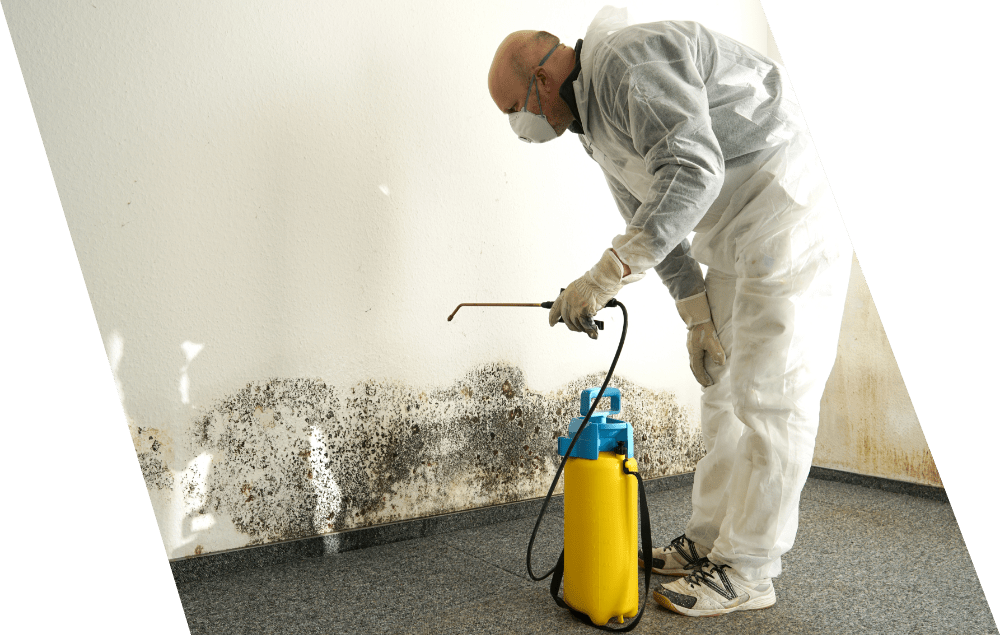
In a converted flat the cause of the mould is frequently not in the flat. A shower tray seal two floors up, a waste connection inside a boxed void shared by three properties, a communal gutter nobody has taken responsibility for since the building was split: all of these produce damp on somebody else's plaster. CR0 has a great deal of this stock, with Victorian and Edwardian terraces subdivided into flats and maisonettes, and the practical problem is rarely the treatment. It is establishing where the water comes from and who owns the defect.
Water arriving from another property
The classic pattern is a stain on a ceiling or a party wall that grows slowly, is worst after a shower is used above, and does not respond to any amount of ventilation. A failed tray seal or a loose waste joint releases a small volume each time, which tracks along a joist and appears a room away from its source. Because the volume is small, it never drips convincingly, and the flat below is often told for months that it has a condensation problem.
Demise, common parts and who is responsible
A lease divides a building up. Structure, roof, external walls, communal gutters and usually the pipework serving more than one flat sit with the freeholder or the management company. Internal finishes and the flat's own services sit with the leaseholder. Where a defect in one flat damages another, the responsibility is usually the owner of the defective installation. None of that can be pursued on the strength of a photograph of mould; it needs a report that names the mechanism.
Addiscombe's conversion stock
Bathrooms in these conversions are very often later additions in a rear back-addition, with waste pipes run on the external face of a wall and an extract fan ducted through a flank wall shared with the neighbour. The rear addition is typically single skin or of thinner construction than the main house, and its walls run cold. A new shower room on a cold external wall with a short, badly terminated duct is the most reliable mould generator in the whole housing type.
Evidence that stands up
The difference between a complaint and a claim is the mechanism. A survey records dated photographs, moisture readings at stated points, surface temperatures, the pattern over time and the route the water takes, and states in writing what is causing what. That report is what a managing agent, a freeholder, a landlord or an insurer can act on, and it is what a tenant or leaseholder needs when two parties are each saying the problem belongs to the other.
Tracing a leak without opening every wall
Boxings around a soil stack are usually sealed with no access, which is why so many defects run undetected for years. A sensible approach opens one inspection point rather than a wall, and refits the boxing afterwards with a removable access panel so the next investigation takes minutes. handyman services across Addiscombe covers that work. Where the flat above is vacant and the agent needs lawful access arranged to trace a leak, the Croydon branch is the trade that provides it without damaging a door.
Working while responsibility is argued
Disputes between a freeholder, a managing agent and two leaseholders take time, and a household cannot live with a black ceiling while they run. The reasonable position is to treat the growth and make the room usable, run a dehumidifier where the area is still damp, and hold back the final finish until the source is fixed, so the decoration is not paid for twice. Mice travelling between flats use exactly the same service voids as the pipework, and pest control specialists in Addiscombe deals with that where signs are found.
Booking a survey as a leaseholder or a tenant
Access to the affected rooms is enough for a first visit; access to the flat above helps but is not essential to reach a view. The report sets out cause, recommended works and what is guaranteed, and is issued to whoever commissioned it. Surveys are arranged as a standalone appointment with no obligation to proceed, treatment is quoted by area and method, and the same service runs in the neighbouring district as flexible mould removal services in Croydon. The overall process is described on local mould remediation.