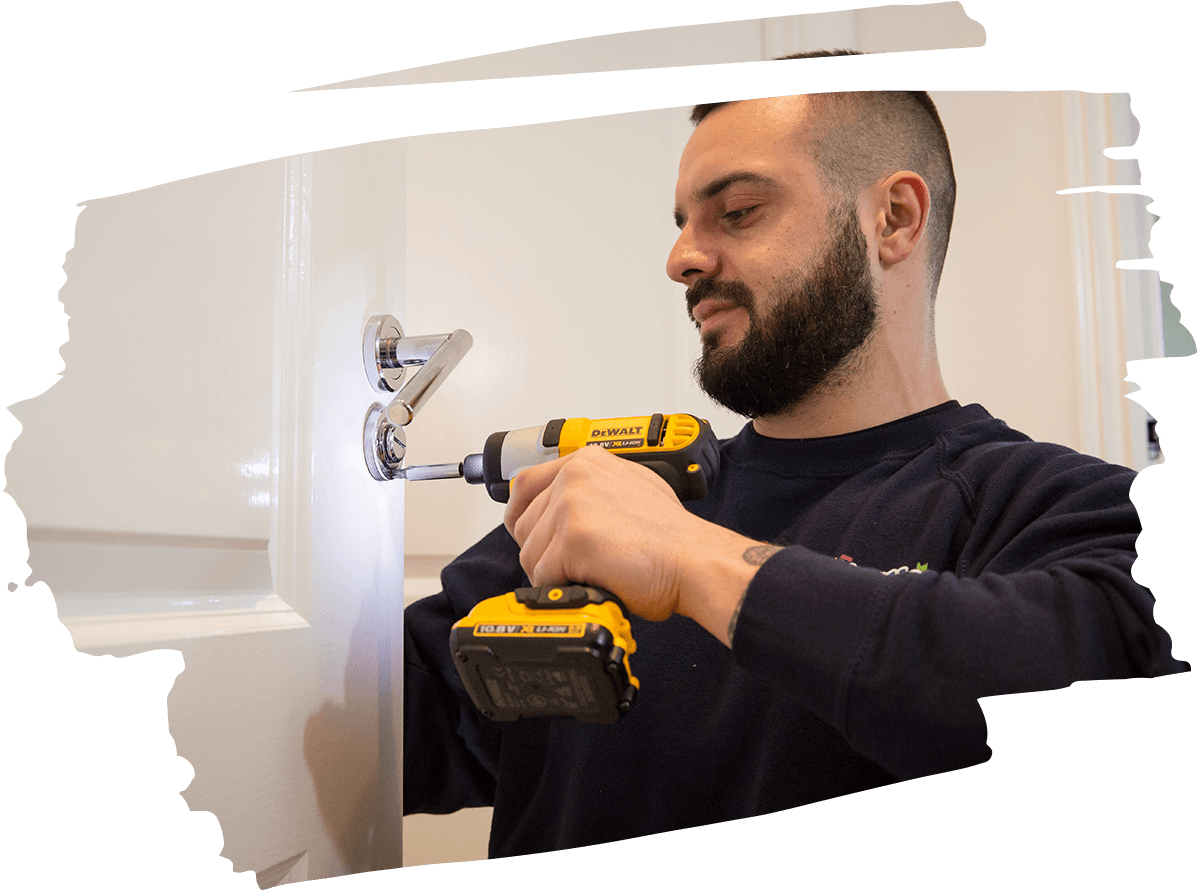
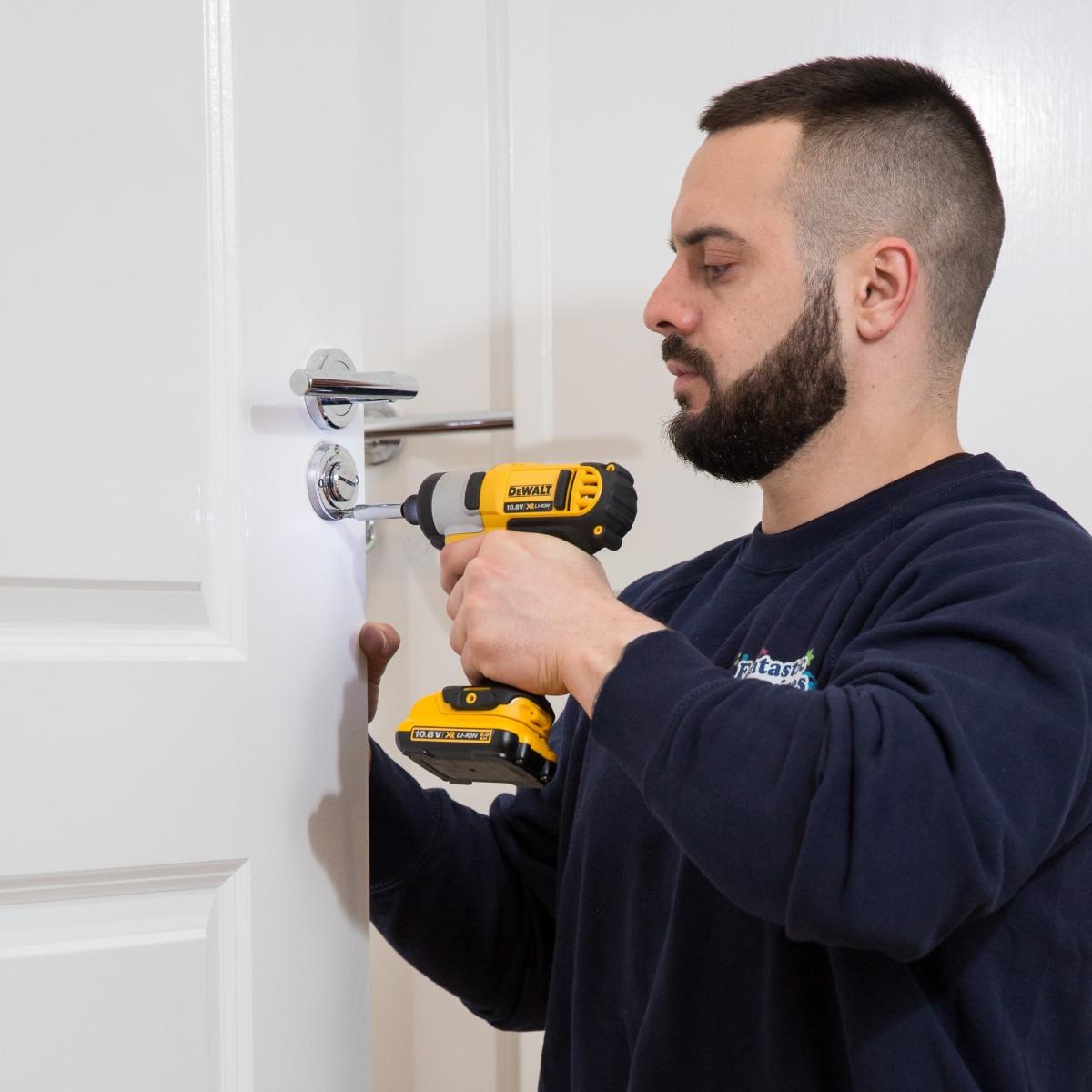
Croydon has an unusually broad mix of door and lock types for one borough — Victorian and Edwardian terraces with original timber doors and rim cylinders, inter-war semis, large post-war estates with communal entrances, and the tall newer residential blocks around the town centre with fobs, magnetic locks and multipoint uPVC doors. Which of those you have determines almost everything about how a lockout or a lock failure is resolved.
Lockouts: the method matters
A competent locksmith opens the majority of domestic doors without damage. Non-destructive entry — picking, bypassing or manipulating the mechanism — should be the default, and drilling should be the last resort, used when the lock is anti-snap, already damaged, or of a type that cannot be picked. That distinction has a direct cost consequence: a non-destructive entry means you pay for the call-out only, while drilling means paying for a replacement cylinder as well. Any locksmith who reaches for a drill first is worth questioning.
Snapped cylinders and door security
Lock snapping remains a common method of forced entry on uPVC and composite doors fitted with older euro cylinders, which can be snapped in seconds. The remedy is straightforward and inexpensive: an anti-snap cylinder to the current British Standard, ideally three-star rated or one-star used with two-star security handles. If your front or back door has a euro cylinder and you do not know its rating, that is worth checking — it is the single most cost-effective security upgrade on a modern door. Insurers increasingly expect it.
Changing locks after a move or a loss
Changing the locks is sensible after buying a property, at the start of a tenancy, after losing keys, or after a relationship ends — you have no way of knowing how many copies exist. On a uPVC door this is usually a cylinder change rather than replacing the whole mechanism, which is far cheaper. Several doors can be keyed alike so one key operates them all. If you rent, tell your landlord or agent first and keep a copy for them; the tenancy agreement normally requires it.
Communal entrances and blocks
In a block, the entrance door, fobs and intercom are usually the freeholder or managing agent's responsibility rather than yours, and work on them needs authorisation. A locksmith can advise on what is needed, but the instruction has to come from whoever holds the responsibility. Individual flat doors are yours.
The related repairs
A lot of "lock problems" are actually door problems: a door that has dropped on its hinges so the multipoint mechanism no longer engages, or a frame that has moved so the keep is misaligned. That is adjustment work rather than a new lock — fully insured minor repairs in Croydon covers it and is considerably cheaper than replacing a mechanism that was never faulty. Where a door has been forced or damaged and moisture has got in behind the frame, mould removal team in Croydon deals with the consequences.
Coverage and booking
The same locksmiths cover the wider south London area, so trusted locksmith in South London operates on the same basis. Emergency and same-day call-outs are available, locksmiths arrive insured and carry common cylinder types on the van, and pricing separates the call-out from any parts so you know what you are paying for. Services, standards and typical response arrangements are on professional emergency lockouts. Where a lock issue turns out to be an infestation in the door frame or surrounding structure, our local team handles that separately.
What to check before anyone starts work
Ask three questions before a locksmith begins: whether entry will be non-destructive, what the call-out charge is and what it includes, and what any replacement parts cost. A legitimate locksmith answers all three without hesitation and confirms the total before starting. Be wary of a quote that is vague on parts, since that is where the cost usually escalates. You should also expect identification, and to be asked for proof that you are entitled to access the property — a locksmith who does not ask is one you should not want.