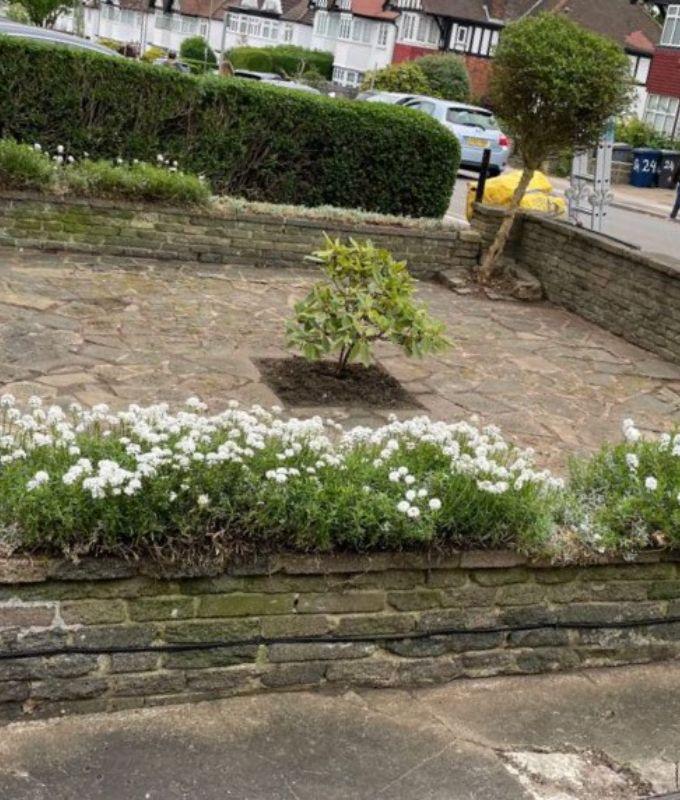
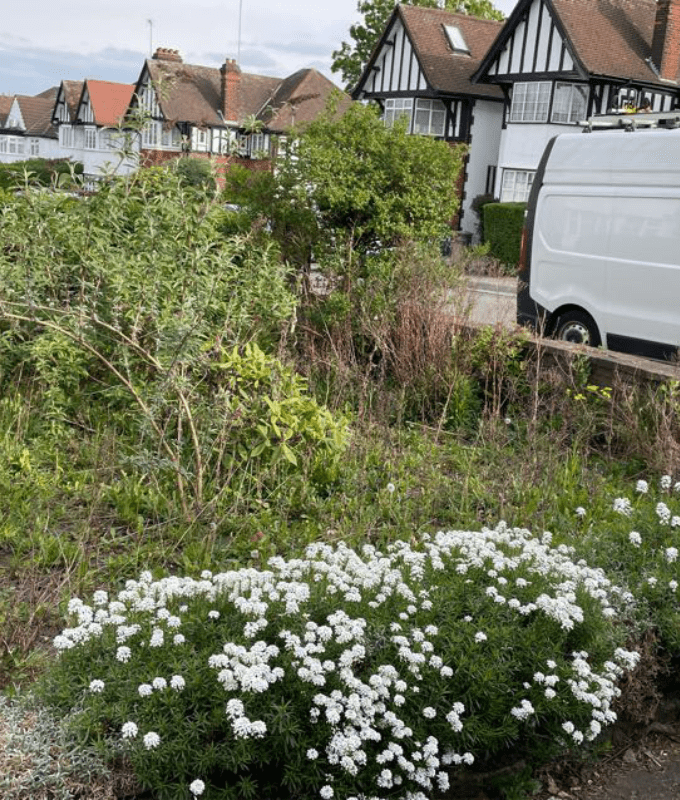
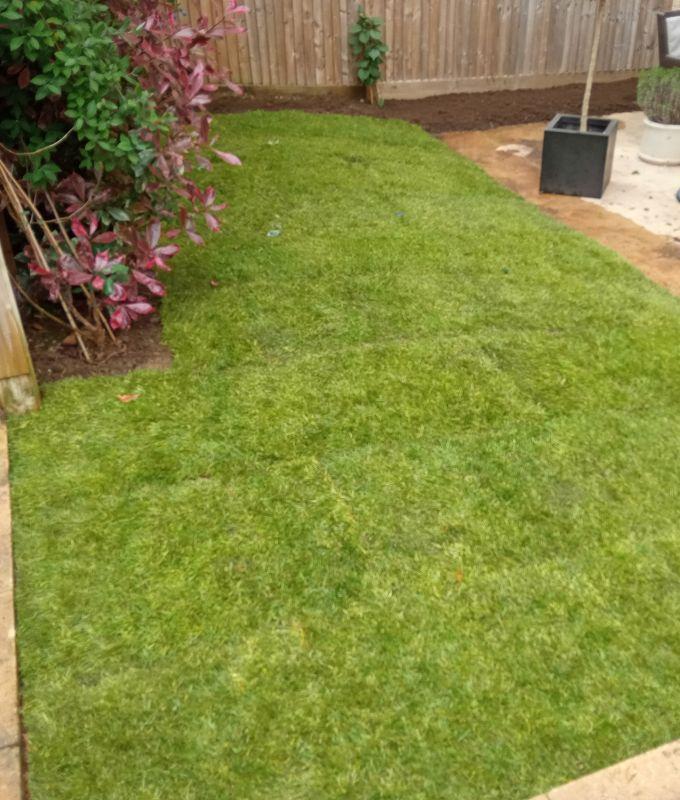
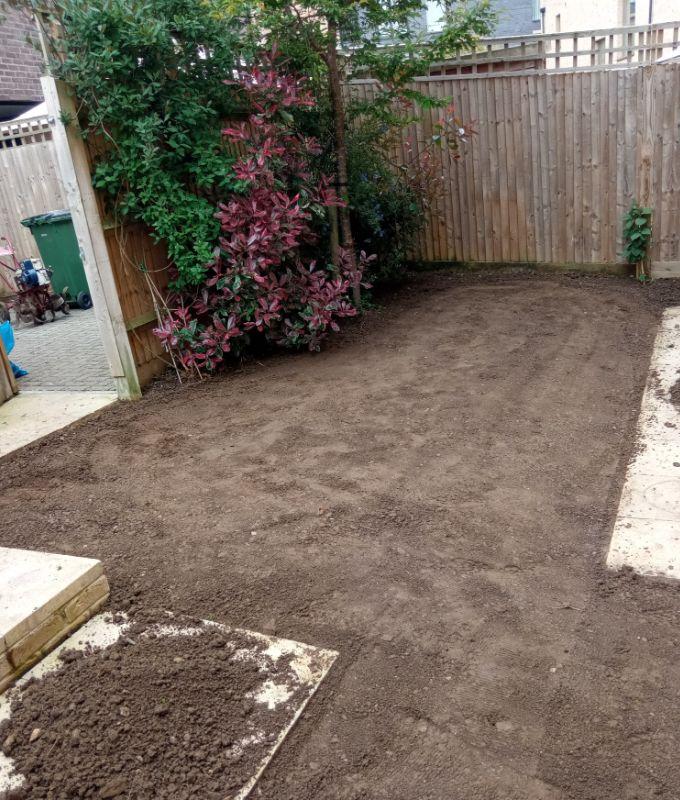
A garden that arrives with a new house starts from a difficult position. On the estates across OX11 the plot is handed over turfed and fenced, with a narrow border along one side, and the ground beneath that turf is rarely what it appears to be. Construction traffic compacts a site for the whole of the build, topsoil is stripped at the beginning and a thin layer spread back at the end, so the lawn is sitting on a pan of compressed subsoil under a few inches of imported soil.
Why new turf yellows in its first summer
Roots cannot get through a compaction pan, so they stay in the top few inches and the grass behaves like a plant in a shallow tray: it dries out within days of hot weather and it sits in water after heavy rain, because moisture cannot move downwards either. The lawn that looked perfect at handover in March is patchy by July and squelching by November. Feeding it makes almost no difference, since the limitation is physical rather than nutritional.
Breaking the pan
The fix is mechanical and it is not a single treatment. Deep aeration with solid or hollow tines, repeated over two or three autumns and followed each time by a sandy top dressing brushed in, gradually opens routes for roots and water. On a small plot a garden fork driven in at close spacing achieves the same thing with more effort. Where the turf has already failed across a large area, lifting it, ripping the subsoil and relaying is quicker than years of gradual correction.
How deep the topsoil actually is
This is worth establishing before anything is planted: dig a hole in the border and measure the dark layer before the colour changes. Frequently it is shallower than the rootball of the shrub about to go into it, which means the plant is being put straight into subsoil. The remedy is to improve a whole bed rather than one hole, since an enriched pocket in compacted ground behaves as a sump. Older gardens with decades of established soil, such as those behind gardening cover across Thame, need none of this preparation.
Boundaries, levels and the fence line
New plots are set out from a plan, and the difference in level between one garden and the next can be considerable on a graded site. The retaining element at that step belongs to somebody, and digging a border hard against it, or raising soil against a neighbour's fence, causes problems that are expensive to reverse. Establishing which fence is whose from the transfer plan before work starts avoids an early dispute with a neighbour who moved in the same month.
Structure before planting
New gardens have no shelter and no shade, and wind funnels between houses built close together. Deciding early where paths, a patio, a shed base and a screen are going saves planting twice, and that hard structure is a construction exercise rather than a horticultural one, set out under affordable landscaping in Didcot. Planting then goes in around it, with a windbreak established first so that everything else has something to grow behind.
What the build leaves behind
Excavation for a patio or a bed on a new plot regularly turns up buried rubble, offcuts of membrane, blocks and lengths of duct that were simply covered over. All of it has to come out before planting rather than be worked around. Inside the house the same period leaves fine dust in every surface and fitting, which is a separate specialism covered by a local professional. Where a mature tree was retained on the estate and its root area was driven over during construction, the crown often shows it a season or two later, and an assessment through Oxford tree surgery services is worth having before deciding anything.
The first year, in order
A workable sequence for a new plot is to correct the ground in the first autumn, set out structure over winter, plant in spring, and expect to water through the first two summers. Quotes for that kind of work are given per stage rather than as one figure, since the ground correction is priced by area and the planting by what goes in. It is also worth checking what the developer still owes: turf and drainage faults raised inside the defect period are often theirs to put right. Standards for ongoing attendances appear on our main service page.