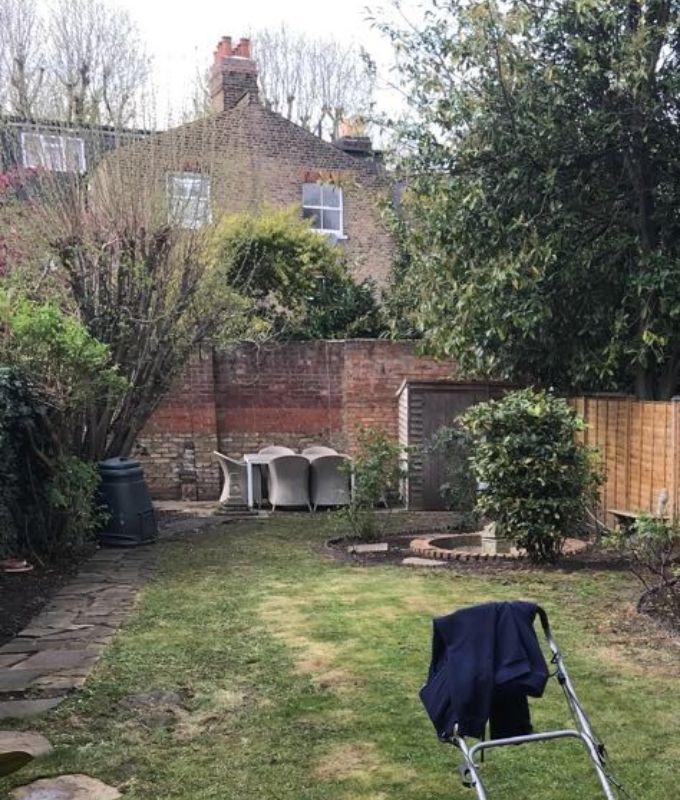
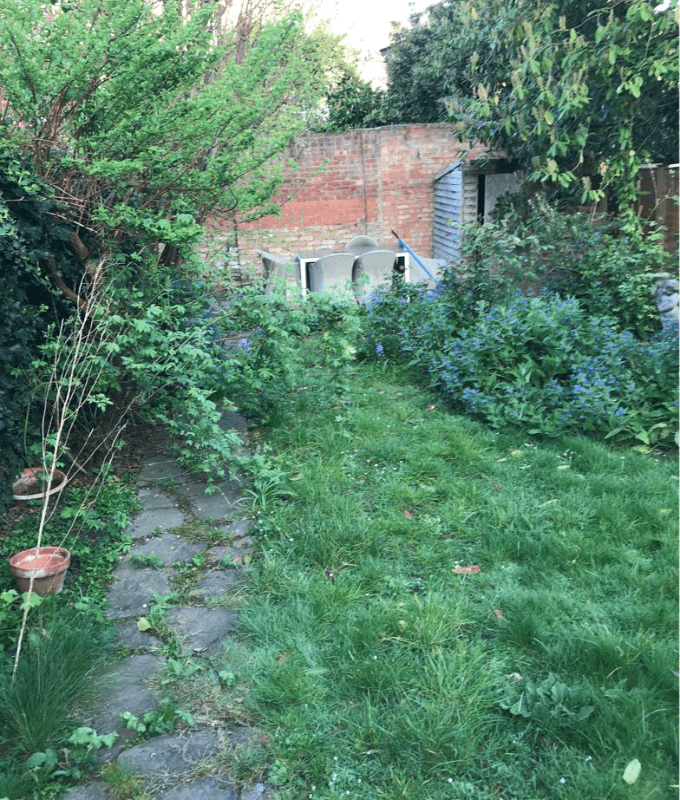
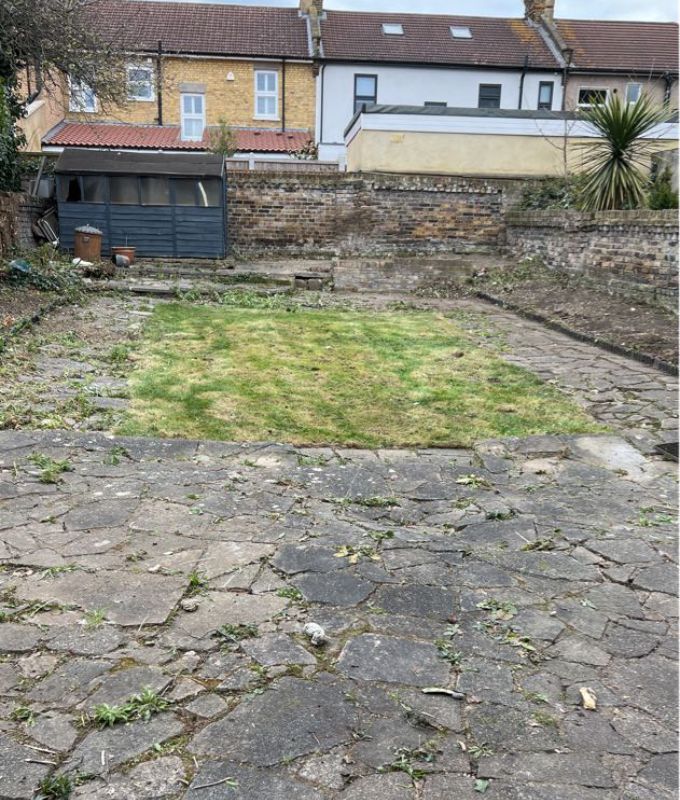
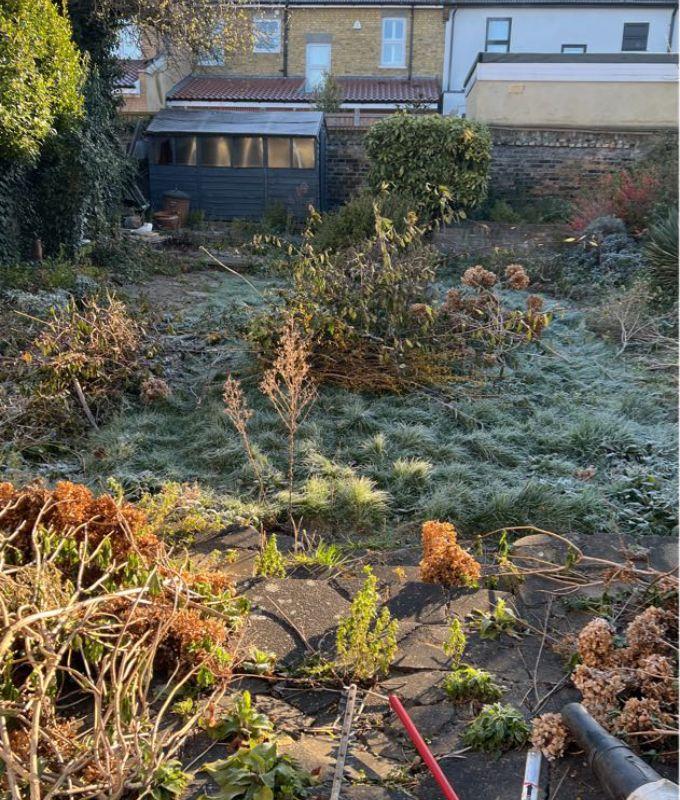
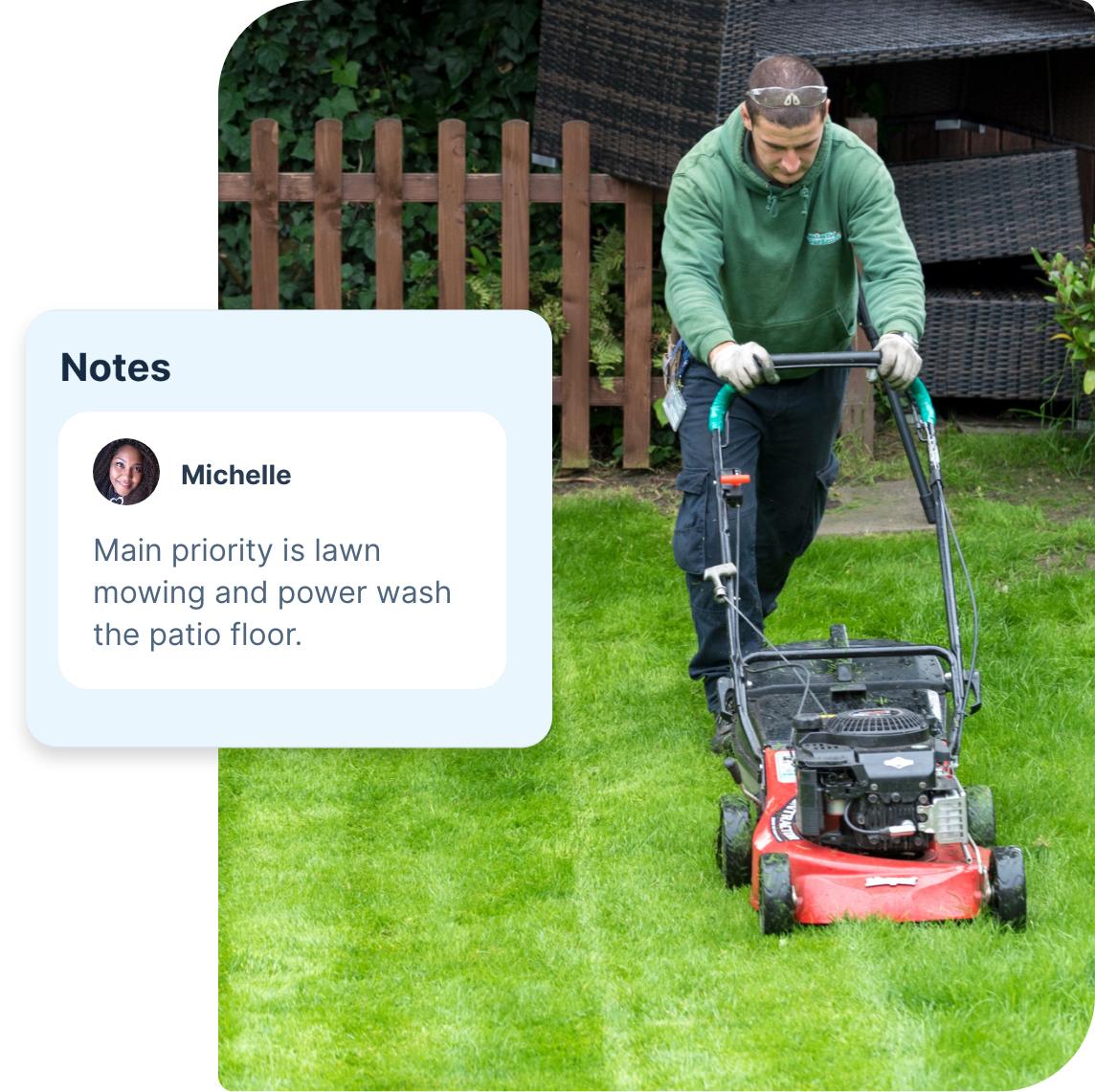
"Garden services" in Oxford covers a wider range of jobs than most people expect, and choosing the wrong one is the usual reason a booking disappoints. A garden that has been left for two seasons does not need a maintenance visit — it needs a clearance first. A garden with a drainage problem does not need more mowing. Knowing which job you are actually buying is worth more than the frequency you book it at.
The four distinct jobs
One-off clearance is for a garden that has got away from you: brambles, waist-high growth, self-seeded saplings, an overgrown boundary, years of accumulated debris. It is priced by scope and volume and generates a lot of green waste. Regular maintenance is the ongoing visit — mowing, edging, weeding, trimming — which only works once the garden is at a manageable baseline. Seasonal work is specific and time-bound: spring lawn treatment, autumn leaf clearance, winter cutting back, hedge cuts at the right point in the season. And landscaping is construction — paving, turfing, planting schemes, structures — which is a different trade with a different quote.
Oxford's soil and its water
Much of Oxford sits on Oxford Clay, with alluvial gravels along the Thames and Cherwell corridors. Clay gardens compact, drain slowly, and turn to concrete in a dry August and to standing water in a wet February — which is why so many local lawns have moss in the shaded half and cracks in the sunny half of the same year. The remedy is mechanical: scarification, aeration and top-dressing rather than repeated feeding. Properties on the lower ground near the rivers also carry genuine flood risk, and that should shape what gets planted and where anything structural is sited.
Rented and multi-occupancy gardens
A significant share of Oxford housing is let, often to several sharers, and the garden is usually the part of the tenancy nobody takes responsibility for. Landlords and agents commonly book a scheduled visit through the growing season precisely to avoid the end-of-tenancy clearance bill, which is almost always larger than the maintenance would have been. Where a tenancy agreement makes the garden the tenant's responsibility, a fixed schedule is the simplest way to evidence that it has been met.
Choosing between the options
If what you want is an ongoing arrangement with a fixed visit pattern rather than a one-off, gardening across Oxford sets out how frequencies and visit content work. If the garden needs building work — levels changed, paving laid, a new planting scheme designed and installed — that is landscaping for flats in Oxford. And hard surfaces that have gone green under Oxford's tree cover need a machine rather than a brush: pressure washing specialists in Oxford.
Booking
Visits are priced by duration and team size, clearances by scope and waste volume, with the figure and available slots shown online before you book. Gardeners bring their own mowers, strimmers, trimmers and tools, and are insured and trained. There is no minimum contract — a single visit is fine, and a schedule can be set up afterwards if it suits. The full range of garden work is set out on garden maintenance explained.
Green waste, and why it affects the price
The disposal is a real cost rather than an afterthought. Arisings from a routine maintenance visit are taken away within an agreed allowance. A clearance is different: a season of growth, a reduced hedge or a cleared boundary can fill a van several times, and licensed disposal of that volume is charged by load. This is why clearance quotes vary so much between properties that look similar — it is the waste, not the cutting. Anyone offering to take a large volume away very cheaply is worth asking about their waste carrier licence, since fly-tipped waste traced back to you is your liability, not theirs.
Gardeners are insured and vetted, quotes are given for clearances after a look at the site, and availability for Oxford is visible online.