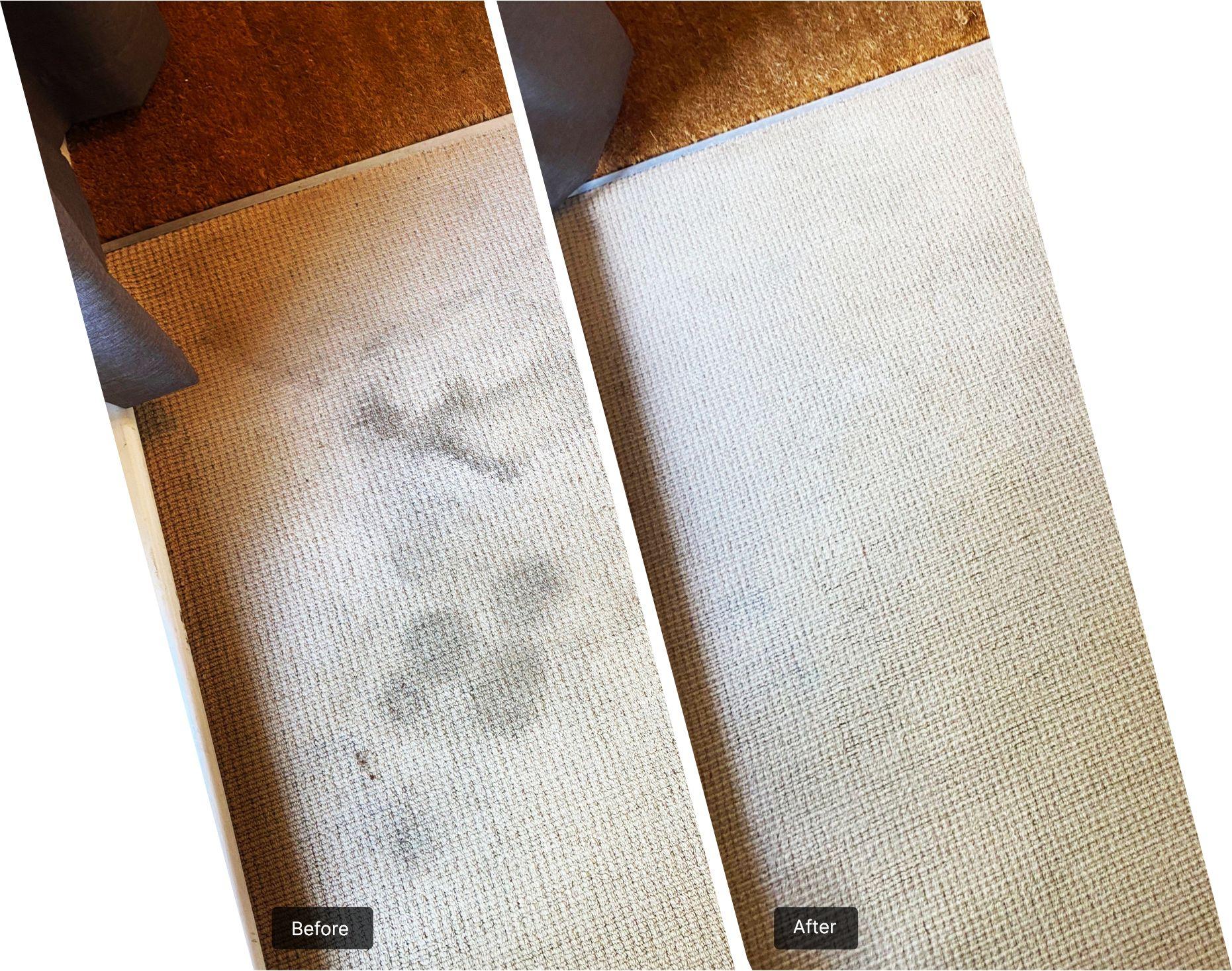
The carpet in a recently built OX11 house is rarely the same kind of product as the one it replaced in an older property. Developer specifications favour solution-dyed polypropylene over a thin foam or crumb underlay, chosen for cost, stain resistance and consistency across hundreds of plots. It is a perfectly sound floorcovering, but it behaves so differently from wool that treating the two the same way produces poor results on both.
A fibre that repels water and welcomes oil
Polypropylene is hydrophobic and oleophilic. Water-based spills sit on the surface and can often be blotted away entirely, while anything oily, from cooking grease to the plasticiser in shoe soles, bonds to the fibre and will not shift with a standard alkaline pre-spray. The correct approach is a solvent-containing pre-treatment on the affected areas, dwell time, mechanical agitation, and only then extraction. The broader fibre guidance is gathered on our carpet and rug cleaning team.
Dust from the first year in a new house
Newly built properties shed for months. Screed, plasterboard and jointing compound leave a superfine residue in the pile, timber and blockwork continue to dry out, and every door closing pushes the material back into the air. A new carpet can therefore look grubby within a season while barely being walked on. Repeated dry extraction is the answer, and the finishing sequence after any construction stage is described under trusted post-renovation cleaning in Didcot.
Flat pile that looks worn before its time
Short, dense loop and twist piles in developer specification crush readily and have almost no recovery, because the fibre has little natural crimp. What reads as wear along a landing is frequently compression plus embedded soil rather than damage, and it responds to damp heat and pile grooming more than to further scrubbing. Distinguishing the two before cleaning avoids a wasted appointment, a judgement made equally often on older stock in Wallingford carpet cleaning services.
Gardens that are still mostly mud
On an estate where turf is young and landscaping unfinished, a back door is an open invitation. Subsoil brought up during construction is heavier and more clay-rich than established topsoil, and it stains more stubbornly. A hard-wearing barrier mat inside and out, long enough for several footsteps rather than one, removes a surprising proportion of it. Households often arrange that alongside broader help such as experienced home cleaning in Wantage.
Stain protection and what the guarantee expects
Many builder-supplied carpets arrive with a factory-applied protector that wears off first in exactly the places that need it. Reapplication after cleaning is a separate stage using a fluorochemical treatment brushed into a damp pile and left to cure, and it is not a substitute for prompt blotting. Manufacturers frequently require evidence of periodic professional cleaning for a warranty to stand.
Underfloor heating changes the drying, not the method
A growing share of new houses have warm water pipework in the ground floor screed, and that affects carpet in two ways. Total tog matters, because an underlay chosen for an older property can trap the heat and leave a room cool while the screed runs hotter than intended. It also alters drying after a clean: warmth arrives from below rather than from the air, which speeds evaporation out of the backing but does nothing about humidity in the room unless a window is open or air is moving. The sensible arrangement is heating at a normal setting, not turned up, with ventilation and an air mover doing the rest.
What a first professional clean covers
A first visit to a new-build starts with a fibre check and a burn test where the specification is unknown, then dry soil removal, targeted solvent pre-treatment, extraction at moderate moisture and rapid drying, because thin underlay over a screed does not tolerate saturation. Pricing is by room. Where a tenancy is involved, the floors are finished last in the sequence run through fully insured tenancy end cleaning in Didcot.