Grounds maintenance and private gardening look similar from the pavement and are quite different disciplines once the work starts. Basingstoke has a large stock of blocks of flats, estate housing and shared open space dating from its rapid postwar expansion, and the ground around those buildings is managed under a schedule agreed with a freeholder or managing agent rather than at the request of whoever lives closest to it.
What a schedule of works actually specifies
A private client asks for the garden to look nice. A communal contract sets out frequency, scope and standard: how often grass is cut and to what height, how many shrub bed maintenance visits happen across the year, whether leaf clearance is included, whether weed treatment on hard surfaces is in or out. Ambiguity in that document is where disputes come from later, and the most common gap is the boundary between grounds work and building fabric - who deals with the moss on the bin store roof, or the self-seeded buddleia growing out of a wall.
Safety items that sit inside the grass cutting
On shared land the work carries obligations a private garden does not. Sight lines at the exit of a car park have to stay clear. Path edges have to be defined so nobody steps off one in the dark. Low branches over a footpath need lifting to head height. Steps and ramps cannot be left slippery under leaf fall. These are the items that turn up in a complaint or an insurance query, and they belong in the specification rather than being left to whoever turns up with the mower.
Shrub beds planted for another decade
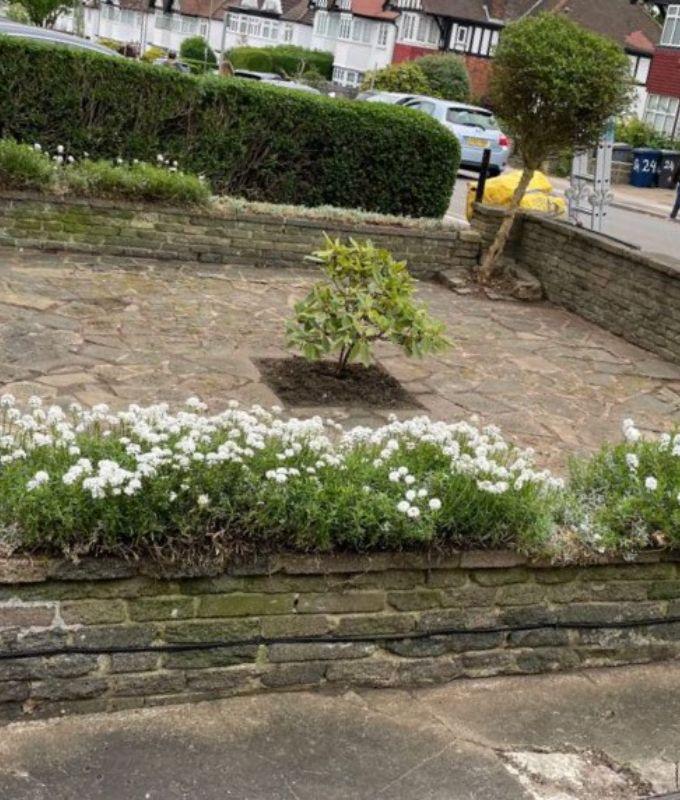
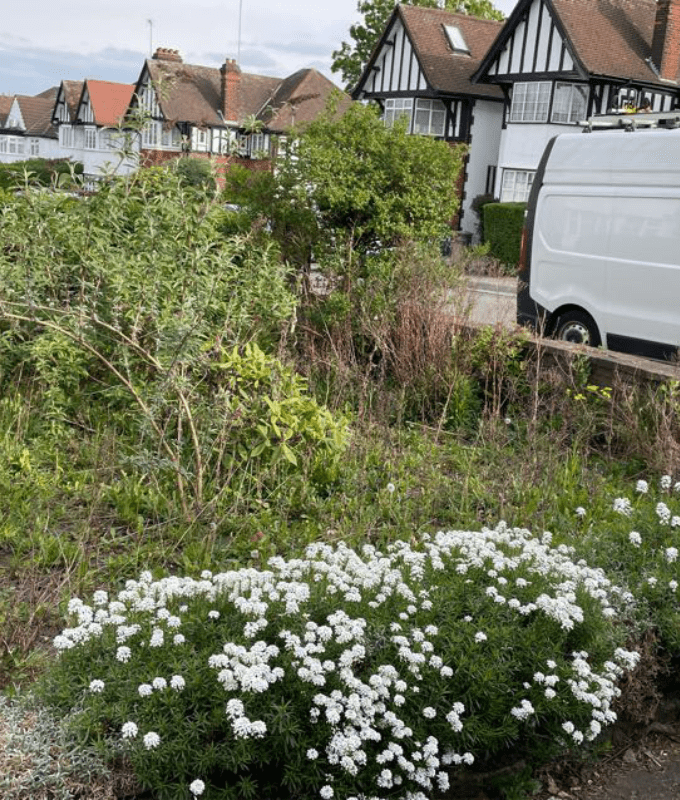
A great deal of RG21 communal planting went in as low-cost mass shrubbery and has never been revised. Forty years on it is usually a block of overgrown laurel, cotoneaster and dwarf conifers, bare at the base, holding litter and blocking windows on the ground floor. Renovating that is a staged job - hard reduction of what regenerates, removal of what does not, then replanting with something that stays at the size it was chosen for. Where the answer is to change the bed itself, reshape levels or replace planting with a hard surface, that becomes construction and falls to landscaping services across Basingstoke.
Cutting grass that the public walks across
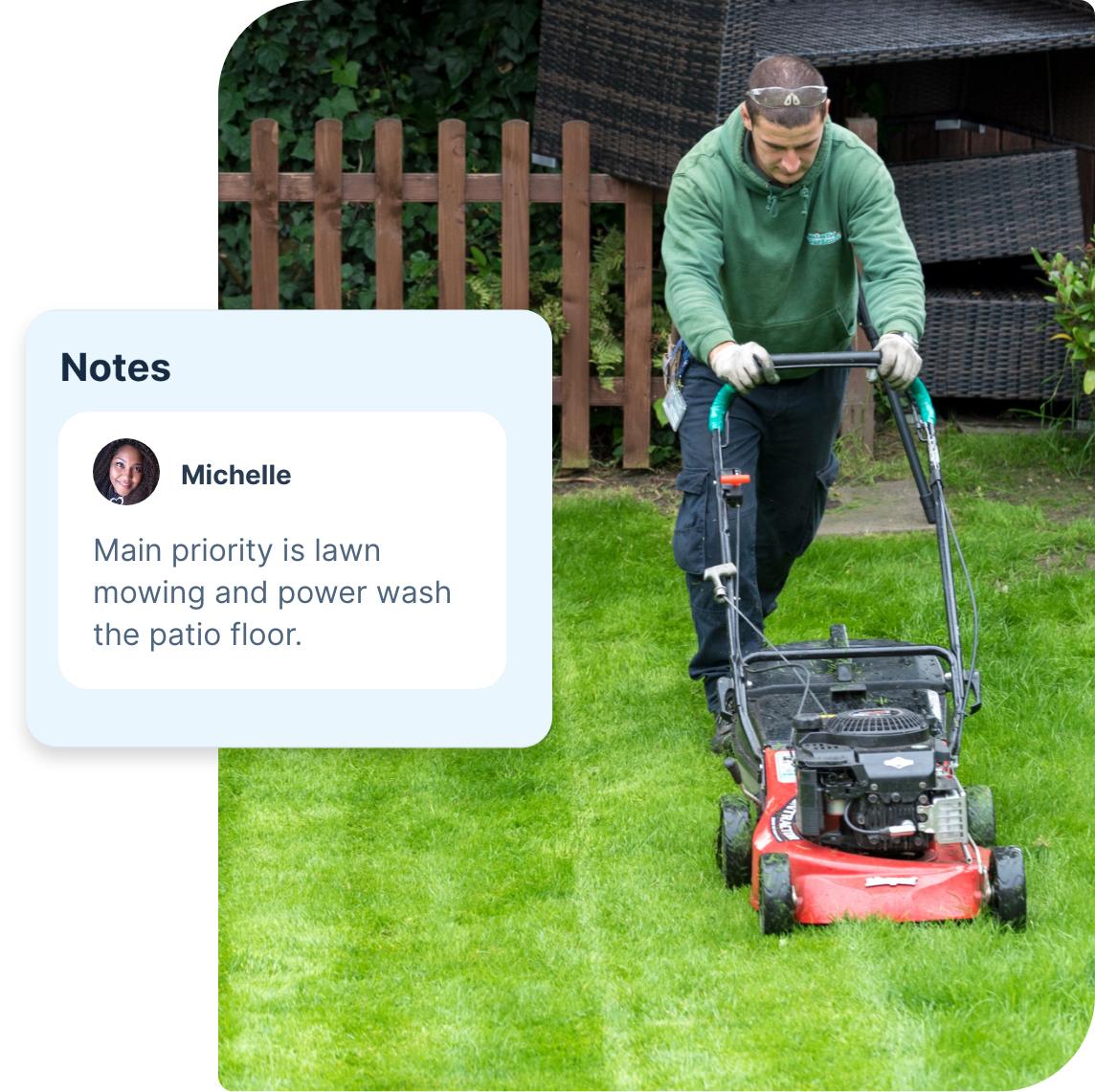
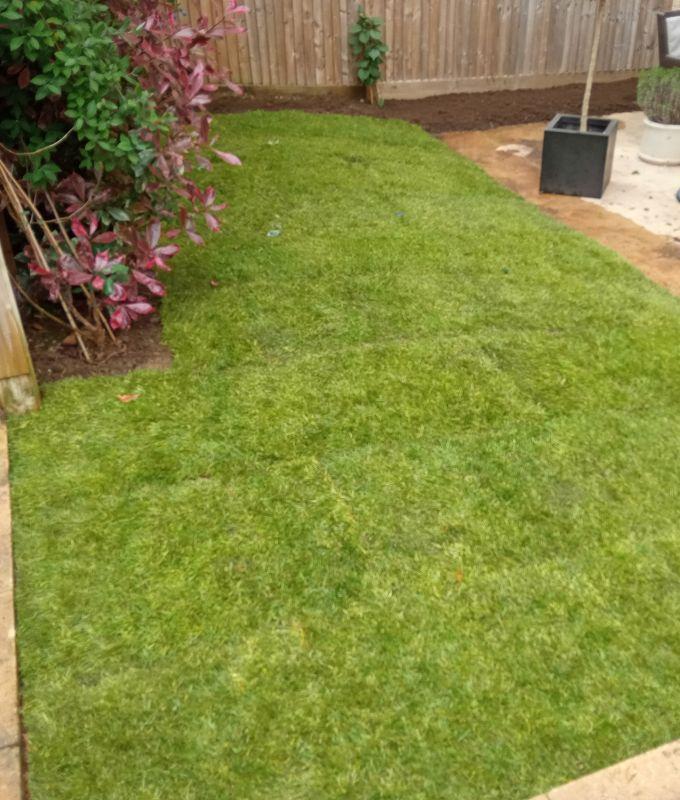
Communal grass is not a lawn and is not treated as one. It is cut at a height that survives foot traffic and dry weather, usually mulched rather than boxed off because the volumes make collection impractical, and it is walked before each cut. The pre-cut walk is not optional: broken glass, dog waste, cans, fly-tipped material and children's toys all become projectiles under a rotary blade. Anything found gets cleared before the machine starts, and that clearance is part of the job rather than an extra.
Reporting, and why agents ask for it
An agent managing several sites cannot see any of them weekly, so the value of a round is partly in what comes back from it: a note that a fence panel has gone, that a tree looks unstable, that a gully is blocked, that someone has started parking on the grass. Photographs dated against each visit settle most queries about whether work was done. It is worth agreeing at the outset who receives that record and how often. Internal communal areas run on their own separate specification, covered by domestic cleaning in Basingstoke, and glass and frames on the upper floors need access equipment of a different kind, handled through our Reading team.
Private gardens on the same round
Plenty of houses here are ordinary gardens with no agent involved, and those are quoted the usual way - on the time a visit takes, the area of grass, the number of obstacles and the material removed - rather than against a written specification. Arrangements further north on the Kennet gravels are described on gardening prices in Thatcham. For either kind of client the first visit runs longer than those that follow, and the national view of routine work sits on garden maintenance services UK. Useful things to confirm before a start date: gate codes, bin store access, where a vehicle can legitimately stand, and who to contact when something on site needs a decision.