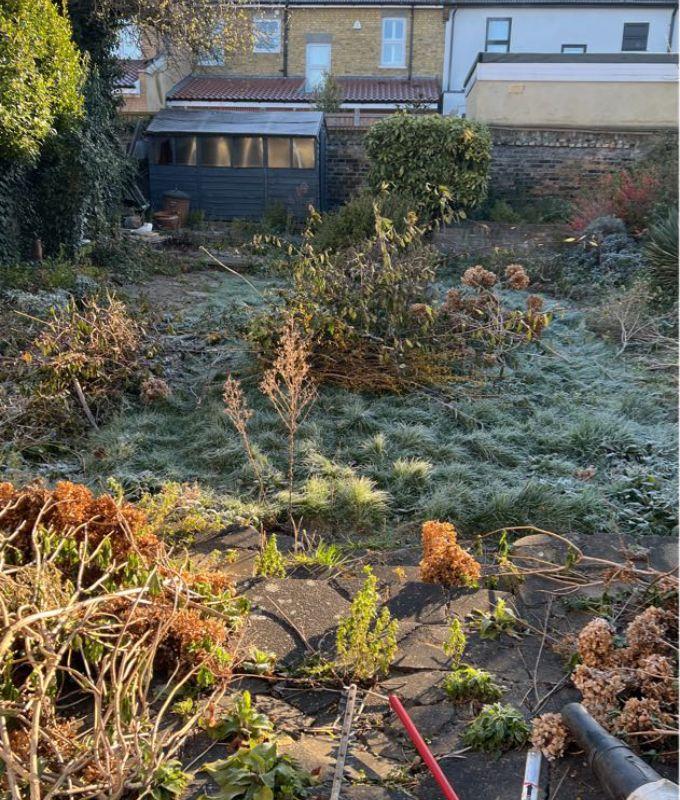
Almost every garden has one stretch of the year it cannot get through. For some it is February, when the structure turns out to be three bare shrubs and a lawn; for others it is late August, once the early perennials have gone over and nothing has been planted to follow them. Identifying that gap is a more useful exercise than adding another rose. A garden in GU51 that holds interest across twelve months has usually been planned around the empty weeks rather than around the good ones.
Auditing the year before buying anything
The method is unglamorous: walk the garden once a month for a year and photograph it from the same two positions. The pictures show, without argument, when the space is working and when it is not. Most people discover their garden peaks for six weeks in June and does very little afterwards. That single observation shapes every planting decision that follows, and it costs nothing but attention. Notes on where the sun reaches in each month are worth taking at the same time.
Winter needs structure rather than flowers
The months with nothing in bloom are carried by shape and surface, not colour. Clipped evergreens, a hedge, the coloured stems of dogwood and willow, the peeling bark on a birch, seed heads left standing on grasses and sedums, and the few genuinely winter-flowering plants such as sarcococca, mahonia and hellebore between them do the work. Resisting the autumn urge to cut everything down to bare earth is half of it. What is left standing also shelters insects through the cold months.
Bulbs, and the depth people get wrong
Bulbs are the cheapest way to fill the late winter and spring gap, and the commonest error is planting them too shallow. Three times the height of the bulb is the working rule, deeper still on the light, free-draining ground found here and across professional garden clearance in Sandhurst. Daffodils go in from September, tulips wait until November when the soil has cooled, which reduces the fungal problems that shorten their life. In containers they can be layered at two or three depths so one pot flowers over two months rather than a fortnight.
The summer changeover and feeding that follows
Where containers and bedding carry the summer display, they are cleared and replanted twice a year rather than topped up. Spring bedding comes out in late May as the last frost risk passes, and summer planting goes in with fresh compost and a slow-release feed. Liquid feeding starts six weeks later, once that reserve is exhausted, and continues weekly. A pot fed properly flowers into October; one planted and forgotten stops in July regardless of how well it was planted.
Deadheading, and what it is actually for
Removing spent flowers stops a plant setting seed, which is the signal that ends its flowering for the year. Roses, dahlias, cosmos, sweet peas and most bedding will keep producing for months under regular deadheading and stop within weeks without it. Some plants are exempt: anything grown for hips, berries or seed heads is left alone from late summer. Little and often through the season is the pattern, and it is one of the reasons a fortnightly round is described the way it is under fully insured weeding and tidy-ups.
Autumn arrives in the gutters as well
The same deciduous planting that gives autumn colour fills the rainwater goods within a fortnight of dropping, and an overflowing gutter in November does more damage to a wall than anything in the garden. Clearing at height is separate work that what the service covers carries out. Bulb planting and potting in the same weeks brings compost indoors, which our nearby specialists lifts out of soft flooring afterwards.
What a planting booking involves
Planting schemes are quoted with plants and materials itemised by quantity, and the labour by the day, since the cost sits mostly in the stock. Beds need to be weed-free before anything goes in, which occasionally means a clearance first. Where levels, edging or new beds have to be built rather than planted, Fleet landscaping specialists does that stage before any stock is ordered.