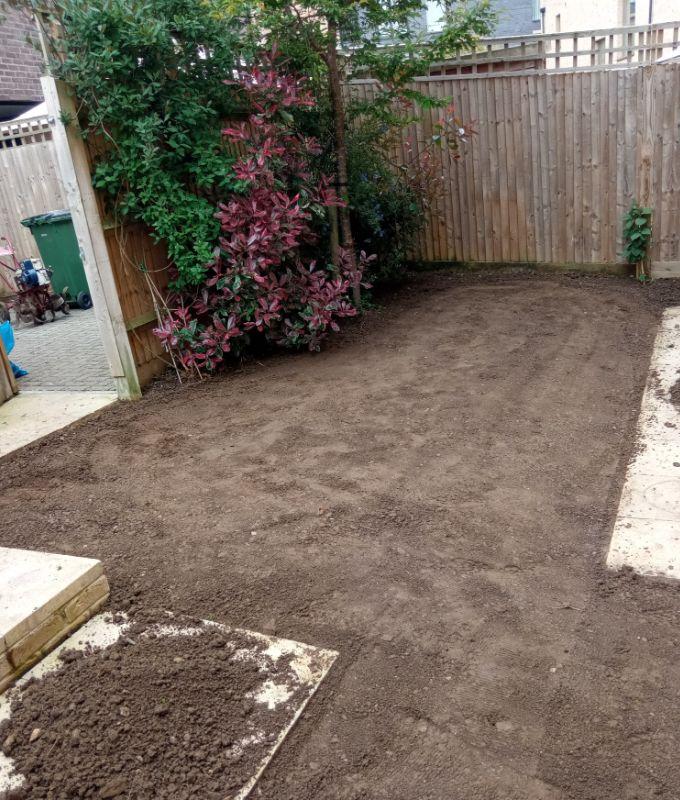
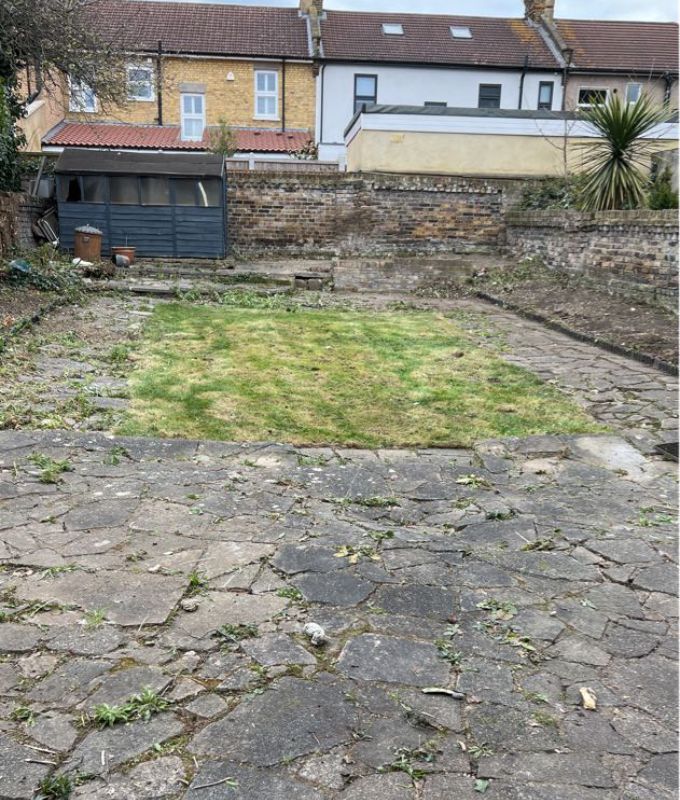
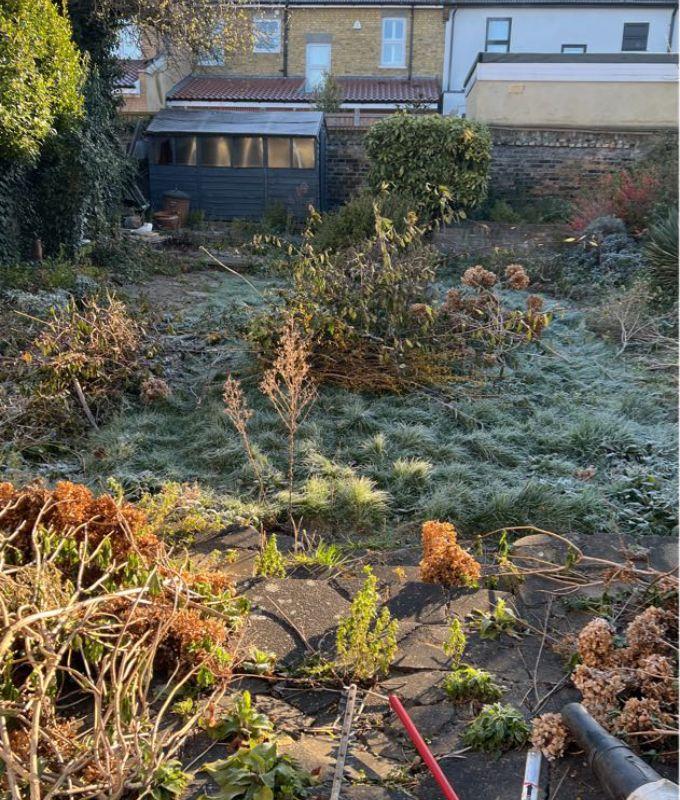
The turf on a new estate garden is often the smartest thing about it and also the shallowest. Lift a corner during the first year and what lies underneath is frequently a hundred millimetres of imported topsoil spread over subsoil that has been driven on by plant for eighteen months, mixed with mortar droppings, plaster, brick fragments and the odd length of banding. Grass will root into that for a season or two on the strength of what came with it, and then stall. A great many young gardens around Farnborough are struggling with construction rather than with gardening.
Finding out what is under the surface
Three or four holes dug to half a metre in different parts of the plot answer most questions in an afternoon. What matters is the depth of usable soil, whether there is a hard, smeared pan where machinery compressed the ground, and how fast a hole full of water empties. A pan is the usual finding. It stops roots and water alike, so the lawn floods in winter and bakes in summer, and no amount of feeding will change either symptom.
Breaking the pan before planting anything
The pan has to be physically broken, by fork, by subsoiler or by digging a border out and back in. Organic matter is then worked into the profile rather than laid on top, because a planting hole filled with compost in unimproved ground becomes a sump that drowns whatever is in it. Getting this right once costs a season and saves replacing plants for a decade. Where levels, retaining or drainage runs have to be built rather than dug, landscaping cover across Farnborough takes that on.
Establishing new turf so that it survives its first August
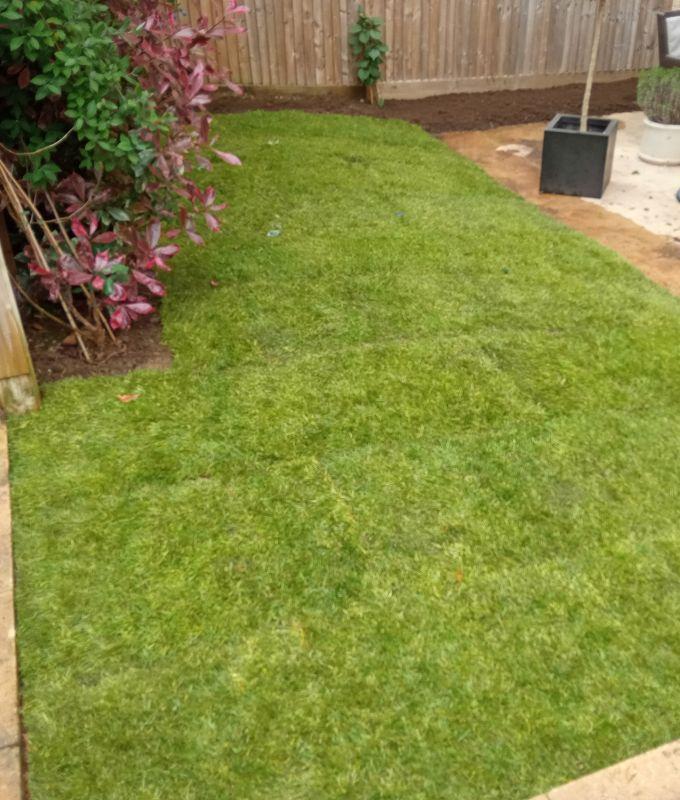
Turf is laid on a firmed, raked, lightly fertilised bed, joints staggered like brickwork, each roll butted tight and never stretched. Then it is watered heavily and repeatedly for the first three weeks, which is the part most often skipped. New turf needs enough water to soak through the roll and into the soil beneath, encouraging roots to cross the join. The first cut waits until the turf resists a gentle tug, and it takes only the tips off, with the mower set high.
Thin borders and the fences behind them
Estate plots tend to come with a three hundred millimetre border against a close-boarded fence, which is not a growing space so much as a gesture. Widening it to half a metre and improving the soil transforms what can be planted, and climbers on wires do more for the look of a boundary than shrubs squeezed in front of it. Nothing that will need a ladder in five years belongs against a fence on a plot this size. Gardens in gardening for rented homes in Ash face the same proportions on older estates.
Newly built ground and what colonises it
Ground disturbed by construction attracts opportunists. Ants nest readily in the loose sand under new slabs, wasps find voids in fence posts and roof edges, and where a development adjoins rough ground, rabbits will graze a young lawn and strip new shrubs at the base. Guards on young stems handle the last of those; anything nesting in the structure is a matter for trusted mice and rat control in Farnborough.
Builders leave more than a garden behind
Mortar splash, silicone smears and plaster spots outlast the scaffold, and glass is the usual casualty. That is separate trade work, and weekend window cleaning in Guildford deals with it a short way east. In the garden, the equivalent is the layer of fine dust and cement residue on paving and fence panels, which is washed rather than swept and is best tackled before new planting goes in.
Getting a young garden into a routine
Establishment work is quoted as a project, with soil improvement, turf and planting each measured by area or volume, while the upkeep that follows is charged by the visit. A first-year garden needs more attention than a settled one, mostly in watering and in keeping weeds out of ground that has no plant cover yet. Once it closes up, the frequency drops. The progression from establishment to routine care is the arc that trusted hedge trimming describes.