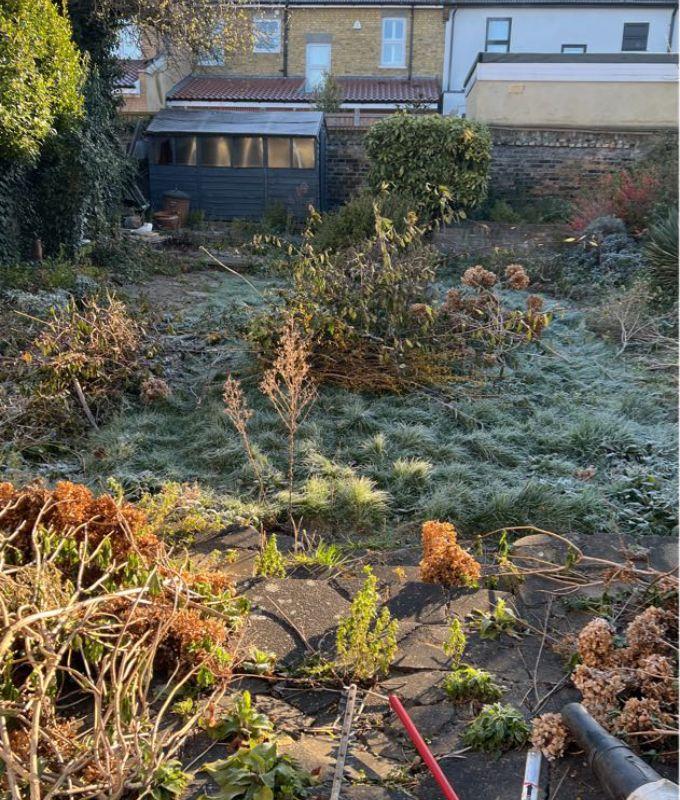
By the middle of April the question arrives in the same form every year. Half a border has come away, and the other half has not, and nobody can tell whether the bare things in it are late or finished. Judging that correctly is worth more than any amount of tidying, because almost every mistake made in a Hampshire garden in spring involves cutting something down that would have recovered, or leaving something standing that has been dead since January.
The test that settles most arguments
A thumbnail or the back of a knife drawn along a stem tells the truth in a second. Bright green or pale cream tissue immediately beneath the bark means live wood. Brown, dry and papery means dead, and the useful part of the exercise is working downward, stem by stem, until the green starts. That point is where a cut is made, just above a bud pointing outward. Roots are harder to read, so a plant with dead top growth and firm, pale, resilient roots gets time rather than a decision.
What cold actually does to a plant
Frost damage is not one injury. Water freezing inside cells ruptures them, which is why soft growth blackens overnight. Bark splits on young trunks when a frozen surface thaws too fast in low winter sun. Evergreens go brown in a dry east wind because the leaves lose water while the frozen soil offers none to replace it, an injury with no frost on it at all. Roots in a container suffer worst of all, because the rootball has none of the buffering that surrounding ground provides.
Brown does not always mean gone
Bay, phormium, hebe, pittosporum and many conifers come through a hard spell looking scorched and recover from wood that still holds buds. Bronzing on foliage is usually a pigment response to cold rather than tissue death. The reliable approach is to do nothing to an evergreen until new growth shows where the life is, then to cut back to it, which means late May in most years rather than March.
Why early tidying makes the damage worse
Pruning tells a plant to grow. A shrub cut hard in the first warm week of March responds with soft shoots that the next radiation frost takes off, and the second loss is more serious than the first, because it comes from reserves already spent. In the valleys around Alton cold air drains downhill and settles, so a garden at the bottom of a slope holds frost weeks after one on the shoulder above has finished with it. Damaged growth also shelters what is beneath it, which is another argument for patience. Working a border in March, when the ground is still sodden, compacts it and carries a good deal of it indoors on boots, and the interior half of that is a job for carpet cleaning services in Alton.
The ones that die from the base
Winter losses in pots are rarely about air temperature. A container that stood in a saucer of rain through a wet January drowned before it froze, and the two together finish a plant that either alone would not. The tell is a stem that is loose in the compost and a rootball that smells sour. Anything that went through winter in a porch or conservatory carries compost, fallen leaves and the occasional insect back out with it in May, and putting those rooms straight afterwards is covered by the local team.
Replacing, and the ground you replace into
Where a plant has genuinely gone, the gap is worth a moment's thought before it is filled. A repeated failure in the same spot is a message about drainage, exposure or a frost hollow rather than bad luck, and the replacement should either suit those conditions or the conditions should be changed. Split paving, lifted steps and a cracked wall after a hard freeze are structural rather than horticultural, and work of that sort is handled by the team covering Woking.
What a spring assessment covers
A visit of this kind is a walk round with secateurs rather than a full day of cutting. Every questionable plant is scratched and labelled in the gardener's notes as live, doubtful or dead; the doubtful ones are left and revisited on the following visit, and only the confirmed losses come out. Feeding and mulching follow once the ground has warmed, never before. Assessments are quoted by duration because the time depends on the number of plants rather than the size of the plot; similar work on the chalk to the south is covered by trusted gardening services in Petersfield, and how visits are scheduled through the season is set out on our garden maintenance team.