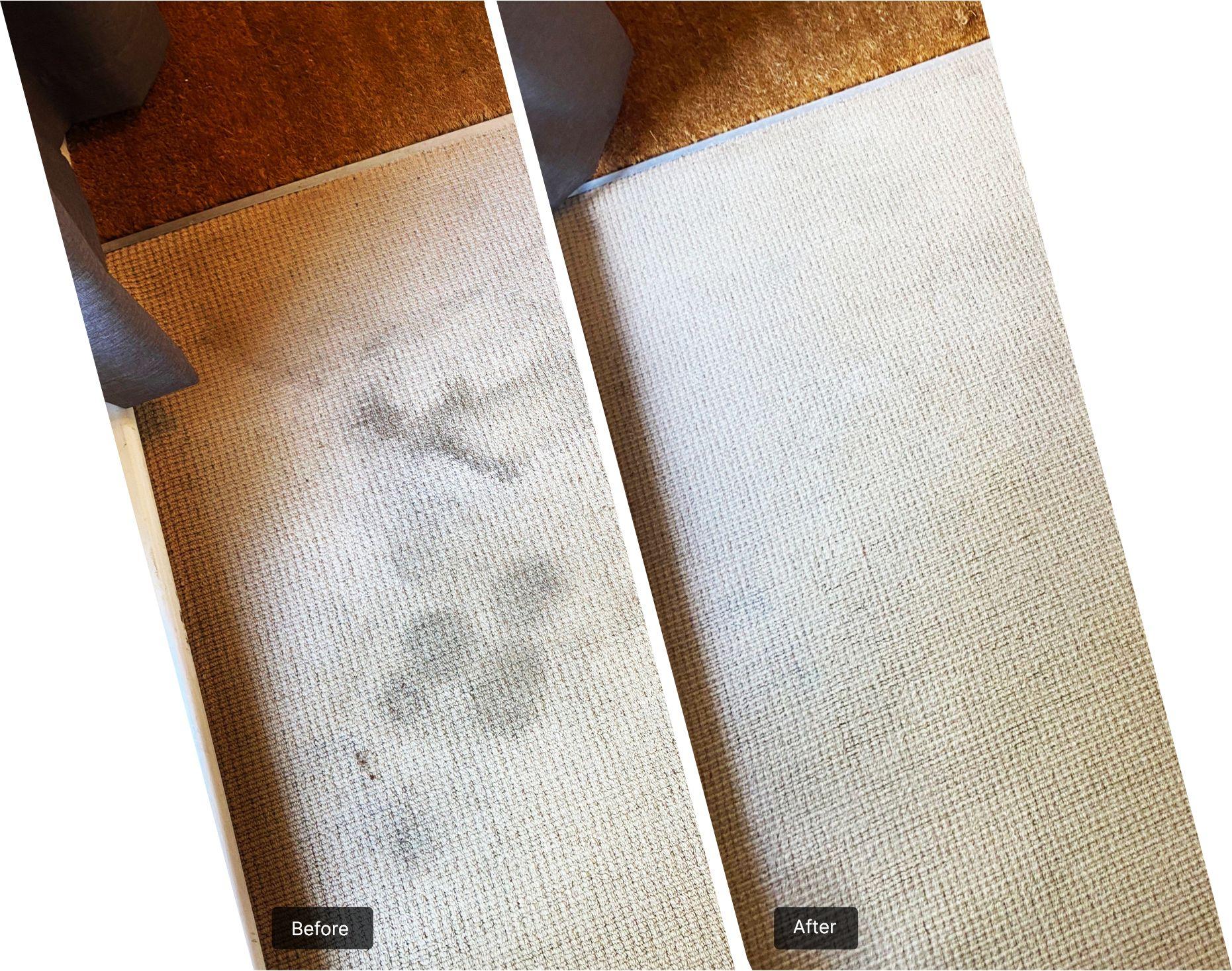
A dog that has had one accident on a landing carpet can make an entire first floor smell for years, and the reason is chemistry rather than hygiene. Urine dries into crystalline salts that sit dormant until humidity rises, at which point they re-dissolve and release ammonia again. Wimbledon has a high proportion of family houses with gardens and a large dog population, and this is the single most common reason a carpet here is cleaned.
What actually happens beneath the surface
Very little of the liquid stays in the pile. Most passes straight through the backing into the underlay, spreads outward, and reaches the floorboards or the screed beneath, so the visible mark is a fraction of the contaminated area. Cleaning the pile alone treats the smallest part of the problem and is why the smell returns on the first warm damp day. A small ultraviolet lamp in a darkened room shows the true extent, and the outline is usually a surprise.
Uric salts, enzymes and why timing matters
The fresh stage responds to water and an absorbent towel. Once the salts have crystallised, the treatment needs an enzyme or an oxidising product that breaks down the uric compounds rather than simply rinsing around them, and enzymes need warmth, moisture and time to act — a product applied and extracted five minutes later has done almost nothing. Sub-surface injection puts the treatment where the contamination actually sits, and the underlay is sometimes beyond saving.
Hair, dander and the vacuum that cannot cope
Double-coated breeds shed fibre that twists around carpet tufts and resists suction entirely. A rubber brush or a pumice block drawn across the pile gathers it into rolls that can then be picked up, and doing that before any wet work prevents hair being matted into the carpet by the wand. Filters loaded with dander lose efficiency quickly, which is why household machines seem to stop working in a pet home.
Gardens, mud and the back-door route
Paws bring in more water than feet do, and a wet dog crossing a hall distributes it along a predictable line. A towel routine at the door and a washable runner on the main route between the garden door and the sofa remove most of the annual soil load before it reaches the good carpet. The routine matters more than the equipment.
When replacing beats cleaning
There is a point at which restoration stops being sensible, and an honest assessment says so. If contamination has soaked through to boards across a wide area, if the underlay has broken down, or if the carpet is already at the end of its wear life along every lane, then treatment buys a limited improvement for a limited time. Lifting the carpet, treating and sealing the sub-floor and starting again gives a better result. The judgement is made from a lifted corner and a moisture reading rather than from the surface appearance alone.
Letting a property where a pet has lived
Odour is one of the most common triggers for a deposit dispute, and an incoming inventory clerk will note it plainly. Treatment needs to happen well before a check-out rather than on the morning of it, since enzyme work and full drying take time. Where a tenancy is ending, the floors form part of the sequence used within the end of tenancy cleaning team in Putney.
What to have ready and how it is priced
Affected areas are quoted after inspection rather than by room count, because the scope depends on how far the contamination has spread and whether the underlay is involved. Pets are best out of the house for the visit and for the drying period. Fabric furniture that has been slept on carries the same salts and is covered on our upholstery cleaning in Wimbledon, wider household work sits with cleaning services across Wimbledon, nearby districts are on the service in full, and the underlying methods are described on the carpet and rug cleaning service.