Under a stand of mature Scots pine the ground is dry, acid and covered by a mat of needles that never quite rots down. Plenty of gardens across GU21 sit on exactly that: sandy heathland soil, a low pH, and one or two large conifers left over from whatever was there before the houses. Nothing is wrong with such a garden, but it will only grow a particular list of plants well, and the perennial mistake is trying to impose a conventional mixed border on ground that is fundamentally woodland edge.
Acid sand decides the planting list
Rhododendron, azalea, camellia, pieris, skimmia, blueberry and the heathers all want acid conditions and thrive here without any intervention. Anything that expects lime struggles, and the tell is yellowing between the leaf veins while the veins themselves stay green. Rather than dosing the soil to change its chemistry, which is expensive and temporary, the practical answer is to plant what suits the ground and reserve a container of ericaceous compost for the one or two exceptions somebody insists on having. Gardens a few miles west around our Farnham team sit on quite different ground and take a different list.
Pruning ericaceous shrubs without losing a year of flower
Rhododendrons and camellias set next season's buds within weeks of finishing, so pruning is done immediately after flowering and not in autumn or winter. Deadheading a rhododendron by snapping out the spent truss just above the emerging shoots, rather than cutting into them, makes a visible difference the following spring. Camellia buds drop if the plant is dry in late summer, which is a watering problem rather than a pruning one. Old, leggy rhododendrons will break from bare wood, so renovation is possible where it is done in stages.
Needle litter, leaf mould and what to do with both
Pine needles are slow to break down and slightly acidifying, which makes them poor compost material and excellent mulch for the very plants that grow beneath them. Raked off paths and lawns, they are better stacked separately and returned to the shrub beds than sent away. Broadleaf litter from the same gardens rots down far quicker into a crumbly leaf mould that is worth more than anything bought in. Keeping them apart takes no extra effort and produces two useful materials instead of one mixed pile.
Dry shade and root competition
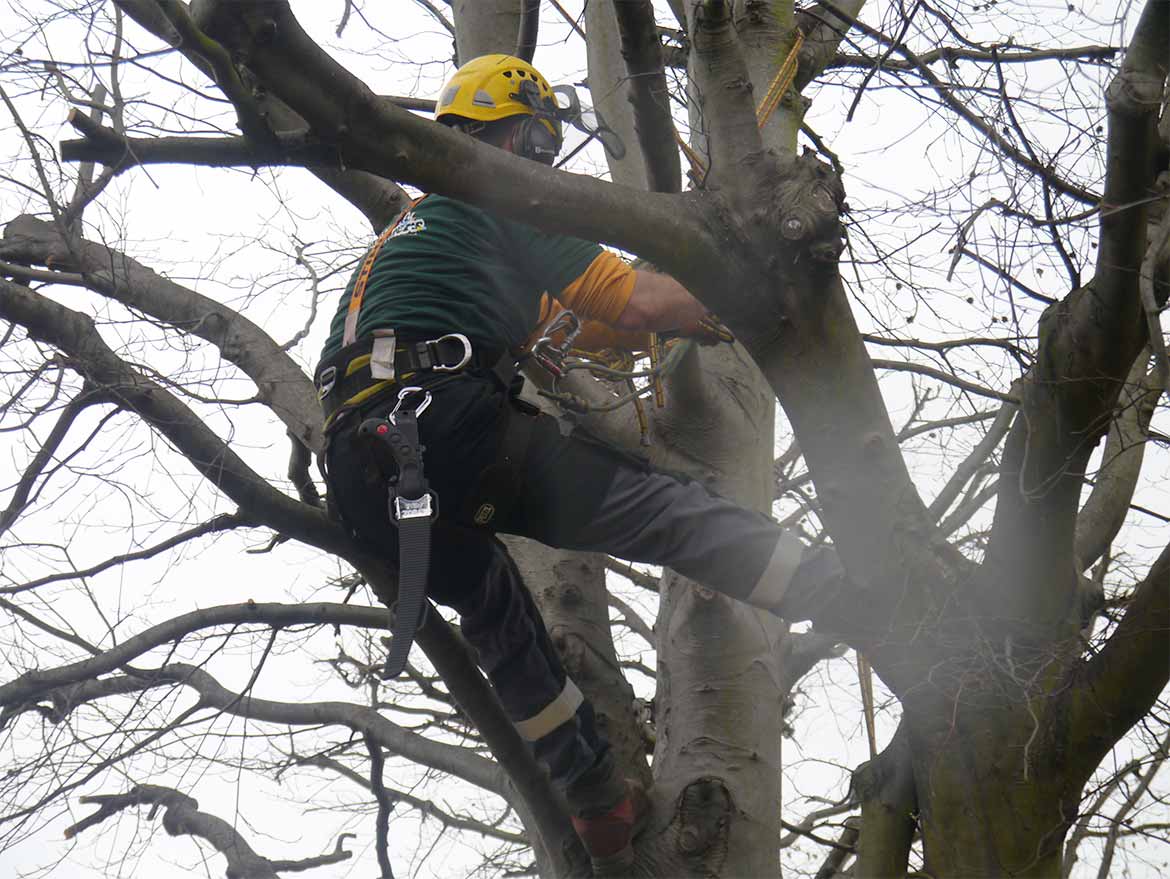
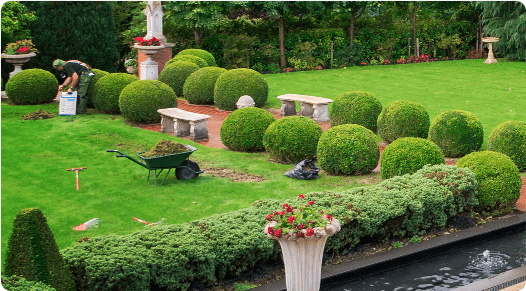
Large conifers take an enormous volume of water out of the top of the soil profile and cast dense shade year round, so the ground beneath them defeats most planting. Selective crown lifting, taking the lowest branches off to raise the canopy, transforms the light at ground level without changing the tree's outline from a distance. Beneath that, a mulch and a limited palette of tolerant plants will establish if they are watered through two summers. Where levels or new beds need building, our landscaping in Woking handles the construction.
What ends up in the gutters
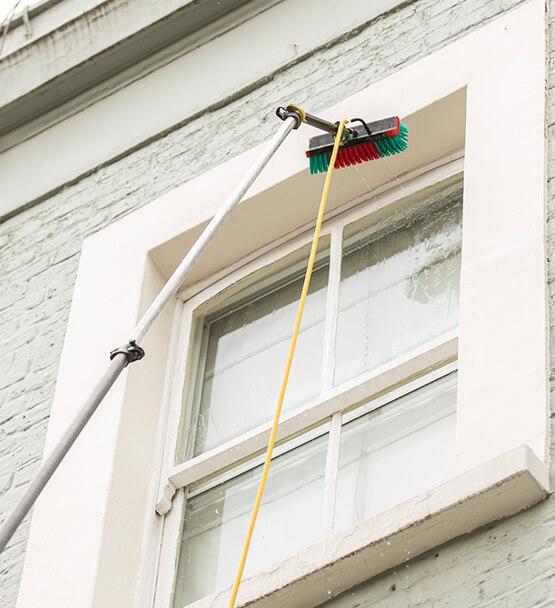
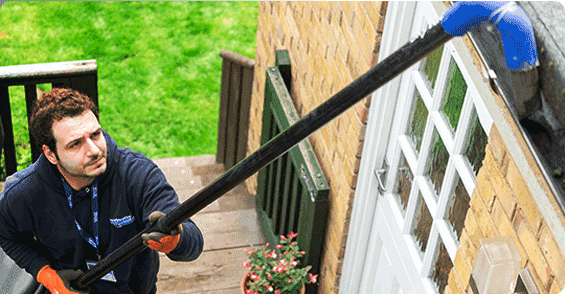
Pine needles are the single worst material for rainwater goods. They thread themselves into a gutter, mat down, hold moisture and block an outlet completely, and unlike leaves they arrive steadily all year rather than in one autumn flush. Crown lifting and reducing limbs that overhang a roof cuts the supply. Clearing the gutter itself is a different job at a different height, and gutter cleaning for flats in Guildford deals with that.
Gardens reinstated after building work
Extensions are common on these plots, and the garden pays for them. Soil gets compacted by traffic, spoil is spread rather than removed, and cement washings raise the pH of whatever they land on, which on acid-loving planting shows up quickly. Reinstatement means removing contaminated material rather than digging it in. The inside of the house has its own version of the same aftermath, and local after builders cleaning services in Woking covers that part of it.
What regular care involves here
Maintenance visits are charged by time and crew rather than by plot size, and a woodland-edge garden tends to want fewer, longer visits concentrated in spring and autumn rather than an even fortnightly round. Watering newly planted shrubs through their first two summers is the commitment that decides whether the planting succeeds. Access for a chipper, somewhere to stack needle litter and a working tap are the practical requirements. The seasonal pattern behind all of it is set out in same-day garden maintenance.