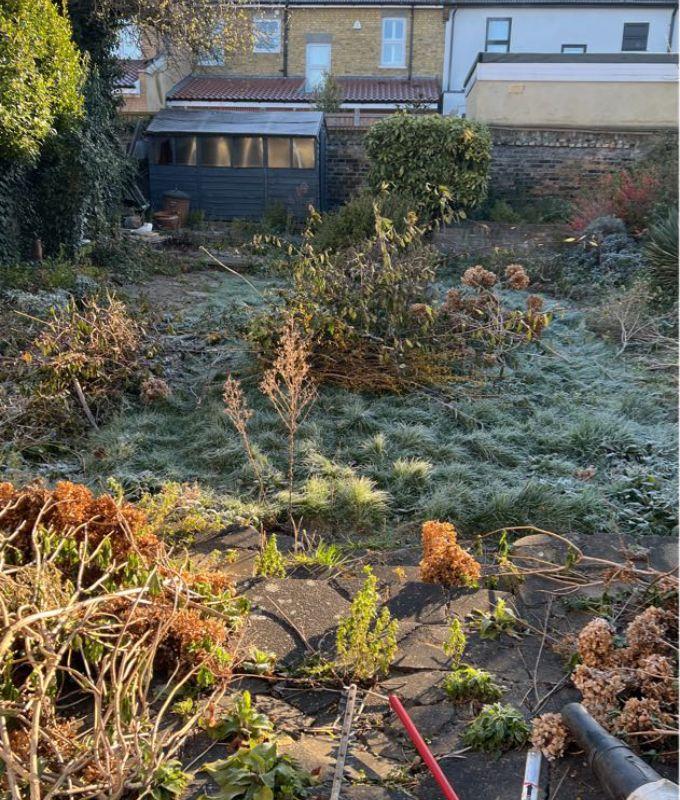
Bindweed, ground elder and couch grass are not weeded in the ordinary sense of the word. Each of them stores everything it needs in an underground system that survives the loss of all its top growth, and every fragment left behind in the soil is a new plant by the end of the season. Pulling the visible parts off a border in Ash is therefore a tidying exercise with no lasting effect whatsoever, and the reason so many gardens here appear to be losing ground to the same three species year after year.
What is actually underneath
Bindweed runs white, brittle, fleshy roots to well over a metre deep and snaps at the slightest tension. Ground elder spreads a shallow mat of rhizomes that weaves through the crowns of everything planted in the bed. Couch grass travels in straight lines and pushes its sharp rhizome tips clean through a potato or the centre of a perennial. Dandelion and dock hold a single deep taproot that regenerates from the shoulder. The strategy differs for each, and knowing which one is present decides how much digging is worth doing.
Clearing a bed properly rather than quickly
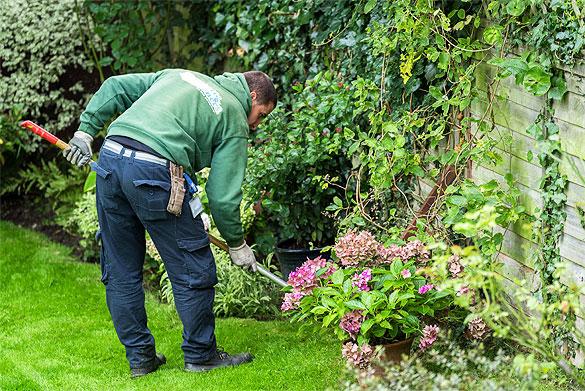
Where a border is badly infested, the honest method is to lift the ornamental plants, wash the soil off their roots so nothing travels with them, hold them in pots, and then work the empty bed systematically with a fork rather than a spade. A fork lifts rhizomes intact; a spade chops them into propagation material. The soil is gone through twice, a few weeks apart, so that anything missed has shown itself. It is slow work and it is the only version that holds.
Exclusion where digging is impossible
Around established shrubs and under hedges, digging out is not an option. Light exclusion works instead: cut everything to ground level, cover with thick cardboard or a heavy mulch of at least a hundred millimetres, and leave it in place for a full growing season. Starved of light, the reserves in the roots exhaust themselves. It requires patience and it must be unbroken, since a gap the size of a hand is enough for bindweed to find and rebuild from. The same method is used on the light soils covered by gardening specialists in Farnborough.
Edges, paths and where the reinfestation comes from
A cleared border adjoining an untouched hedge bottom, a neighbouring garden or a gravel path will be recolonised from the edge within two seasons. A physical barrier sunk vertically at the boundary, a properly bedded edging, or a maintained strip of bare ground makes the difference between a job done once and a job done annually. Gravel and path construction with the right membrane and depth underneath is a build rather than a maintenance task, and Farnborough landscaping service covers that side of it.
The seed bank nobody sees
Annual weeds are a different problem with a simpler answer. Groundsel, chickweed, bittercress and the rest set seed in a matter of weeks and leave thousands in the top few centimetres of soil. Hoeing on a dry day, shallowly, before any of them flower, breaks the cycle within two seasons. Deep cultivation does the opposite by lifting buried seed into the light. Mulch suppresses the lot. The rhythm of little and often here is exactly what flexible garden maintenance is designed around.
The mess a full border strip makes indoors
Lifting and sieving a bed generates a remarkable amount of soil on boots and on the route through to the front. Sheeting goes down over any internal carry, but on a wet day in a house with soft flooring the marks can still need dealing with afterwards, and the team covering Ash restores that properly. On a dry day with sheeting down and boots changed at the door, very little of it gets past the threshold in the first place.
How weed clearance is quoted
This work is priced after an inspection rather than by area, because the variable is which species is present and how deeply it is established. Two borders of identical size can differ by days. Cleared root material does not go on a domestic compost heap under any circumstances and leaves the site as green waste. Planting is held back until the ground has been gone through twice. Where a tenancy is ending, the garden is judged against the check-in record and the interior standard behind Ash end of tenancy cleaning specialists is assessed on its own terms.