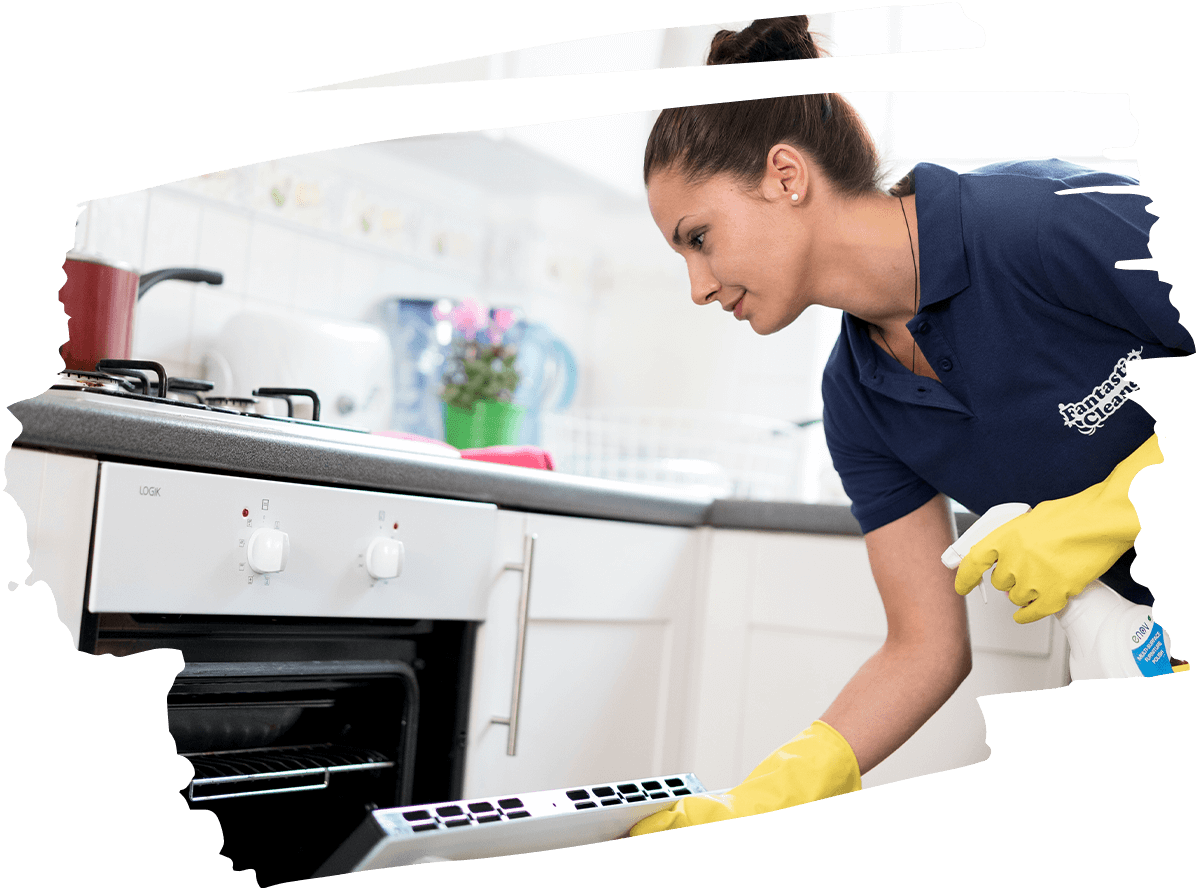
Inspections are decided at the edges. A clerk with a torch does not stand in the middle of a room and admire the floor; they run a finger along the top of a door, look up into a light fitting, crouch to the skirting behind a radiator and open the drawer under the oven. In the converted terraces and purpose-built flats around SW17 those are the surfaces a routine clean never reaches, and they are the ones that decide whether a property is signed off.
Horizontal surfaces above eye level
Dust settles wherever it can rest. The top edge of a door, the head of the frame above it, picture rails, coving, the top of a wardrobe, the upper face of a curtain pole and the flat of a cistern all collect it, and none are visible from standing height. They are done with a damp cloth folded over a flat hand rather than a duster, which moves dust rather than removing it, and they are done before floors so anything that falls is picked up afterwards.
Radiators, and the gap behind them
A panel radiator has fins behind the front face that trap a felt of dust and hair, and above it there is usually a grey plume on the wall where convected air has carried soil upwards. The fins take a long narrow brush and a vacuum crevice tool worked from the top down; the wall mark takes a light wipe rather than a scrub, since matt emulsion burnishes. Valves and pipe collars at floor level, and the strip of skirting behind, are part of the same task.
Switches, handles and the things people touch
The items in daily contact are the ones that look worst under a light. Switch plates carry finger marks around the rocker; socket faces gather dust in the earth slot; door handles, the leading edge of a door and the paint around a handle all darken. Everything electrical is cleaned with a cloth barely damp and never sprayed directly. Pendant shades and bathroom diffusers come down where they can, are washed and dried completely before they go back, and bulbs are checked while access is easy, since a blown lamp is an inventory item and cheap to put right.
Skirtings, thresholds and the line where floor meets wall
The junction between floor and wall collects everything a vacuum pushes towards it. Skirting tops hold dust, the moulding profile holds more, and the threshold strip between a hall and a room holds grit in its channel. Carpet edges against a skirting also hold a dark filtration line, caused by air being drawn through the pile, and that is a job for extraction rather than a cloth; Tooting carpet cleaning services is what actually shifts it.
The same attention outdoors
Outside, the equivalent of a door top is a window sill, a porch ledge and the tiled path where grit collects against the wall. Those surfaces respond to controlled water pressure rather than detail work, and the treatment used in pressure washing specialists in Mortlake is the practical answer for a frontage. A shared bin area behind a block is reset the same way through our nearby specialists.
Getting the rooms empty
None of the detail work is possible with boxes against the skirting or a wardrobe still in place, and the edges that matter most are precisely the ones furniture covers. A one-bedroom flat is cleared quickly through our man and van in Wimbledon, and a family house takes a crew and a day through our removals in Tooting. Whatever remains should be gathered into a single room so the rest of the property can be finished in one pass.
How the visit is quoted
Charges follow the size of the property and whether it is furnished, not the clock, which is exactly why edges get done: there is no incentive to stop early. Power and hot water need to be on, and light fittings accessible. Anything that turns out to be damage rather than soiling is recorded instead of worked at. The itemised list behind tenancy end cleaning names these surfaces individually, and the same sheet is used on local end of tenancy cleaning across Wimbledon.