When a landlord and a tenant disagree about cleaning at the end of a tenancy, the deposit scheme decides it on paper. No adjudicator visits the property. They read the check-in inventory, the check-out report, the photographs and whatever either side chooses to send, and they apply one test: has the property been returned in the same condition as at the start, allowing for fair wear and tear. Understanding that test is more useful to a tenant in SM1 than any amount of scrubbing.
The check-in report does the deciding
A check-out is only meaningful against a baseline. If the inventory at the start recorded the oven as professionally cleaned and the carpets as free of marks, that is the standard the property has to come back to. If it recorded the oven as lightly soiled, no adjudicator will award the cost of a full valet. Reading the original report before arranging anything is therefore the first sensible step, because it shows which rooms actually carry risk and which are already documented as imperfect. Schedules of condition run to photographs as well as text, and the photographs are what an adjudicator looks at first.
Wear and tear is not a licence
Fair wear and tear covers deterioration from ordinary use over time: a carpet thinning in a doorway, paint dulling, a hinge loosening. It does not cover soiling. Grease on the top of kitchen units, a limescaled shower, a fridge left with food in it and a bath with a ring around it are all removable, and removable means chargeable. The distinction is not about how bad something looks; it is about whether cleaning returns it to the recorded condition. Length of tenancy shifts where that line falls for decoration and flooring, but it never converts grease into wear.
Evidence beats argument
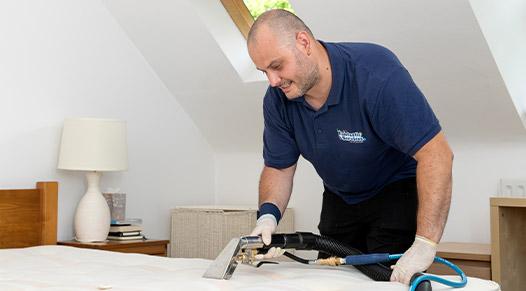
Photographs with a visible date, taken room by room on the final day, are worth more than several pages of explanation. A work sheet listing what was done, with the property address on it, answers the question an adjudicator actually asks, which is whether a clean happened and to what specification. Where carpets are involved a separate record matters even more, because extraction has a visible before and after and what the service covers is normally documented as its own line rather than bundled into a general clean.
Betterment and apportionment
Schemes will not allow a landlord to end up better off. A carpet already five years into a ten-year life is not replaced at a tenant's full cost; the award is apportioned. The same logic applies to redecoration after a long tenancy. It follows that the cheapest position for a tenant is almost always to clean thoroughly and dispute nothing, and the cheapest position for a landlord is to instruct work that is clearly itemised. Landlords holding several properties nearby tend to keep one standard across them, including on Wallington end of tenancy cleaning specialists and through arrangements such as a local pro near you between tenancies.
Timing, keys and the final walk-through
The clean must come after the property is empty and before the check-out appointment, with enough margin for carpets to dry. Handing keys back before the inspection removes any chance to put right a small omission, so it is worth keeping access until the report is agreed. Furniture and unwanted items need to be gone first, which is why a local professional is normally scheduled a day ahead rather than on the same morning.
What is actually being bought
A move-out clean is assessed by the size and furnishing of the property because it is a defined list of tasks rather than a block of time, and the list is what an adjudicator compares against. Utilities need to be live, the property empty, and any appliance forming part of the inventory accessible. The specification used is the one published with our national end of tenancy cleaning service, and asking for it in writing beforehand gives a tenant something concrete to point at if the deposit is later questioned.