Black spotting on bedroom walls appears between October and March and disappears from memory by June, which is why so many tenants in SW12 first think about it on the day they hand the keys back. Most of the stock here is solid-walled Victorian terrace converted into flats, with no cavity and no insulation in the original fabric. Warm damp air produced by ordinary living meets a cold external wall, condenses on it, and within a few weeks a colony is growing on the surface of the paint.
Condensation is not a leak
The distinction matters because it decides who pays. A leak wets a wall from outside or from a pipe and leaves a defined tide mark, usually worst at the bottom. Condensation settles evenly on the coldest surfaces - the corners of an external wall, behind a wardrobe pushed flat against it, inside a window reveal, along the top of a bathroom door - and produces speckled growth rather than a stain. Cleaning addresses the growth; only ventilation, heating and insulation address the cause.
Removing growth without spreading it
Dry brushing disturbs spores and sends them across the room, which is the one thing worth avoiding. The surface is dampened first, wiped with a fungicidal solution using disposable cloths changed frequently, given time to work rather than wiped straight off, and then dried. Bleach lightens the pigment and leaves the root structure in the paint film, so the marks return at the same spot. Where growth has gone through emulsion into the plaster, cleaning stops being the answer and specialist work such as mould removal services in St James's takes over.
The places it is always found
A move-out clean in a period conversion checks the same handful of locations every time: the outside corner of the coldest bedroom, behind and beneath any furniture standing against an external wall, the window reveal and the underside of the sill, the ceiling above a shower, the sealant around a bath, and the inside of a wardrobe on an outside wall. Textiles absorb the smell before anything is visible, so a musty wardrobe is a reliable early sign.
Water arriving from outside
Some of what looks like condensation is not. A gully blocked with leaves at the base of a downpipe, a soil stack discharging against brickwork, an overflowing gutter or a raised path bridging the damp course will all wet a wall persistently. Clearing and washing down the external surface is straightforward - pressure washing services in Raynes Park deals with exactly this kind of build-up - but the repair itself belongs to whoever maintains the building, and reporting it is the tenant's part.
Textiles, carpet and the smell that lingers
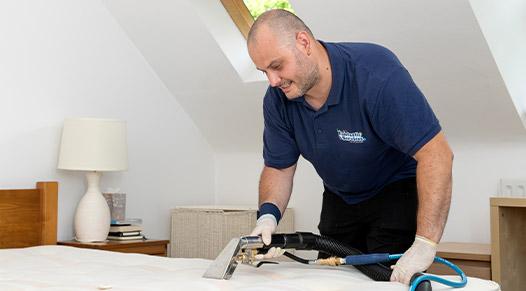
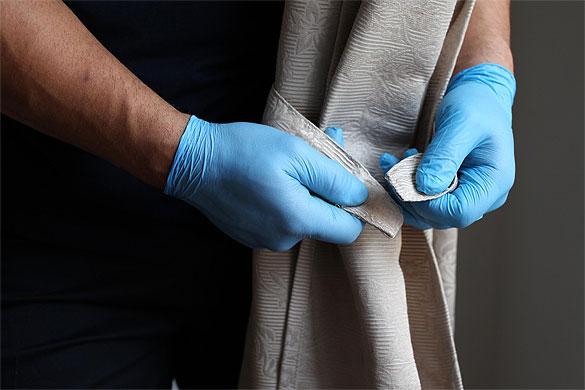
Once a flat has been damp, the smell sits in soft materials rather than on hard ones. Curtains, mattresses and carpet all hold it, and cleaning the walls without addressing them leaves a property that still reads as damp on a viewing. Extraction with a suitable treatment deals with carpet; that is the purpose of carpet stain removal in Balham, and it is worth doing after the wall work rather than before so nothing is re-contaminated.
Emptying rooms so walls can be reached
None of this is possible with furniture in place, and the worst affected wall is invariably the one behind the heaviest item in the flat. Rooms need to be cleared first, which for a one-bedroom conversion usually means trusted furniture collection in South West London rather than a full removal crew, while a family flat with a loft room is better handled through the removals team in Balham.
What the visit covers
Price follows the size and furnishing of the property rather than time on site, with severe growth flagged as a separate item because it needs different materials and protective equipment. Heating and power should be on, windows openable, and wardrobes emptied so their backs can be reached. Anything structural is recorded and passed on rather than painted over. The room-by-room standard behind our end of tenancy cleaning team is the same one used across the wider area on trusted move-out cleaning in South West London.