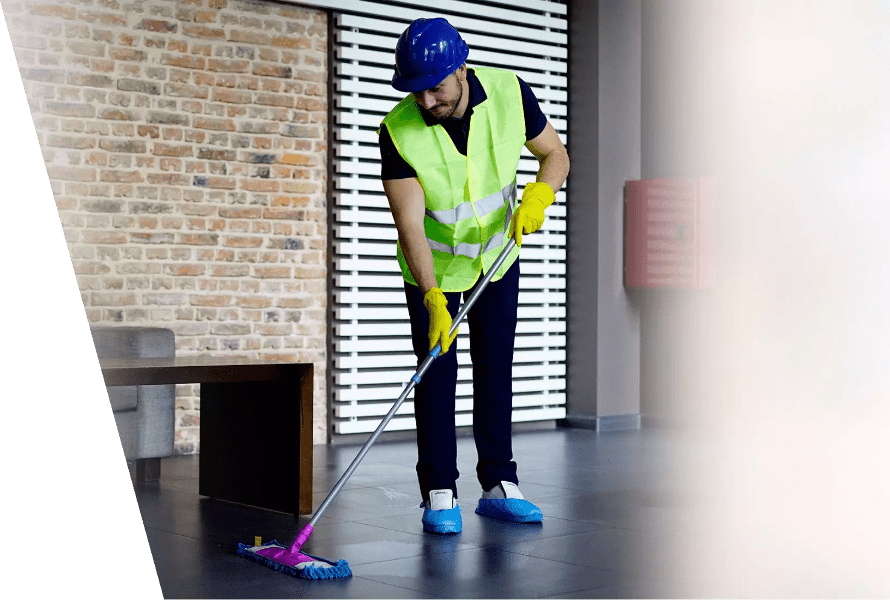
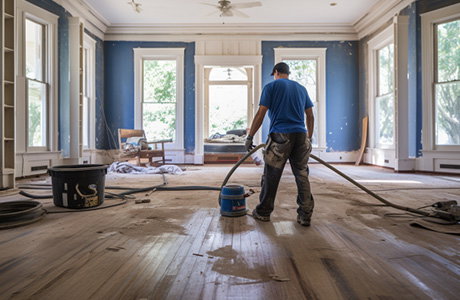
Not every property can be emptied while it is worked on. A fair share of jobs in Slough happen in houses that stay occupied, in shared houses where rooms are let individually, and in commercial units that need to trade again on Monday. That changes the problem completely: instead of one visit to an empty shell, the work has to be phased around people, and dust has to be controlled while the build is still running.
Cleaning in stages while the works continue
Where a household is living around a build, an interim clean at the end of each noisy phase keeps the rest of the property usable. It is not a full post-construction clean and should not be sold as one; it is containment, meaning the working boundary wiped down, the route through the house cleared, and the kitchen made usable again. The final clean still happens at the end and is still the larger job. What that final visit covers is set out on vetted after builders cleaning.
Shared houses and rooms let separately
In a house in multiple occupation, a refurbishment to one room affects everyone's kitchen, bathroom and hallway. Communal areas take the traffic and get the least attention from the trades. Locks and tenancy arrangements mean access is agreed in advance, room by room, and nothing is moved from a tenant's space without permission. Landlord repair and safety obligations in those shared areas do not pause because a builder is on site. Rooms let separately also mean separate rubbish, and a bin store filled with building packaging is the first thing an inspector notices. Comparable landlord work further north is covered by Aylesbury after builders cleaning team.
Units on the trading estates
Commercial fit-outs produce the same dust in much larger volumes and on hard, open floor plans. Suspended ceiling tiles hold sanding dust on their upper face, cable trays collect it, and a single pass with a mop across a large area only redistributes it. Scrubber-driers are used on resin and vinyl floors, high-level work is done from a platform before anything at floor level, and the sequence is planned so the handover inspection sees a dry floor. Roller shutters, goods doors and the loading apron outside belong to the same handover and are usually left until the internal floor has been buffed.
Glass in buildings that were never meant to be cleaned from a ladder
Shopfronts, stairwell glazing and first-floor windows above a pavement cannot be reached safely from inside. Cement splash and render slurry on those panes bond hard and need soaking rather than force. Reach-and-wash equipment is the practical answer for the routine work afterwards, which is where the window cleaning team in Slough takes over once the construction residue has been removed.
Turnaround pressure and what it actually costs
Compressed deadlines are normal here, and the honest position is that some things cannot be rushed. Sealant needs to cure, screed needs to dry, acidic treatments need dwell time, and a floor washed at five o'clock will be walked on wet. Where a date is genuinely fixed, the answer is more people rather than faster chemistry. Larger crews and split shifts are planned in advance, and the same capacity supports the towns covered by post-renovation cleaning in Ascot.
What is agreed before the first visit
Because these jobs vary so much, the scope is fixed in writing beforehand: which rooms, whether high level is included, whether windows are in or out, and who signs the work off. Access windows matter too, since tenanted rooms need notice and estate units often have contractor hours. Cost is worked out from the area covered and the state it is in rather than from a headline rate. Upholstery and communal floor coverings are usually the last thing dealt with, and that work is done by carpet cleaning specialists in Slough.