On a semi-detached pair the gutter is one continuous channel with a house on either side of the middle, and water pays no attention to the boundary. Cleaning one half while the other stays packed is close to pointless: the blockage simply overflows a metre from where it was, usually over the neighbour's bay. Most of the housing in SL1 is arranged like this, in interwar and post-war pairs and short terraces, so the first practical question about a job here is rarely technical. It is whether both halves are being done on the same day.
Talking to the other half of the pair
Approaching a neighbour first makes the work cheaper for both and avoids a ladder appearing over a fence unannounced. Where the properties are rented, the landlord or the agent is the one to ask, since exterior maintenance sits with the owner rather than the tenant. Where the neighbour declines, the run can still be cleared to the boundary and the outlet checked, but the limitation is worth stating plainly at the time so nobody is surprised when the overflow reappears at the same corner.
Grit, not just leaves
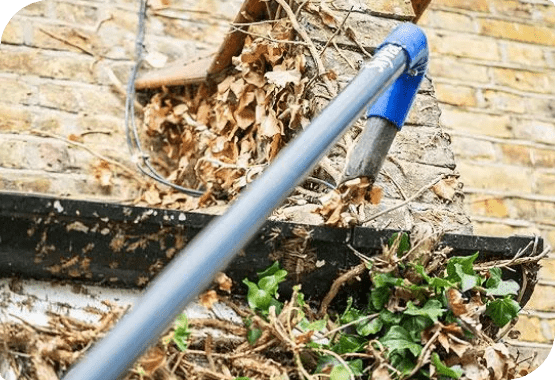
Roofs close to major roads and the trading estates collect a fine, dark, gritty deposit alongside the usual organic material. On its own it would wash through; combined with moss torn off a ridge it forms a dense mat that sets almost solid over a dry summer and then holds water like a sponge through the winter. It also scours the protective coating off cast iron and the inside of an aluminium section. Removing it properly means lifting it out rather than flushing, then rinsing what remains through to the outlet. Older stone housing collects a different mix again, set out under the service in full.
The extension roof and its outlet
Almost every house of this type has gained a rear extension, and where a flat roof meets the main pitched roof there is usually a short box gutter with lead flashing and a single outlet. It is the highest-risk detail on the building and the least visited. Mineral chippings drift into the outlet, the gutter ponds, and the water finds the flashing lap. Checking that outlet, clearing the chippings and looking at the upstand while the roof is dry is worth doing every time the main gutters are done. On a newly built extension the residue indoors is a separate specification, described in builders clean in Ascot.
Side alleys, gates and footing a ladder
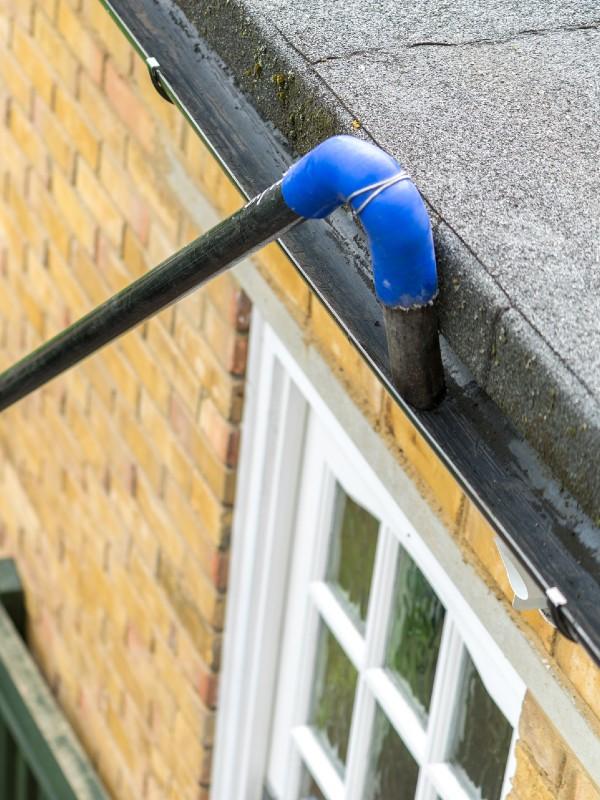
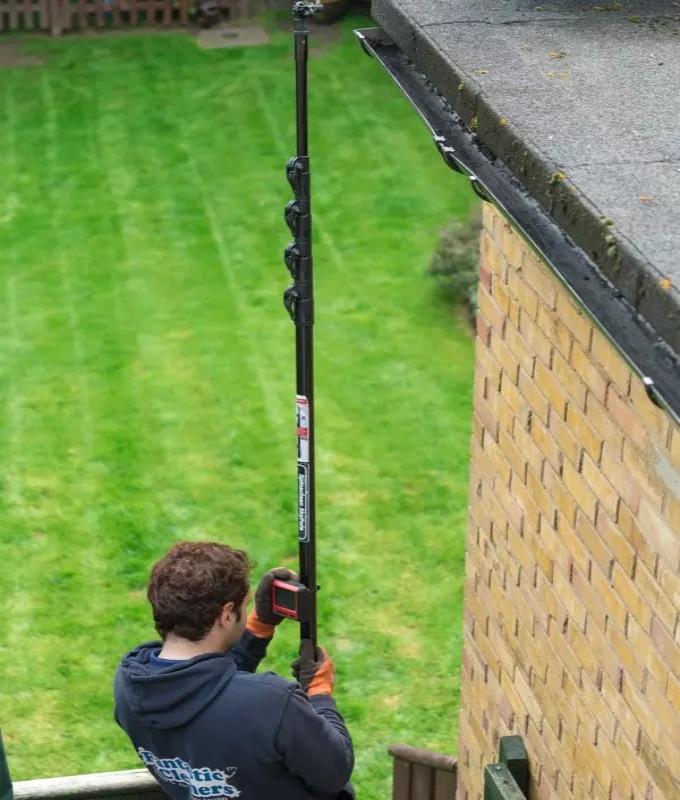
The passage between two semis is often a metre wide, gated at both ends, with an uneven concrete path and a drain in the middle. It is where a ladder has to stand to reach the rear, and it is rarely level. Bringing a vacuum system on poles from the front avoids the problem for eaves-height work, but anything needing hands at gutter level requires that path to be clear, the gate unlocked and the bins moved. Confirming that at the time of booking saves the slot. The alley itself is usually streaked where a gutter has been overflowing, and that surface is the machine job in the local team.
Low-rise blocks and managed estates
Alongside the houses there are three and four storey blocks with communal grounds, where the freeholder or managing agent instructs the work and the residents need notice. Those buildings usually have longer runs, more downpipes and parking layouts that keep a van some distance from the elevation. The value of doing a block in one visit is that every run is cleared to the same standard on the same day, which makes the following winter predictable rather than a sequence of individual complaints.
What is done, and what it is based on
A visit clears the runs and outlets, rods and flushes the downpipes to the gully, bags the waste and records the state of each elevation in photographs. Cost is built from the number of elevations, the storeys and the access method, with adjoining properties done together priced better than either alone. Glass at the same heights is the job in vetted window cleaning services in Slough, and the service in general sits on affordable gutter cleaning.