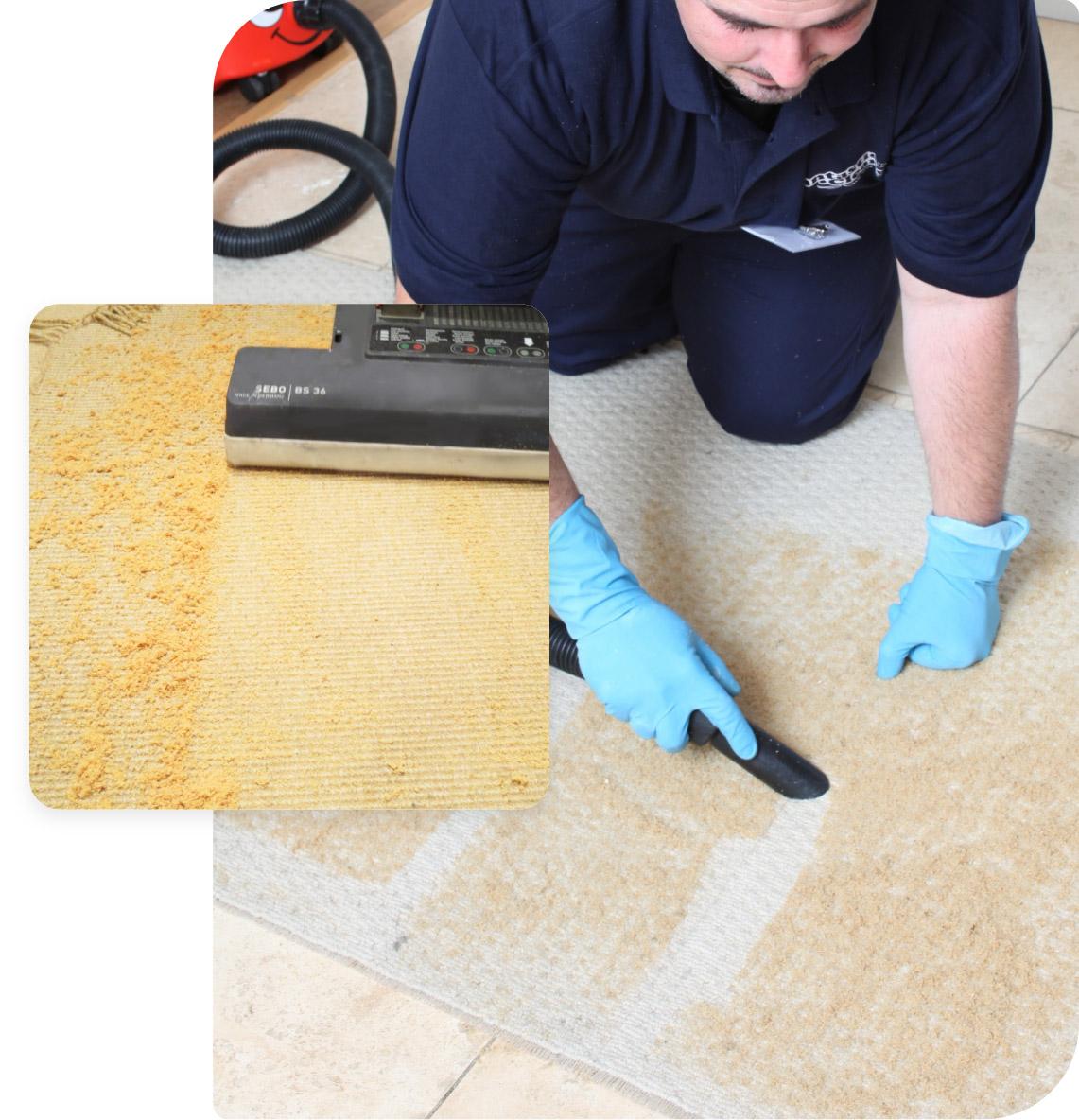
Water in Slough is drawn from chalk and it is genuinely hard, which affects carpet cleaning far more than most people expect. Hardness is dissolved calcium and magnesium, and those minerals react with cleaning products in the machine before the solution ever reaches the floor. Detergent that should be lifting soil is instead being consumed neutralising the water, so the same product that works well elsewhere underperforms here unless it is adjusted. The visible consequence is a carpet that looks clean while damp and dulls again within a week or two.
What hardness does to a cleaning solution
Hard water forms insoluble soaps that deposit on the fibre rather than rinsing away. Those deposits are slightly tacky, so they collect dry soil and hold it, and they build up with each clean. A water conditioner or a chelating agent in the pre-spray locks up the minerals so the active ingredients can do their job, and the rinse is where it matters most: a slightly acidic rinse both neutralises alkaline residue and keeps mineral deposits in solution so they leave with the extracted water rather than staying behind.
Residue is the usual reason a clean does not last
When a carpet greys quickly after cleaning, the cause is nearly always residue rather than new soil. A carpet rinsed properly feels slightly crisp when dry and the fibres are individually separate; one left with residue feels faintly sticky at the base and mats together. Anyone can test it by rubbing a dry cleaned area briskly with a white cloth and looking at what transfers. Getting this right is the single biggest determinant of how a carpet looks two months after a visit.
Limescale elsewhere in the property
The same water leaves scale on taps, shower screens, kettles and appliance elements, and the descaling products used on those surfaces are strongly acidic. Splashed onto carpet or tracked on a wet foot, they can strip dye from wool and some nylon. Keeping acidic bathroom products off carpeted areas is worth the caution, and a bath mat that has been splashed is better rinsed and dried than dropped straight back onto a landing. Where a whole property is being reset between occupants, the flooring is planned alongside what the service covers so bathroom and kitchen descaling happens without the floor being in the firing line.
Rental turnover and short voids
Housing in the town covers a wide range, from interwar semis to newer flats, with a substantial private rented sector and frequent changes of occupant. Short voids leave little time for drying, so a method is chosen to suit the window available rather than the other way round: lower moisture and forced airflow where the handover is the next day, full extraction where there is more room to work. Where building or refurbishment work has just finished, dust must be removed dry first, which is the principle behind Slough after builders cleaning team.
Testing before committing to a method
An inconspicuous test area answers three questions at once: how the fibre responds, whether the dye is stable in local water, and how quickly the pile dries in that room. Ten minutes spent on it prevents the two most expensive outcomes, which are colour loss and overwetting. Properties across the district with similar water and similar stock are approached the same way, as with our carpet cleaning service in Windsor.
What a booking covers
Charges are worked out per room and per stair flight, with heavily soiled areas identified before work begins. Have a tap and a power point accessible, and mention if the property is on a water meter with low pressure, since that affects fill times for a portable machine. Expect a short conversation about how long the carpet needs before furniture goes back. Fibre notes, rinse chemistry and aftercare are set out on Fantastic Services.