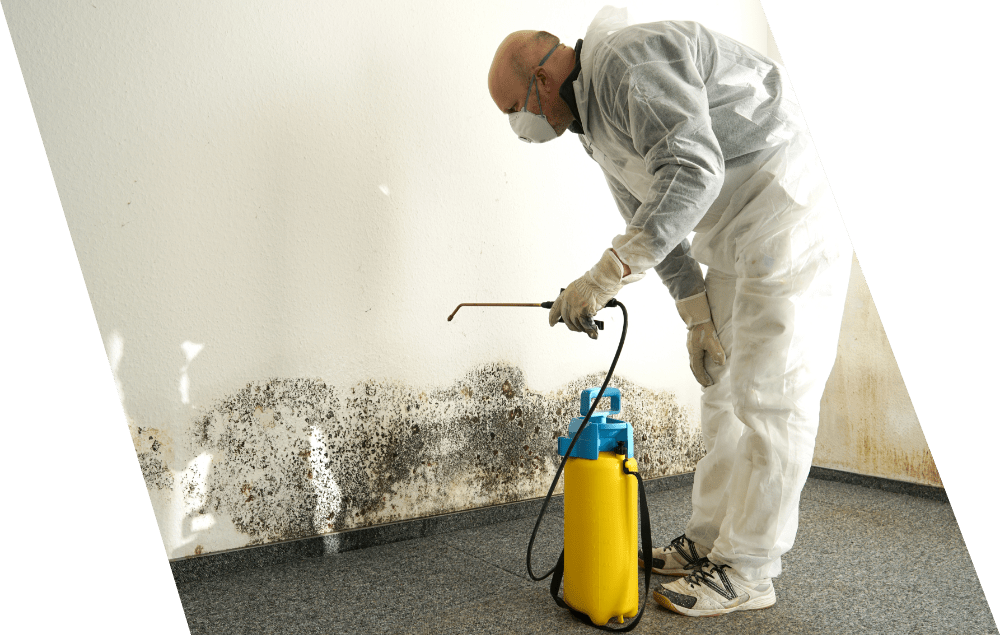
Damp and mould stopped being treated as a housekeeping matter some years ago. Statutory guidance is now explicit that growth in a home is presumed to arise from the condition of the building unless there is evidence otherwise, and social landlords work to fixed timescales for investigating a report and writing to the resident with what they found. That change matters in HA8, where a large part of the housing is interwar cottage-estate stock built for renting, now split between social tenancies, former right-to-buy houses and private lettings, all in the same terrace.
How mould is assessed as a hazard
Under the housing health and safety rating system, damp and mould are assessed as a hazard to the occupants rather than as damage to the property. The assessment weighs the likelihood of harm and its seriousness for the people actually living there, which is why the same patch of growth can be scored very differently in a household with an infant or someone with a respiratory condition. A report that records occupancy, room use and who is affected is therefore doing something a photograph cannot.
What a landlord has to do, and when
For social tenancies the obligations are procedural as well as physical: investigate within a set period of a report, put the findings in writing, and carry out the work within defined timescales, with emergency action where a hazard poses a significant risk. Private landlords are covered by the fitness-for-habitation requirements and by the local authority's enforcement powers, which is the route a tenant takes where a landlord does not respond. In either case a dated, independent written assessment is the document that moves matters along.
Why this stock grows mould
The physical causes here are consistent. Solid nine-inch brick walls on the earliest phases, with no cavity to insulate. Original small rear kitchens and bathrooms added into what was a scullery or built onto the back. Steel-framed casement windows replaced with sealed units that removed the draught that used to ventilate the house, often with no trickle vents. Concrete tile roofs over shallow lofts where topped-up insulation blocks the eaves. And gardens that back onto each other with fences and outbuildings that keep the rear elevation permanently shaded.
Evidence that actually helps a case
Three things carry weight. Dated photographs taken from the same position over successive months, which show whether the growth is seasonal and whether it recurs after redecoration. A record of what has already been reported and when, including reference numbers and who attended. And readings taken by someone independent, covering surface temperature as well as moisture, because that is what distinguishes a cold wall from a leak. Where a landlord's contractor has already painted over the growth twice, the redecoration history is itself evidence.
What gets done on the ground
Treatment removes the growth under containment and addresses the surface, but the durable part of the job is the fabric and the ventilation. That usually means extract that runs continuously at a low rate, trickle ventilation reinstated, insulated lining to the coldest wall in the affected room, and eaves ventilation restored in the loft. handyman for landlords in Edgware covers the installation, boarding and making good. Where a survey also finds evidence of mice - common in these terraces, which share long runs of sub-floor void - pest control prices in Edgware deals with that in parallel. The standing method and guarantee terms are on mould removal and remediation services nationwide.
What a visit produces
An attendance results in a written assessment: the affected rooms and elevations, readings at marked points, the cause as diagnosed, the works recommended in priority order, and what can reasonably be done by the occupants in the meantime. Tenants can send that document to a landlord or to environmental health; landlords and agents can use it to scope work properly rather than repainting each spring. Surveys are booked as a standalone visit with no obligation to proceed. Rooms are generally usable the same evening, though Wembley house cleaning is worth arranging where lining work has generated dust, and comparable stock to the south is covered under mould removal throughout Wembley.