There is usually a gap between what a household means by a deep clean and what fits into the hours they have in mind. The phrase covers everything from a hard scrub of a kitchen and two bathrooms to a whole-house reset in which every cupboard is emptied, every appliance stripped and every surface above head height reached. Settling which version is wanted, before anybody arrives, is most of what makes the day work.
What separates it from a maintenance visit
A routine clean works on surfaces that are in use. A deep clean opens and moves things: furniture comes forward, appliances come out where the flooring allows, cupboards are emptied, extractor filters come down, and the vertical and underside surfaces that never get touched — the side of a fridge housing, the underside of a wall unit, the back of a toilet pan, the top of a door — get proper attention. The work is slower per square metre by a wide margin. Which tasks fall into which category is laid out on nationwide cleaning services.
Ovens are their own job
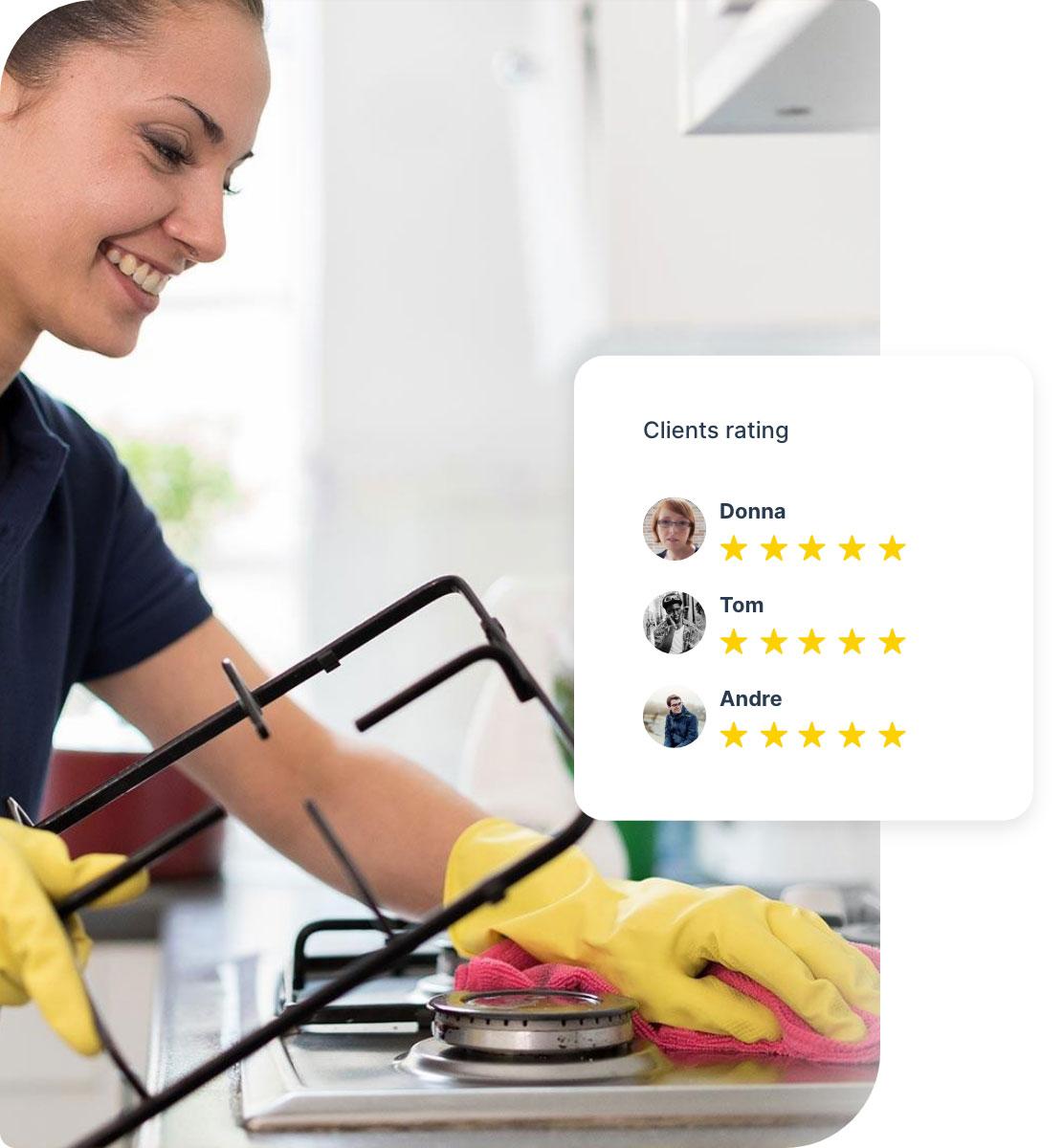
An oven is treated as a separate item because it is a dismantling exercise rather than a wiping one. Shelves, runners and trays come out to soak; the interior is treated and given time; the door is usually split so the film between the panes can be reached, which is where most of the visible brown haze lives. Catalytic or self-cleaning liners must never be scoured or treated with a caustic product, since the coating is the thing doing the work. Anyone booking a deep clean should say which type the oven has.
The parts of appliances people forget
A washing machine has a filter behind a panel at the bottom that collects coins, hair and a grey sludge, and a detergent drawer that grows a biofilm in the corners. The door seal on a front loader holds standing water and the black spotting that follows. A fridge has a drip channel at the back of the cabinet that blocks and puts water under the salad drawer. Dishwashers have a filter that lifts out and a spray arm whose holes clog with limescale. None of these appear in a weekly visit and all of them change how a kitchen smells.
Above the wall units
The top of a run of kitchen cupboards collects a layer that is part dust and part airborne cooking fat, and after a few years it is a sticky brown crust rather than dust. It comes off with an alkaline degreaser, contact time and patience, followed by a rinse so no residue is left to catch the next layer. The same deposit sits on the top edges of door frames throughout a house and is the single most common thing missed in an otherwise thorough job.
How the estimate is actually built
Time drives the price, and the time is driven by three things: the number of rooms and bathrooms, the condition when the team arrives, and whether the property is occupied or empty. An empty property is considerably faster because nothing has to be worked around. Flats in central districts tend to need fewer hours for the same standard, which is why Marylebone domestic cleaning team is generally quoted on a shorter visit than a suburban house of the same nominal size.
When the result has to satisfy somebody else
A deep clean arranged for a household's own benefit is judged by that household. One arranged at the end of a tenancy is judged against a schedule by a clerk acting for a landlord, and the two are not the same specification: the second includes items, such as window interiors and the insides of every unit, that a household would not normally ask for. Where a deposit is at stake, end of tenancy cleaning team in Ealing is the version that matches the test being applied.
Getting the property ready
Preparation buys more of the day than anything else. Worktops cleared, the fridge emptied of anything that is staying, personal items off the floors, hot water on, and somewhere for a vehicle to sit for the duration. It is also worth flagging the finishes that rule out standard products, and anything fragile that should not be moved. Once the reset is done, holding it needs far fewer hours, which is the argument for a local professional.