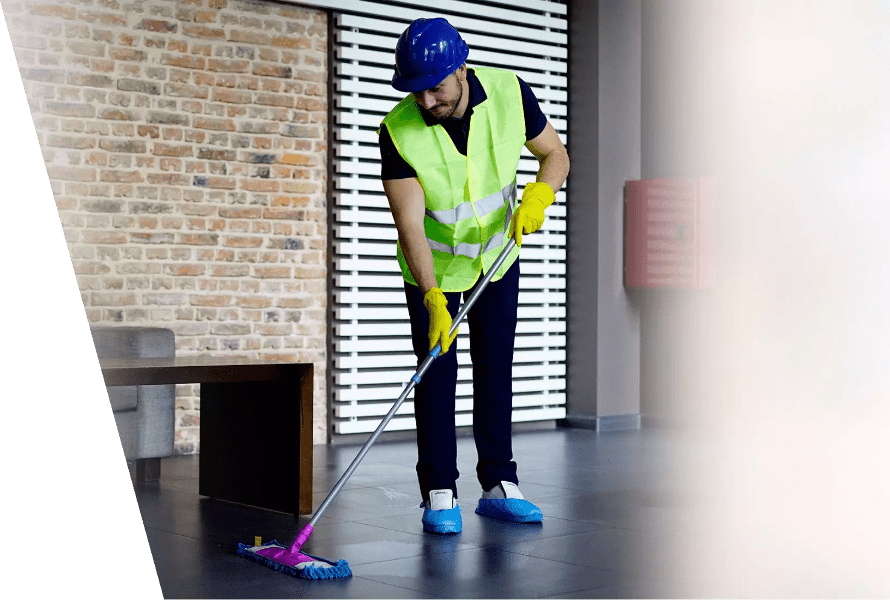
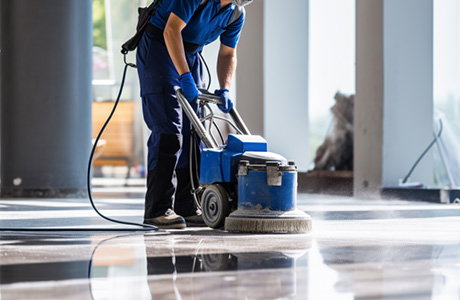
Water is the hidden variable on GU34 jobs. Supplies drawn through the chalk of the surrounding downs are hard, and the mineral content that produces kettle scale also decides how a post-construction clean turns out. Rinse a new shower screen and let it dry on its own and it will carry a white bloom by the afternoon. Wash a granite worktop and leave it and the edges will show tide marks. On a newly finished bathroom or kitchen, the residue people notice first is not construction dust at all - it is what the rinse water left behind.
Drying is part of the method, not an afterthought
Every wet surface is dried by hand: glass, chrome, stone, stainless steel, ceramic. Left to air, hard water deposits calcium in exactly the pattern the last drips took, and on new chrome that deposit starts bonding within days. Buckets are refilled rather than topped up, because a bucket that has been used for plaster residue is carrying both minerals and abrasive. On a large job, more time goes into the drying pass than most people expect.
New sanitaryware and its first contact with mains water
A bath, basin or shower tray that has just been installed usually contains grout slurry, plaster fragments and swarf from cutting a waste. Flushing that through without catching it puts grit into the trap, and the first scale deposits form around it. Traps are checked, the overflow is cleared, aerators on new taps are unscrewed and rinsed, and the shower screen is treated and sealed if the manufacturer allows before it is ever used.
Grout haze against a hard-water background
Cement haze and mineral deposit look alike and behave differently. Haze is removed inside its window with a pad and a suitable solution; scale needs an acidic treatment with dwell time. Confusing the two wastes effort, and applying a limescale product to fresh grout or to a natural stone tile causes damage that shows straight away. On new work the safe route is to identify the deposit before choosing anything stronger than neutral.
Dust from a period cottage refurbishment
Older properties in the town centre carry lime plaster, soft brick and timber that has moved over centuries. Hacking off and re-plastering releases an alkaline dust that finds every gap in a floor, and gaps are wide in old boards. Those joints are drawn out with a crevice tool rather than mopped, since washing simply carries the fines further down to come back with footfall a fortnight later. Comparable work further along the route is arranged as Woking after builders cleaning service.
Fabric and fibres after a re-plaster
Alkaline fines settle into carpet and stay in the base of the pile, where they keep abrading and keep releasing. A domestic vacuum removes the surface layer and compacts the rest. Hot-water extraction, with careful control of how much moisture goes into an older suspended floor beneath, is what clears it properly; that work is listed as experienced carpet cleaning services in Alton.
Once the house is back in normal use
Hard water means the maintenance burden here is real, particularly in bathrooms, and the finish achieved at handover needs keeping rather than admiring. Regular help is arranged under cleaning services team in Alton, while a single intensive pass through a whole house - the sort wanted before a family moves back in - is covered by what the service covers.
What is agreed before the date
Scope is written from the works themselves: rooms affected, whether new bathrooms or kitchens are included, whether any surface is natural stone, and whether the water supply on site is live. Charging is based on hours and the number of people needed, not on a headline figure, and an accurate account of the state of the site is what makes a quote hold. Waste should have been collected and protective sheeting lifted beforehand. Wider inclusions appear on after builders cleaning services UK.