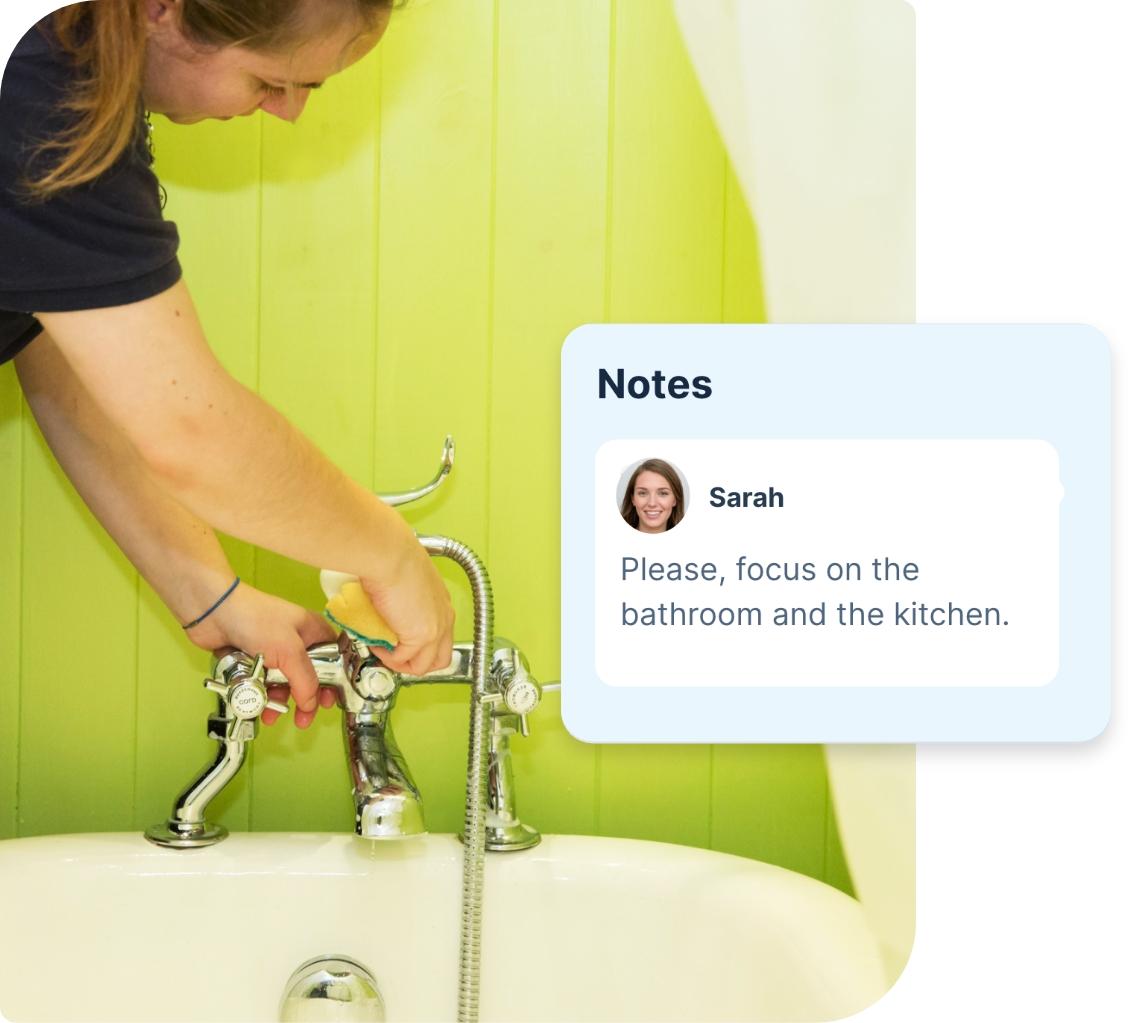
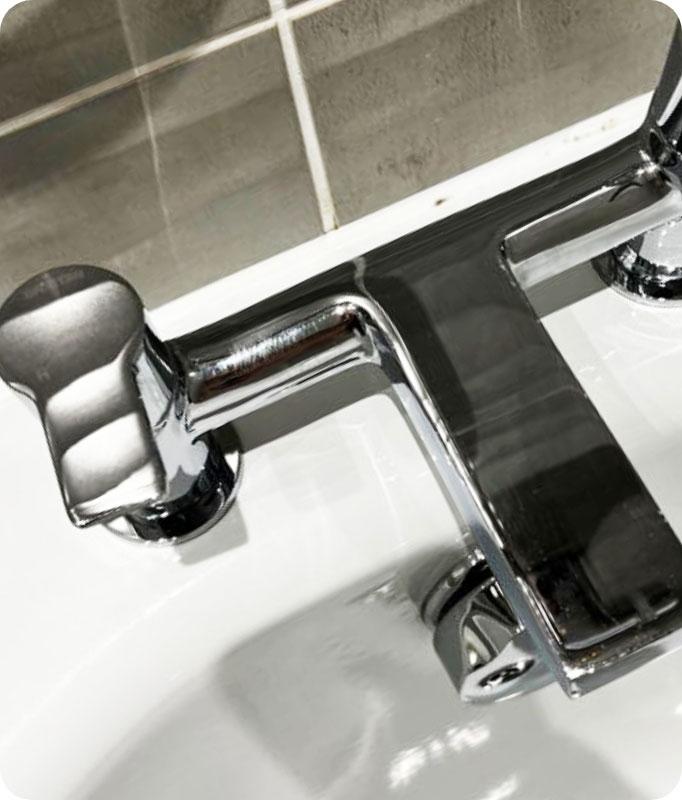
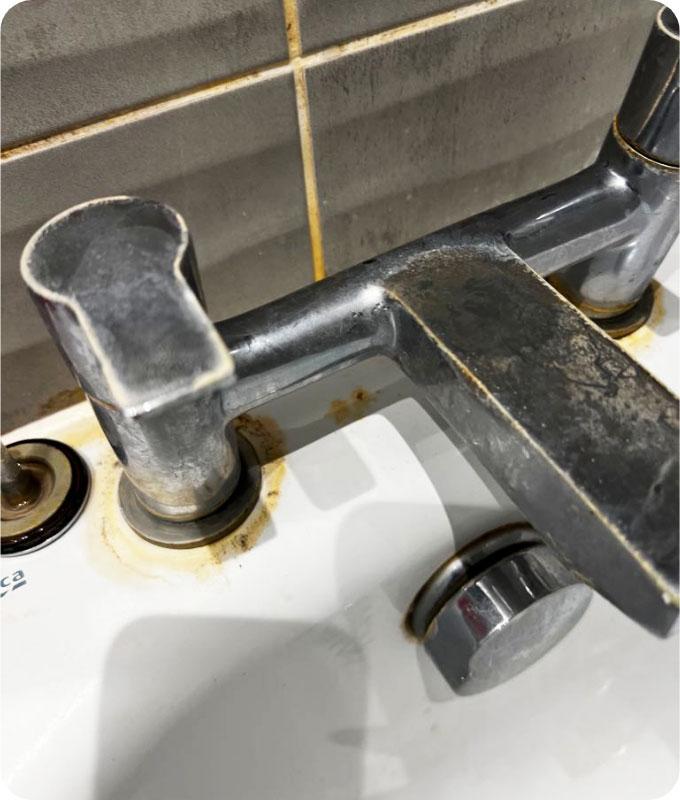
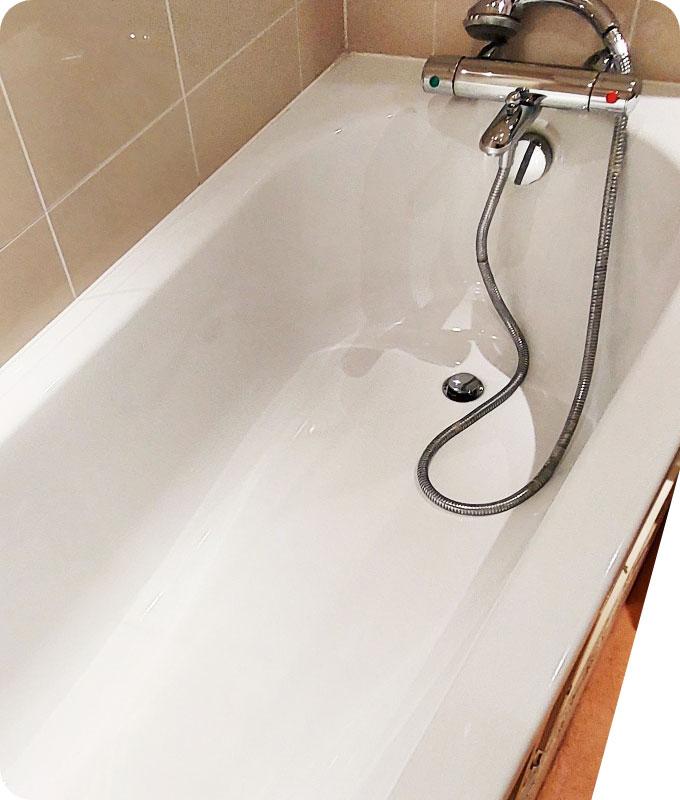
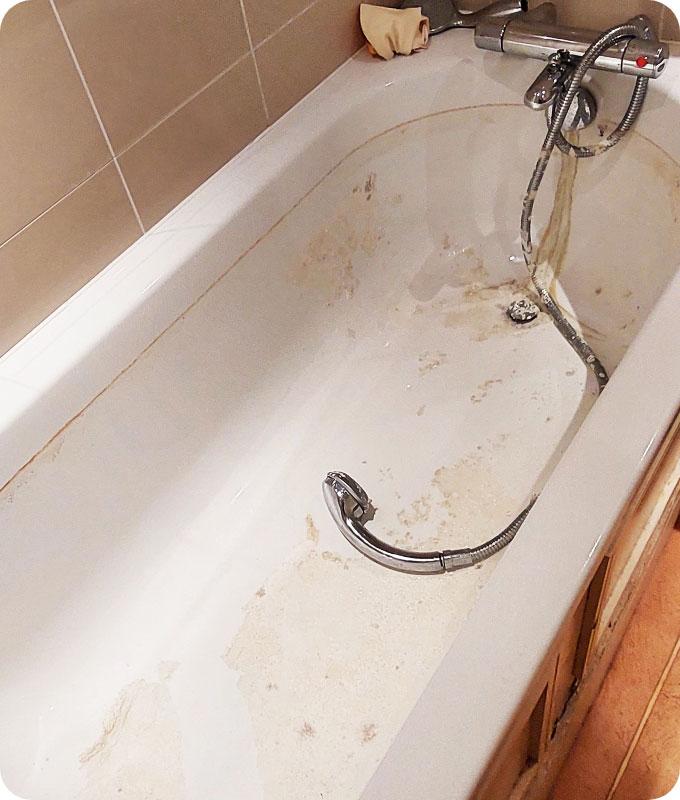
Water drawn from the chalk under east Hampshire arrives hard, and in GU34 that single fact shapes a move-out clean more than anything else. Scale forms on shower screens, around tap bases, on kettle elements and along the waterline of a WC pan, and it builds slowly enough that the people living with it stop registering it at all. An inventory clerk on the final inspection has no such blind spot. A bathroom that looks perfectly tidy can still be marked down over a ridge of hardened mineral that took eighteen months to form.
Scale comes off with time, not pressure
Calcium deposits are dissolved rather than scrubbed away. A mild acid is applied and left to work until the crust softens, then the residue is lifted, the surface rinsed and dried thoroughly so nothing is left to re-deposit. Attacking the same deposit with an abrasive pad puts a haze of fine scratches into chrome, acrylic and toughened glass, and those scratches then trap scale faster than the original finish ever did. Enamel, chrome and natural stone each want different products, since a descaler that clears a mixer tap in minutes will etch a limestone splashback in the same time.
The appliances that decide the result
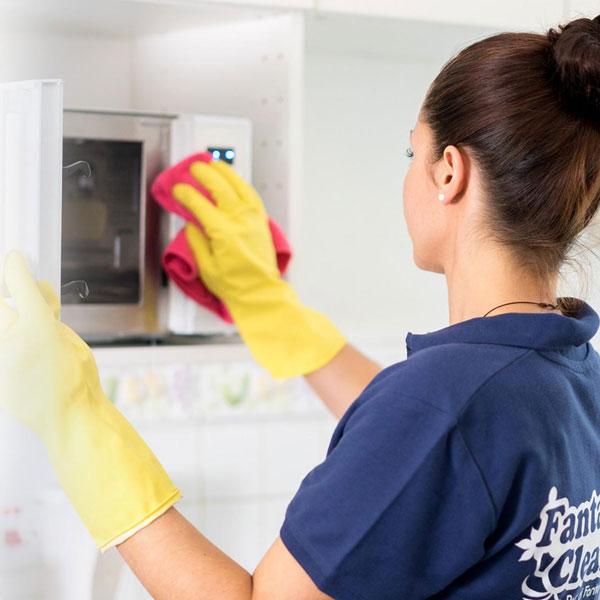
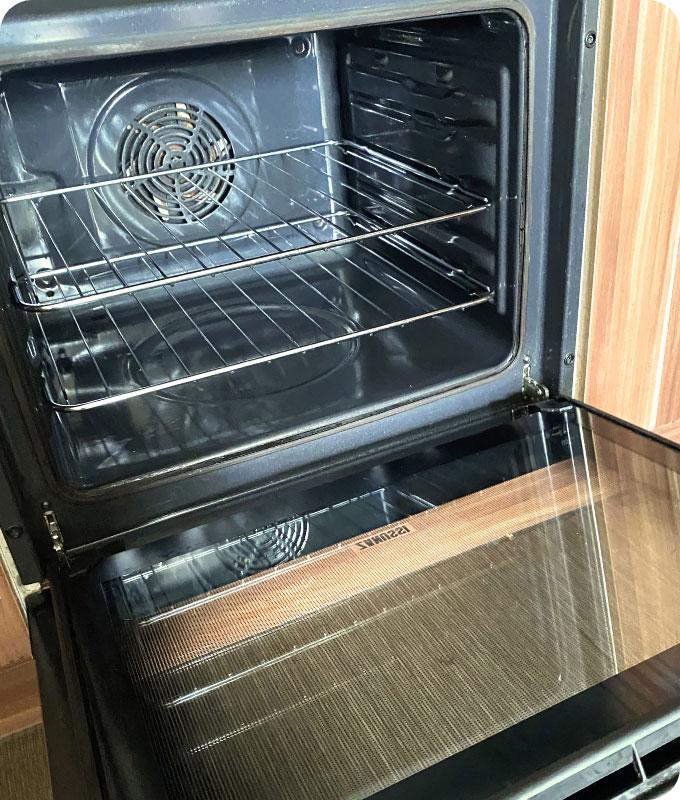
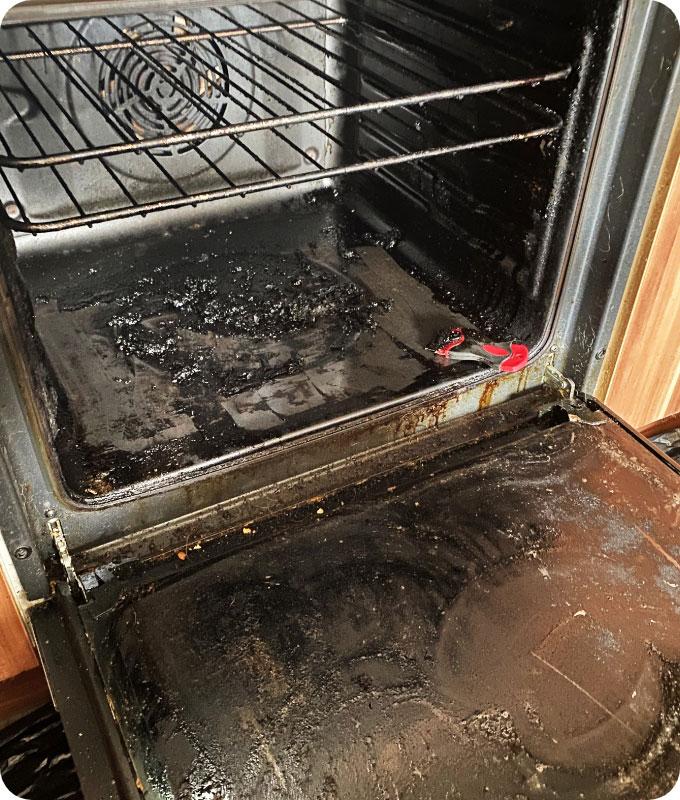
Kitchens in the town's older cottages tend to be small, which concentrates everything into a short run of units and leaves very little slack. Fridge seals, the rubber gasket around a washing machine door and the detergent drawer behind it all hold residue that a surface wipe leaves entirely untouched. The cooker is a job in its own right: carbonised deposits on shelves, side racks and inner door glass need soaking rather than wiping, which is why a dedicated appointment for oven cleaning for flats in Alton is often arranged alongside the main clean rather than squeezed into it.
Georgian frontages, awkward interiors
Behind the town's older frontages the layouts are rarely square. Rooms have been divided, staircases are steep and narrow, and floors move under a trolley. Skirtings sit proud of uneven plaster and leave a ledge that no vacuum head reaches cleanly; window seats and deep sash boxes do the same thing at a different height. Property of this type takes longer per square metre than a modern flat, and the time goes on edges and joins rather than open floor. The same stock and the same slow corners turn up in tenancy end cleaning services in Bordon, a short drive east.
Soft flooring and the water it holds
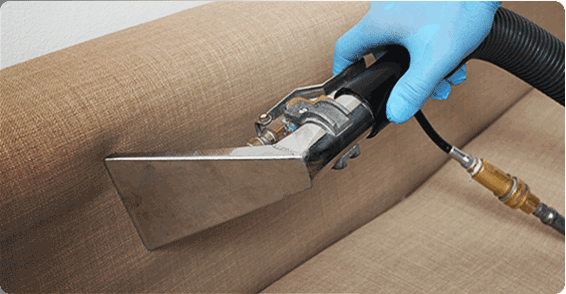
Carpet is where hard water causes a second, less obvious problem. Mineral-rich water pushed through a hot-water extraction machine leaves a residue in the pile that attracts soil again within weeks, so a carpet cleaned in a rush can look tired again before the next tenant unpacks. Rinsing properly and controlling how much water goes down in the first place is what makes the result last. Extraction is a separate discipline with its own drying time, and landlords holding more than one property locally often pair the two; our local team works on exactly the same principle.
Where a disagreement usually begins
Most arguments at the end of a tenancy turn on the gap between the check-in report and the state of the property on the final day, less fair wear and tear. Limescale is not wear. It is soiling, it is removable, and adjudicators treat it as such. The room-by-room standard behind pre-tenancy cleaning does not change from one county to another; what changes is the fabric it is applied to, and in a hard-water district the bathroom and the kitchen carry most of the weight of the inspection.
What a booking covers
Pricing follows the size of the property and whether it is furnished rather than an hourly rate, because the work is defined by a fixed list of tasks instead of by time spent. The property should be empty of belongings, with utilities still connected, since a clean without hot water or power cannot be finished. Fridges and freezers need defrosting beforehand. Households staying in the area after the move often keep something lighter running afterwards, which is what the team covering Alton is for once the tenancy paperwork is behind them.