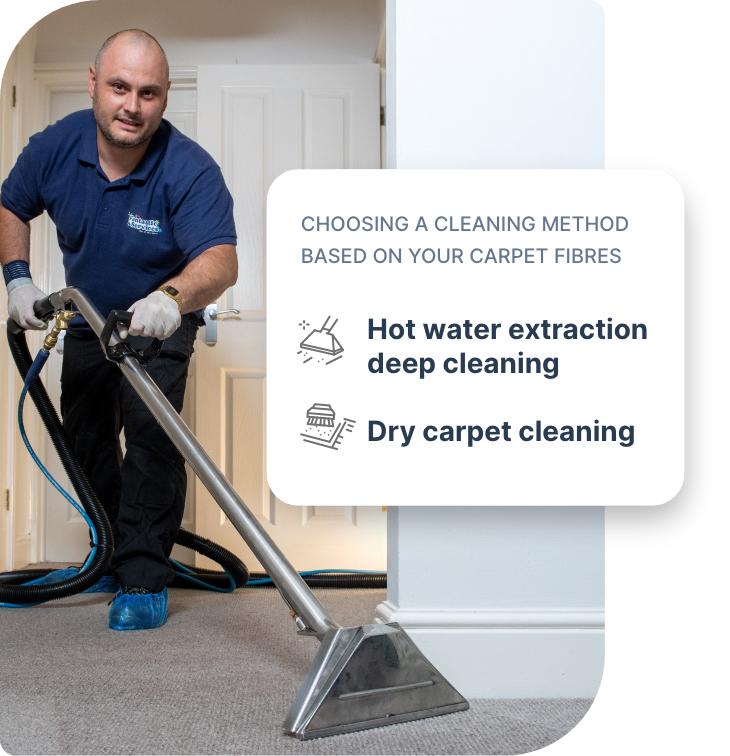
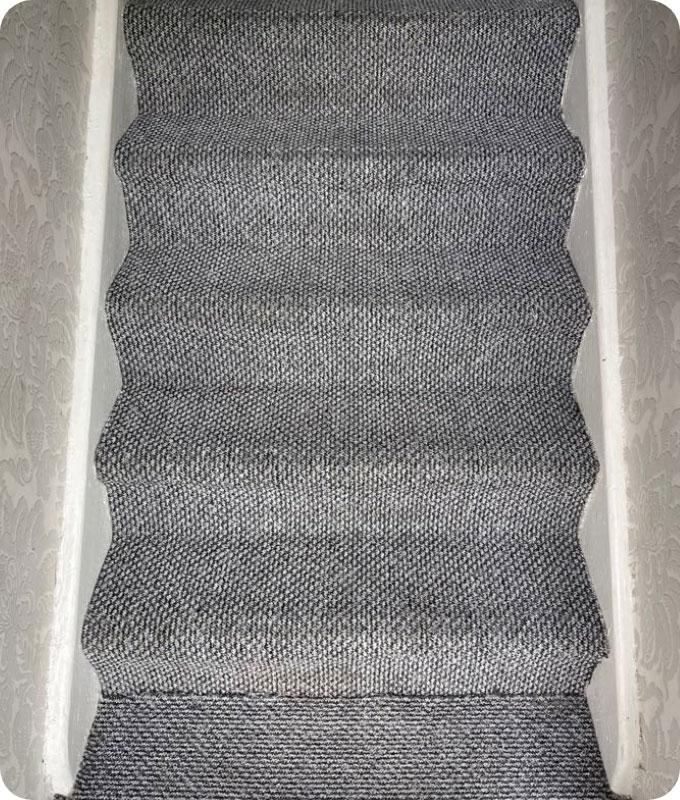
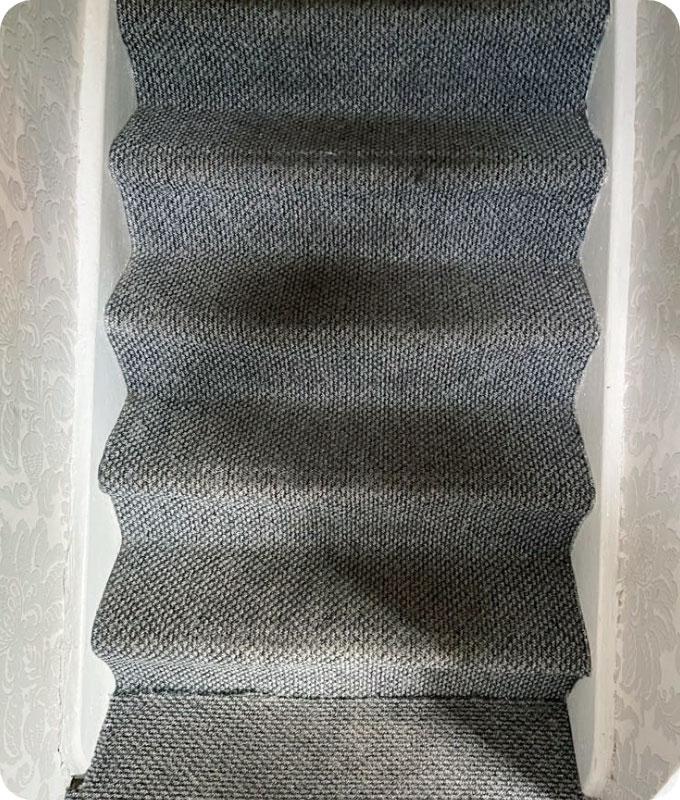
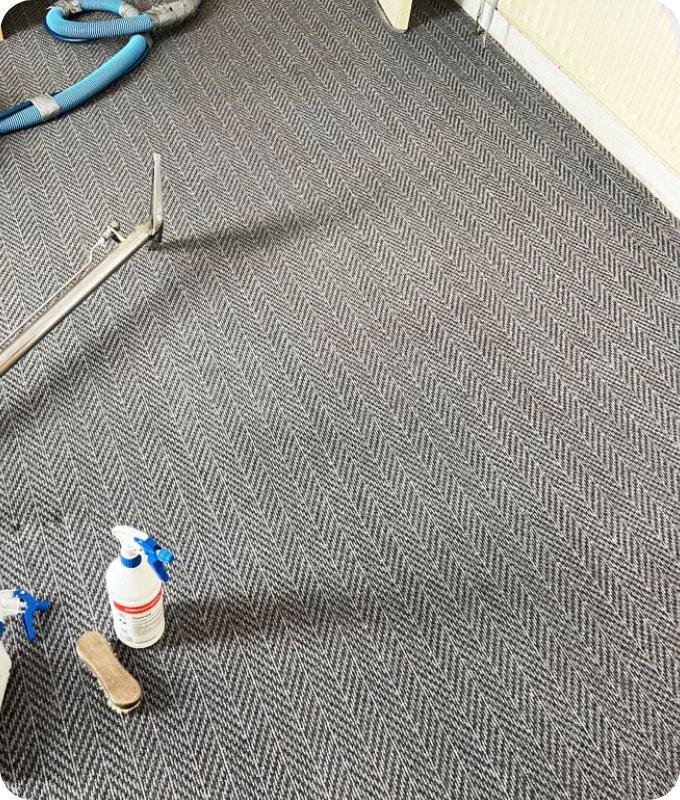
Three variables decide what a machine can actually do to a floor: heat, pressure and vacuum. Everything else is technique. Most disappointing results in and around GU34 come from one of those three being wrong for the carpet in front of the operator, and the one that gets overestimated is almost always pressure, while the one that matters most gets ignored altogether. A short explanation of what the equipment is doing makes it a great deal easier to judge what is being offered.
Heat and pressure, and what each is for
Warm solution works better than cold because it lowers surface tension and speeds the reaction that releases soil, but the benefit plateaus and then turns harmful: heat sets protein marks, softens the latex holding a tufted carpet together, and on wool it lifts the fibre scales and dulls the surface. Pressure is the number most often quoted and the least important of the three. Its job is to carry solution through the pile to the base, not to blast soil out, and turning it up beyond what the fibre needs drives more water into the backing than the vacuum can recover. That is how over-wetting happens.
Vacuum lift, hose runs and sealed joints
Recovery is the variable that decides how the carpet looks a week later, and it degrades quietly. Every additional length of hose, every loose cuff and every partially blocked filter costs suction, and a machine performing perfectly at the van can be mediocre at the far end of a long run. Hoses are kept as short as the job allows, joints checked, and the recovery tank emptied before it affects airflow. The difference shows up as drying time and as soil left at the base of the pile.
Wands, glides and jet spacing
The tool at the end of the hose is not a detail. Jet spacing has to match the head width or bands of carpet are left untouched, the vacuum slot has to sit flat against the pile, and a worn or dented slot leaks air along its length. A glide reduces drag so the head can be drawn slowly, which is what actually recovers water, and a two-jet upholstery tool exists because a floor wand has no business on a stair tread or a sofa cushion. Which tools suit which constructions is set out under local steam carpet cleaning.
Where a van cannot get near the door
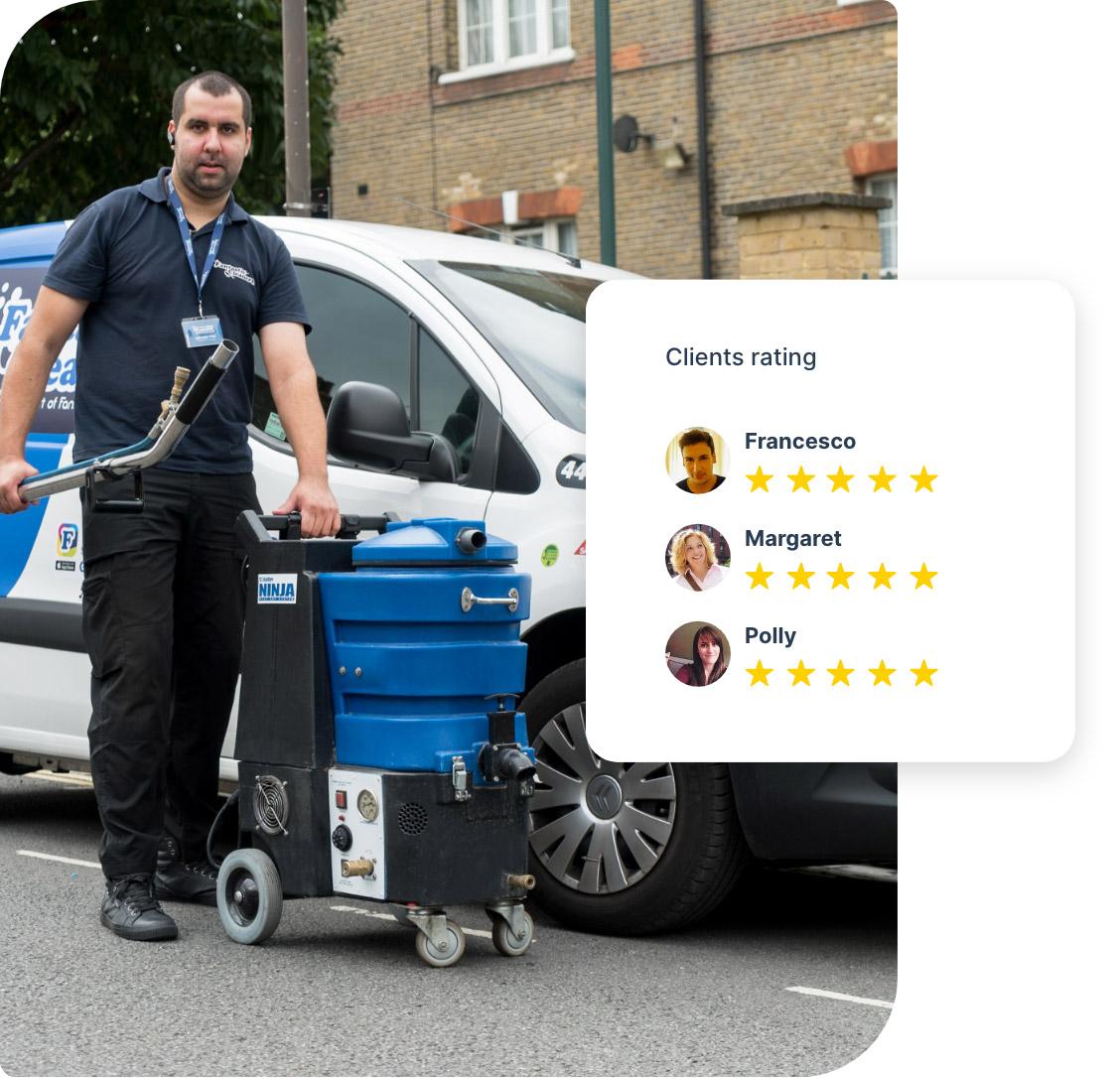
Plenty of local property has no parking within reach, from town-centre terraces to farm cottages down a long track. Beyond a practical hose length the answer is a portable machine carried in, filled and emptied inside the building, with the smaller tank capacity that implies and a rhythm of refills built into the timing. It is a slower way to work and it is the only honest one in those buildings. The same constraint applies in the neighbouring town for cleaning services cover across Petersfield.
Site conditions after building work
Recently completed work changes the machine settings as well as the sequence. Alkaline plaster fines neutralise detergent, abrasive grit shortens the life of a glide and a vacuum slot, and filters clog far faster than on domestic soil. Floors go last, once the construction residue has been taken out through local specialists, and filters are changed part-way through rather than at the end.
Empty properties between occupants
An unfurnished property allows the whole floor to be reached, including the perimeter and the areas under where furniture stood, and it dries evenly with nothing standing on it. That is the best possible condition for this work and it is why handover cleans consistently produce better results than the same job done around a full house. It is normally sequenced behind Alton end of tenancy cleaning service.
What determines the quote and the timing
Measured area, fibre, soil level and access determine both cost and duration, and access is the variable most often forgotten when people compare figures. Say at the point of booking whether a vehicle can get close, how many flights there are and whether the property is occupied. Allow several hours of drying with air moving before furniture goes back. Similar work on the chalk to the south is covered by Petersfield carpet stain removal.