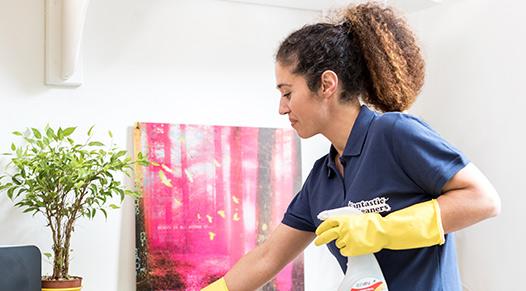
One of the most common disputes in E17 housing has nothing to do with standards and everything to do with boundaries: who is responsible for the mould in the bathroom, the state of the communal stairs, the gutter that overflows onto a back door, and the carpet that was already worn at the start of the tenancy. Knowing where a cleaner's remit begins and ends prevents most of it.
Repairs are not cleaning, and the distinction matters
A landlord is obliged to keep the structure, exterior and the installations for water, gas, electricity, sanitation and heating in repair. A tenant is expected to keep the property in a reasonable state and to ventilate and heat it sensibly. Condensation mould sits awkwardly across that line: if it is coming from a defect it is a repair, and if it is coming from how the home is used it is not. A cleaner can remove growth from a surface but cannot resolve which of those it is.
Communal areas belong to the freeholder
In a converted house split into flats, the stairs, hallway and bin area are usually the freeholder's responsibility, funded through the service charge. A resident's own cleaner has no authority to work there and should not be asked to. Where a managing agent is failing on communal standards, the route is the agent, not a private booking. Inside the flat, the wider set of jobs that can be arranged is listed under experienced house cleaning in Waltham Forest.
The variety of the local stock
The borough holds Victorian terraces, interwar semis, purpose-built low-rise blocks, converted maisonettes and recent infill flats within a few streets of each other, and they fail in different ways. A ground-floor conversion with a solid floor and no cavity behaves nothing like a first-floor flat with a flat roof above it. That is why a standing cleaning arrangement that works well in one is not simply transferable to the next, and why the first visit is partly a survey.
Evidence, and why a routine visit helps
A tenant reporting a recurring problem is far better placed when there is a consistent record. Someone attending weekly notices whether the same corner returns after being treated, whether the extractor is actually moving air, and whether the damp patch grows in the same season each year. That is useful evidence in a way that a single photograph is not.
Deposits, inventories and the end of an agreement
Deposit deductions for cleaning are judged against the check-in inventory, not against a general idea of clean. A property must be returned to the condition recorded at the start, allowing for fair wear and tear. Routine housekeeping keeps a home well ahead of that standard but is not documented against an inventory, and heavy fabric floors normally need specialist treatment rather than more vacuuming, which is the carpet cleaning team in Walthamstow.
Shared buildings and shared problems
Voids, service ducts and the gap between a suspended floor and the ground run between flats in a converted house. A problem originating in one dwelling will show in another, and treating only the flat that noticed it achieves nothing. Where that is the situation, the freeholder normally needs to arrange our local team across the whole building rather than leaving it to individual leaseholders.
Setting up a regular slot
Bookings are made in hours on a repeating day with a minimum per visit, and the price follows time rather than property size. Tenants should check whether their agreement requires notice before letting a contractor in; most do not for domestic cleaning, but shared houses sometimes have their own rules. Agree the scope in writing at the outset, including which rooms are excluded. A fuller account of how recurring visits are structured is at the full service page, and the neighbourhood-level page for the same service is our specialists in the area.