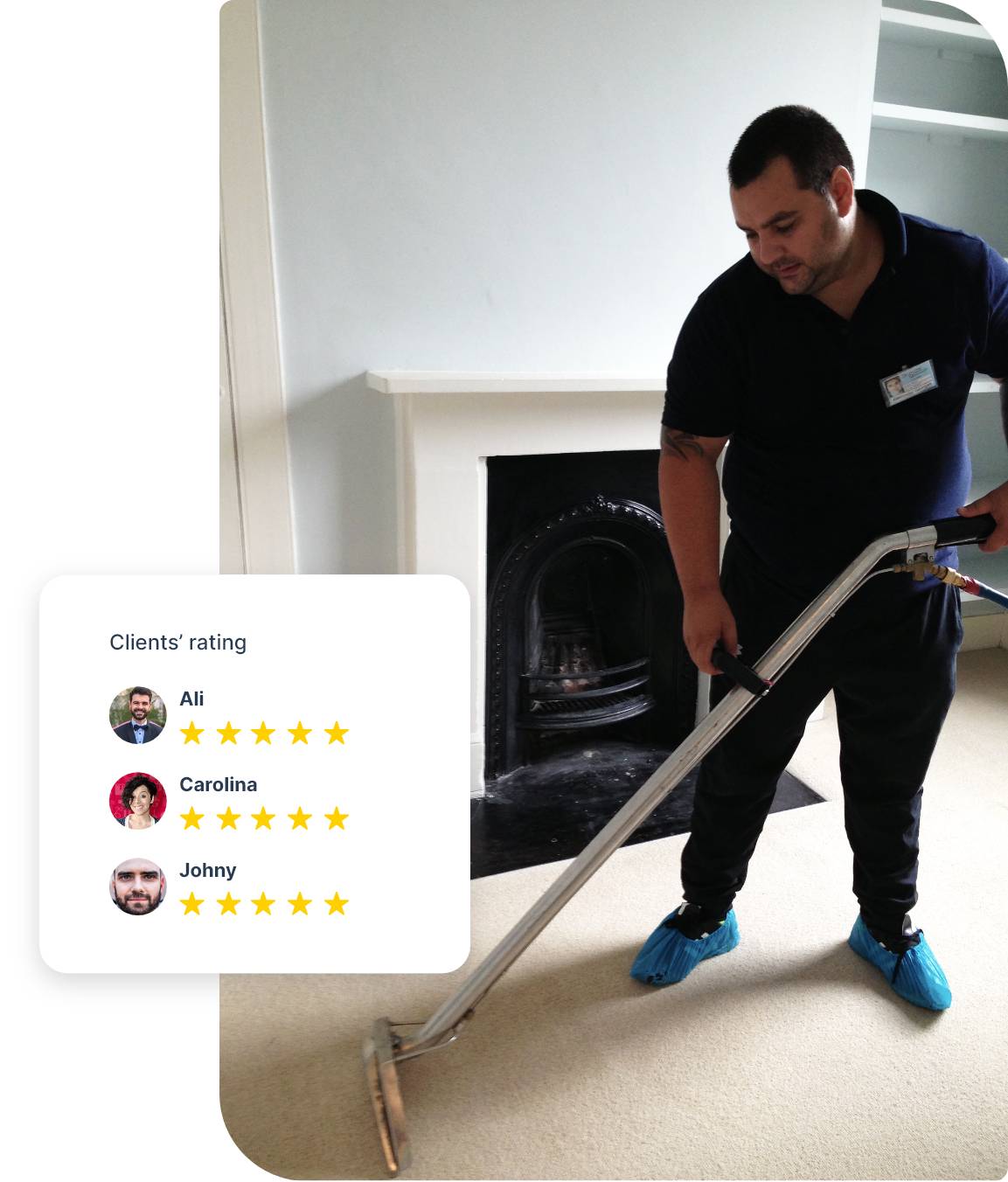
The distance between where a van can legally stop and where the carpet actually is decides how a job in central Romford gets done. Loading bays, permit bays and pedestrianised stretches around the town centre mean the kerb is often a long way from the front door, and above the shops there may be two flights of stairs after that. None of it is complicated, but it has to be planned, because hose length, water supply and power all depend on the answer.
How far the hose has to run
A truck-mounted system can pull solution and vacuum over a considerable distance, but every extra metre costs suction and heat, and every doorway the line crosses has to be protected so the hose cannot chafe paintwork or jam a fire door. Where the run would be excessive, a portable machine goes up to the flat instead and works from the property's own supply. Knowing which of the two is needed before arrival saves an hour of improvisation.
Water, power and what a flat can supply
A portable unit draws from a tap and needs a socket that is not shared with much else, and it produces waste water that has to go down an internal drain rather than into a gutter or the street. In older flats above retail units, the electrical supply can be modest, so equipment is chosen to run inside it. Asking about tap access and the nearest socket at the booking stage is not idle curiosity.
Noise, hours and neighbours below
A vacuum motor directly over a shop or a sleeping neighbour is antisocial at the wrong hour, and some blocks set contractor hours in the lease. Work is scheduled to sit inside those windows. Extraction equipment is noisier than a domestic vacuum but runs for shorter stretches per room, and doors kept closed behind the operator cut most of what carries through a building.
Protecting a shared stairway
Carrying equipment and wet hose up a communal stair risks marking a surface that nobody in particular is responsible for, and that causes more friction than the job itself. Runners go down over the treads, the line is routed along one side, and the stair is checked afterwards. The same care applies to a communal entrance where a door has to be held open while the line is run. Where a shared area needs attention in its own right rather than as a route to a flat, the options are grouped under cleaning services specialists in Romford.
Moving days and empty rooms
Floors clean up far better with nothing standing on them, so the natural time is the gap between the last box going out and the first one coming in. Households coordinating that often arrange transport through the local team and slot the floor work into the same afternoon. An empty room also dries faster, since air can move across the whole surface rather than around furniture.
Waste water and where it is allowed to go
Recovered water is dirty water, and there are rules about disposing of it. It belongs in a foul drain, never in a surface gully that discharges to a watercourse. In a flat that means an internal soil stack; from a vehicle it means a controlled discharge at an appropriate point. Householders rarely give it a thought, but a contractor emptying a waste tank into a street gully is breaking the law, and it is a fair question to ask before anyone starts. Method notes for different pile types are collected on our carpet and rug cleaning team.
What a booking covers and how it is priced
Rooms are charged by size and number, stairs by the flight, and heavily soiled areas may need a second pass that is agreed on site rather than assumed. Clearing small furniture beforehand keeps both the time and the cost down, and a parking space held outside the door makes more practical difference than anything else a householder can arrange. Regular housework nearby is covered by trusted regular house cleaning in Upminster, and customers further east sometimes take a slot listed for carpet cleaning across Dagenham and nearby areas.