Fine building dust is the carpet problem that defines Barking at the moment. Between riverside regeneration, large conversions and a steady run of loft and rear extensions, a great many homes in IG11 have a building site somewhere in their recent past. Construction dust is not ordinary soil. The particles are microscopic, angular and strongly alkaline, they stay airborne for days after the last tradesman leaves, and once they have settled into a pile they behave like unset cement the moment any water reaches them.
Why plaster dust defeats an ordinary clean
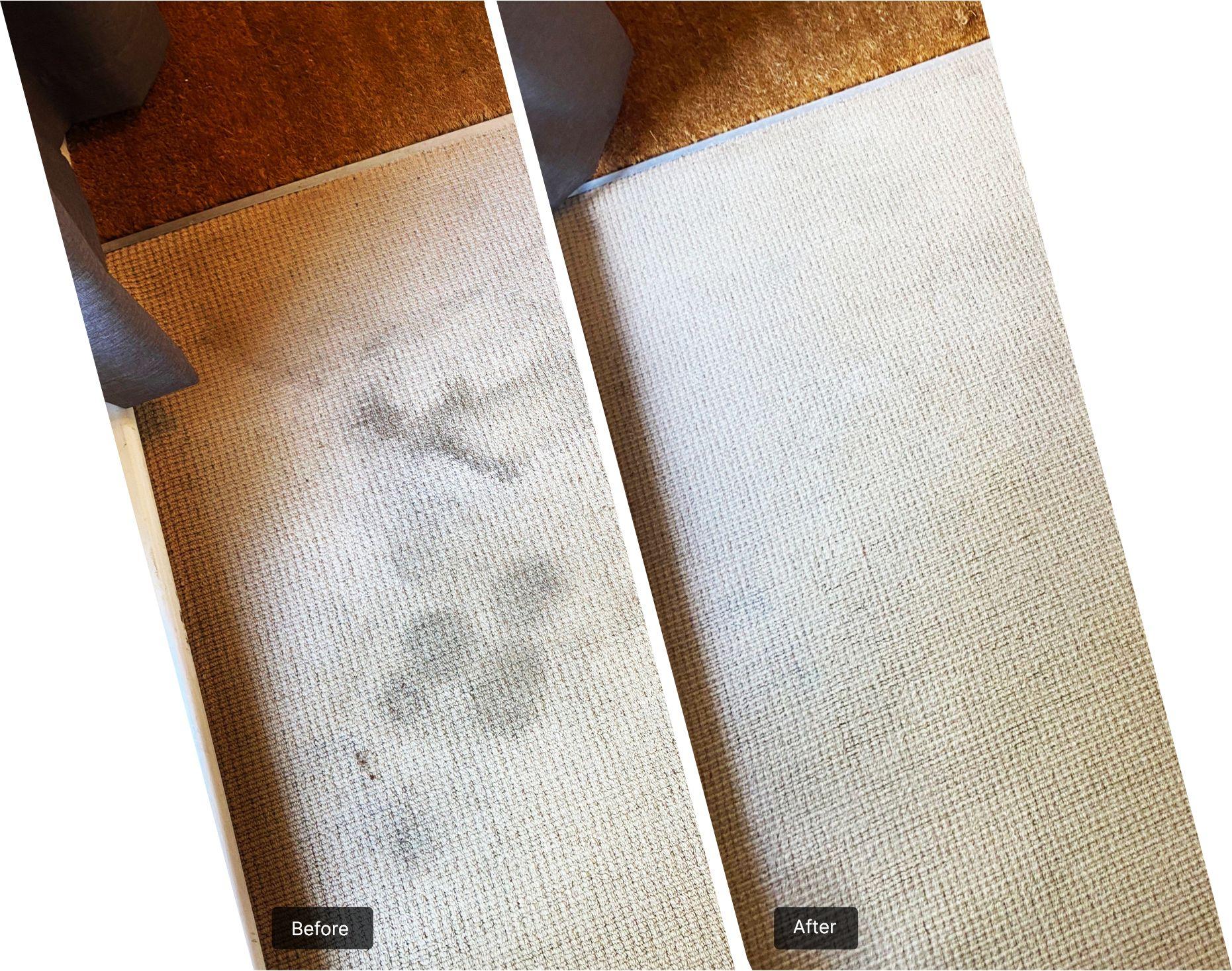
Gypsum and cement particles are hygroscopic, which means they take up moisture and stiffen. Send a wet extraction pass over a carpet still loaded with them and the result is a grey slurry driven deeper into the tuft, where it sets hard around the fibre and leaves the pile feeling gritty for the rest of its life. The correct sequence is entirely dry to begin with: repeated slow passes with a machine running proper filtration, working in two directions, emptying frequently because the dust blinds a filter fast, and often coming back for a second dry session once more has fallen out of the air.
Sharp grit against a brand new carpet
Silica from cutting and chasing work is genuinely abrasive, and a carpet fitted at the end of a project can be visibly worn along the main routes within a few months if the dust is never properly removed. Barrier matting at every entrance during the snagging period, and a no-shoes rule while the last of the second fix is happening, does more for a new floor than any treatment applied afterwards.
Getting the order of work right
Carpets belong at the end of the sequence, not the middle. Ceilings, ducts, window reveals, radiator backs and the tops of doors all hold reservoirs of dust that will come down later, so the fabric of the property is dealt with first and the floors afterwards. That is precisely what professional post-build cleaning in Barking is for, and splitting the two visits by a day or so lets the remaining airborne material settle where it can be removed rather than redistributed.
Low ground, river air and drying times
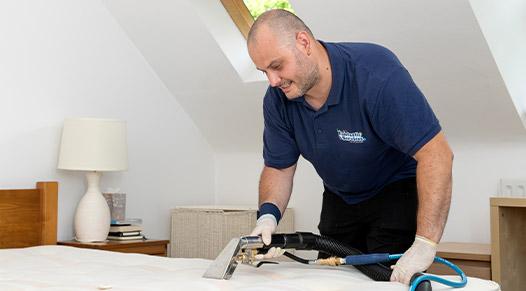
The southern end of the district sits low on alluvial ground close to the river, and humidity there runs higher than a few miles inland. In a sealed new flat with mechanical ventilation and restricted windows, that combination makes natural drying unreliable. Restorative extraction is therefore paired with air movers positioned to sweep across the pile rather than down into it, and a dehumidifier where the room has no useful airflow at all.
The older terraces further back from the water
Away from the new blocks, the inter-war and Victorian terraces have suspended timber floors, gaps at the skirtings and underlay that is frequently older than the carpet above it. Moisture control matters as much there, for different reasons, and a moisture reading before and after is standard. Neighbouring streets to the north are covered by our carpet cleaning in Ilford.
Keeping on top of it afterwards
Once a property is finished and occupied, the useful pattern is frequent dry vacuuming, prompt attention to spills and a restorative clean roughly once a year on the traffic routes. Regular household support is arranged through experienced home cleaning in Barking, and the equivalent in the districts to the north-east is experienced fortnightly cleaning in Buckhurst Hill.
How the job is quoted and what to prepare
Post-construction carpet work is priced by room and by condition rather than by area alone, because a floor that needs three dry passes takes far longer than one that needs one. Protective sheeting, paint tins, offcuts and tools want clearing first, and it helps to know whether the underlay is new. Further out, the same approach applies through local specialists, and the method reference for different fibre types is carpet and rug cleaning for homes and businesses.