Ink behaves nothing like a drink knocked over on a Friday evening, and the flats around Hackney produce a great deal of it. A spare bedroom doubles as a desk, a printer ends up on the floor, and a leaking cartridge, a burst biro or a marker left uncapped puts a mark into the pile that ordinary cleaning spreads rather than lifts. The distinction is chemical: a drink is colour carried in water, while ink, toner and adhesive are formulated to stay exactly where they land.
Pigment, dye and adhesive are three separate problems
Pigment sits on the fibre as solid particles locked into a resin. Dye has gone into the fibre and coloured it from within. Adhesive has set as a film around the yarn. Each demands a different approach, and the wrong one tends to fix the mark permanently. Pigment can often be released once its binder softens, then lifted mechanically. Dye has to be drawn back out or chemically reduced, which is slow and often impossible. An adhesive film must be softened until it lets go, because scraping at it tears tufts loose. Identifying which of the three is present comes before any bottle is opened.
Toner stays dry until it is vacuumed
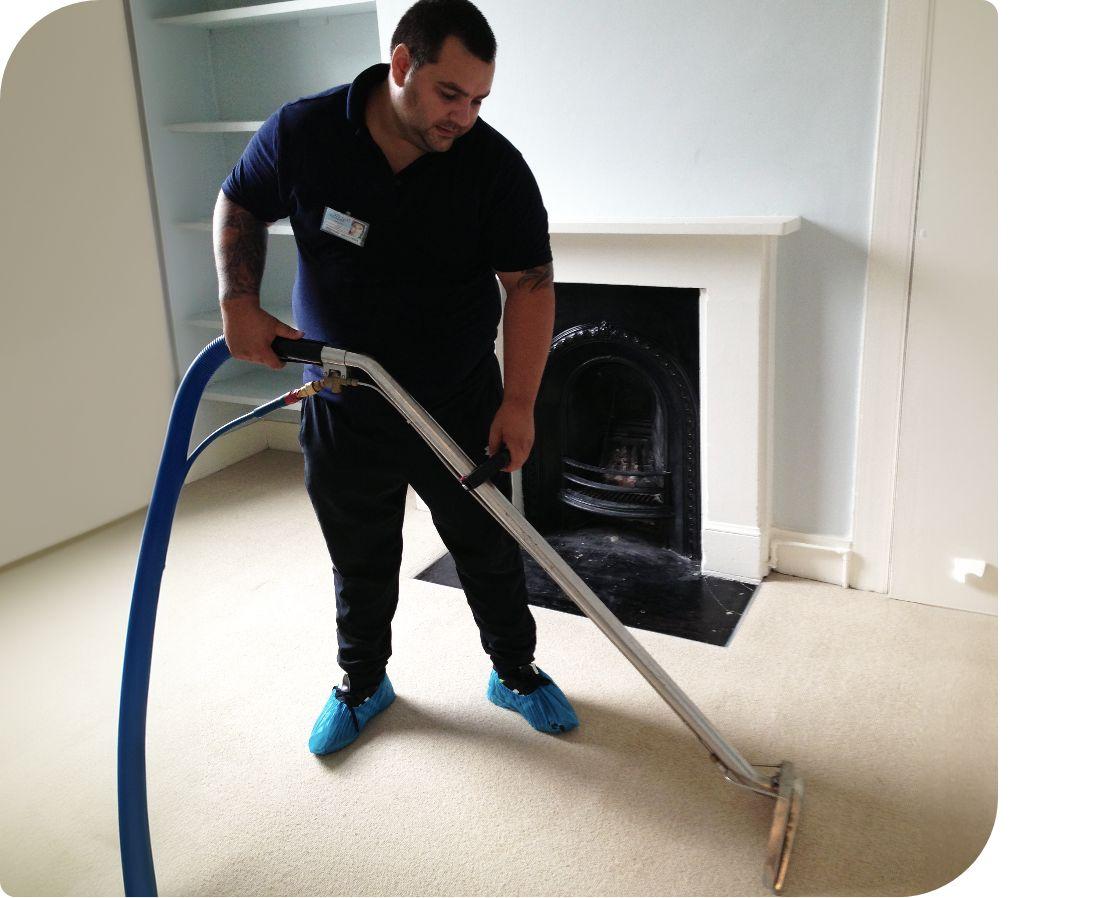
A split toner cartridge is the one occasion where speed is the enemy: the powder is a thermoplastic sitting loosely between the tufts. Vacuumed patiently, with no downward pressure and no brush action, most of it leaves. Wetted, it fuses into a black smear that travels to the base of the pile and stays. The same rule covers dry pigment from art materials, photocopier dust and fine soot: dry removal first, and liquid only once nothing further will lift.
The solvent matters more than the effort
Rubbing harder achieves nothing beyond distorting the pile and driving material deeper. What changes the result is matching the solvent to the binder: a citrus or hydrocarbon product for resin and adhesive, an alcohol-based one for many writing inks, water-based chemistry for anything water-based to begin with. Each goes onto a white cloth rather than the floor, then is transferred to the mark from the outer edge inwards so the ring does not grow. Colour leaving the fibre should appear on the cloth rather than spreading sideways. Broader notes on how methods are chosen sit on our nationwide service.
The backing is the part that gets ruined
Most fitted carpet relies on a latex compound bonding the face yarn to a secondary backing, and strong solvents soften that compound. Enough of it, poured rather than dabbed, and the tufts lose their anchorage and the carpet delaminates in a patch no cleaning will disguise. That is why a technician works in small quantities and blots rather than floods, and why a mark on a fitted floor is treated more cautiously than one on a loose rug. The same failure turns up in the neighbouring terraces covered by what the service covers.
Testing somewhere nobody looks
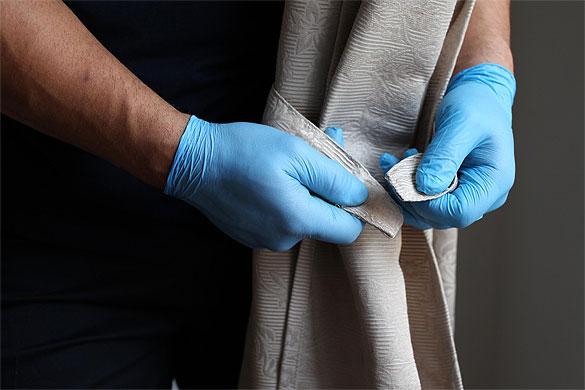
Before anything touches a visible area, a hidden patch is tested — inside a fitted wardrobe, under a radiator, or on an offcut if the fitter left one. Two things are being established: whether the dye holds against that chemistry, and whether the backing tolerates it. Older printed carpets and some bright synthetic colours give way quickly, and finding that out in a wardrobe costs nothing. Where a whole property is being turned round at once, this work surfaces alongside everything else, and the wider range is set out under our Hackney team.
Converted terraces and where the marks collect
Housing here is largely Victorian terrace subdivided into flats, with narrow rooms and one through space doing several jobs at once. The desk corner, the patch by the front door where bags land and the edge of a rug are where this damage concentrates. Shared entrances mean grit arrives on the hall carpet all day, and households on a regular schedule for our specialists in the area keep the worst of that in check between deeper visits. The hard surfaces outside feed most of it indoors and are treated separately under the Isle of Dogs branch.
What a visit for mark removal covers
Work of this kind is quoted by time and by the number of marks rather than by floor area, because two identical-looking spots can take five minutes and an hour. A technician will say plainly when something is permanent, which is more useful than repeated attempts that thin the pile. Where several marks are scattered through one room, a full clean afterwards often makes sense, since spot work can leave a noticeably brighter island. The equivalent for a second property sits under Forest Gate domestic cleaning specialists, and outside surfaces in the surrounding districts come under pressure washing across Leytonstone.