A downpipe that overflows at the top in heavy rain gets blamed on the gutter above it, and that is right perhaps half the time. The rest of the time the gutter is clear and the restriction is below: a hopper head packed with leaf, a swan neck bend around a string course, a shoe discharging onto a paved yard, or a back-inlet gully silted up at ground level. Diagnosing which of those is happening, before anyone starts scooping, saves a second visit and explains why the same house floods at the same corner every winter.
Reading where the water actually stops
The method is straightforward. Water is run into the gutter at the far end of the run and followed. If it reaches the outlet and backs up, the obstruction is in the pipe; if it stands halfway along, the fall or the bracket line is the problem; if the pipe runs freely but the gully floods, the issue is underground and belongs to drainage rather than roofline work. Rodding a downpipe from the shoe upwards is often enough, though hoppers on older elevations usually have to be reached and emptied by hand.
Rainfall, roof area and an undersized outlet
This is a wet corner of the country, and the rain that matters is not the steady kind but the short heavy burst off the Channel. A rainwater system is sized for a design rate, and a roof extended at the back or a valley discharging into a single outlet can exceed it even when everything is clean. Overshooting at one particular corner in every downpour, with the rest of the run dry, is the signature of capacity rather than debris, and no amount of clearing will change it. A drier, flatter catchment to the east fills far more slowly, as set out under Swindon gutter cleaning services.
Warehouse conversions and flat roof outlets
Around the harbour and the older commercial streets, flats sit under large flat or shallow-pitched roofs draining through rainwater outlets rather than eaves gutters. Those outlets have leaf guards that themselves block, and the pipes often run internally through the building, so a failure shows up as water inside rather than a stain outside. Clearing them means lifting the guard, checking the sump and the surrounding membrane, and confirming flow rather than assuming it. Neighbouring areas with more tree cover face a different balance of debris, described under flexible gardening in Clevedon.
Steep streets and rear elevations
Houses built into the hills commonly present two storeys at the front and four at the back, with a rear yard reached only through the property or a shared passage. That single fact governs how a job is planned: which elevations can be worked from ground level with a pole and vacuum, which need a tower, and whether a neighbour's permission is required for footing. Cleaning half a house because the back was unreachable is a waste of a visit, so access is settled before a date is offered.
What a running downpipe does to a wall
Rubble stone, soft brick and painted render all behave badly under a constant trickle. The wall stays saturated through the wet months, mortar softens, and the first internal sign is usually a cold patch or a bloom of mould on the inside face at that exact height. Repointing or redecorating before the leak is stopped simply repeats the damage. Once the run is dry, the silt and algae streaked across paths and yard surfaces below is a separate clean of the type set out in path and paving cleaning services in Bristol.
Evidence, and what a booking covers
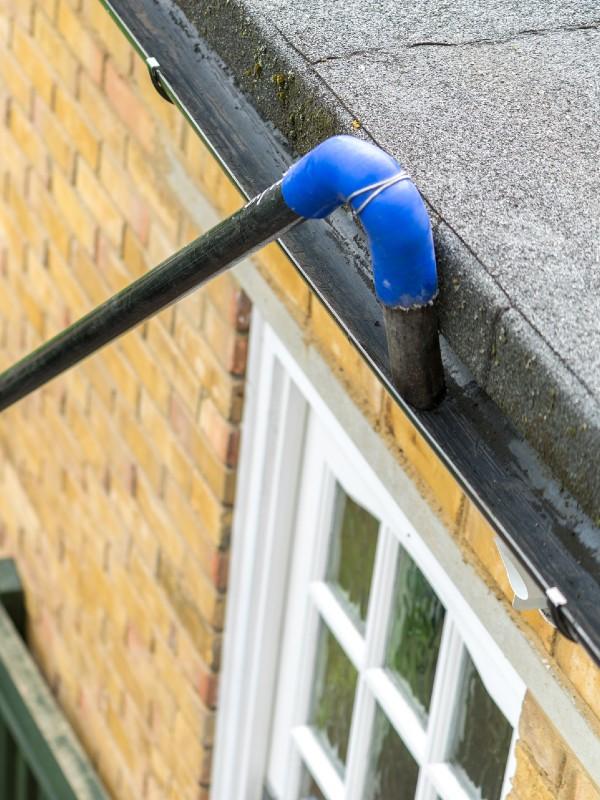
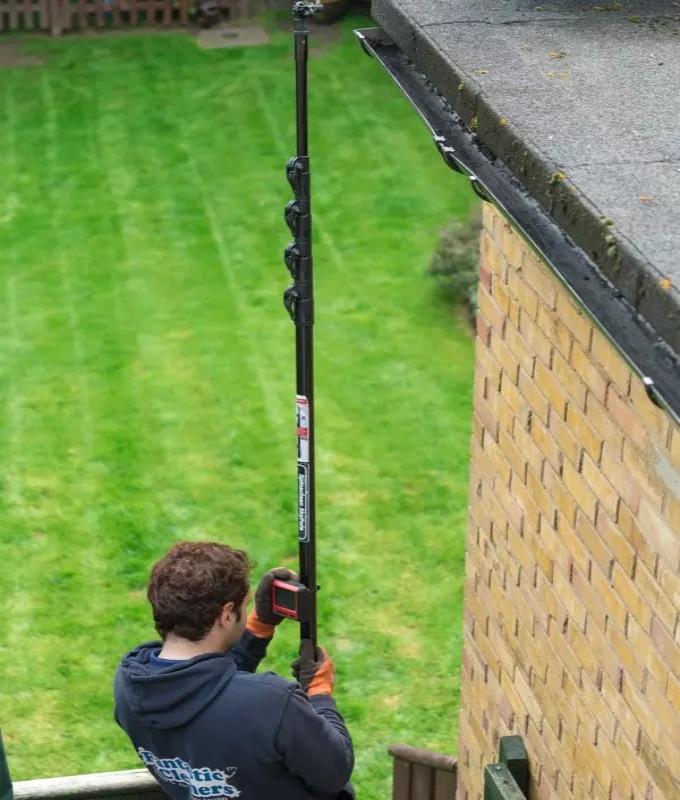
A clearance covers the accessible gutter runs, the outlets, the hoppers and the downpipes, with the debris bagged and removed rather than dropped into the garden. Photographs or pole-camera footage before and after give a record of joints, bracket spacing and any cracked section worth watching. Quotes follow the number of elevations, the height and the access method. Households often pair the visit with glass at the same heights, which is the work in window cleaning services in Bristol, while the wider method behind gutter work is described on local gutter cleaning.