The rainwater goods that cause the most trouble on a Georgian terrace are the ones invisible from the pavement. Behind a stone parapet sits a lead-lined box gutter, often running the full width of two or three houses, draining to outlets that are equally hidden. Nothing about a blockage up there announces itself until water appears on a bedroom ceiling or a damp shadow spreads across ashlar below the eaves. Roofs of this age and shape need looking at on a schedule rather than in response to a symptom, because by the time the symptom shows, the repair has usually stopped being a cleaning job.
The anatomy of a parapet gutter
A box gutter is a shallow timber trough dressed in lead, laid to a slight fall towards a sump and an outlet that drops through the parapet or into an internal pipe. Debris settles at the low end, where it holds moisture against the lead welts and the boarding beneath. Clearing one is deliberate work: lifting material out by hand into a bucket rather than pushing it towards an outlet that will then jam, checking the sump, flushing the fall, and looking at the lead upstands and the cover flashings while the trough is empty.
What overflow does to limestone
The local stone is porous and bedded with lime mortar, and a gutter that has been overflowing for a winter will have driven water deep into a wall rather than merely wetting its face. Saturated stone spalls when it freezes, salts migrate to the surface, and a green-black streak marks the run long after the leak stops. Aggressive washing is the wrong response on a soft face; the surfaces that genuinely benefit from machine cleaning are paving, steps and yards, which is the ground covered by professional pressure washing services in Bath.
Access on a hill
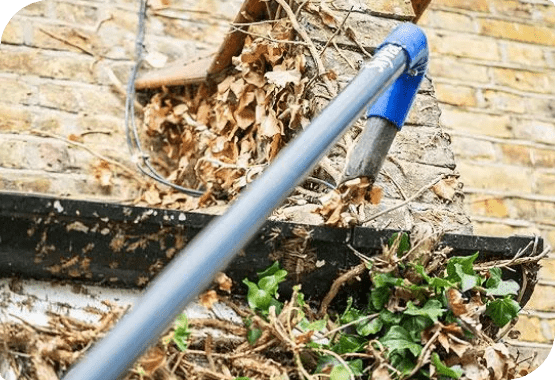
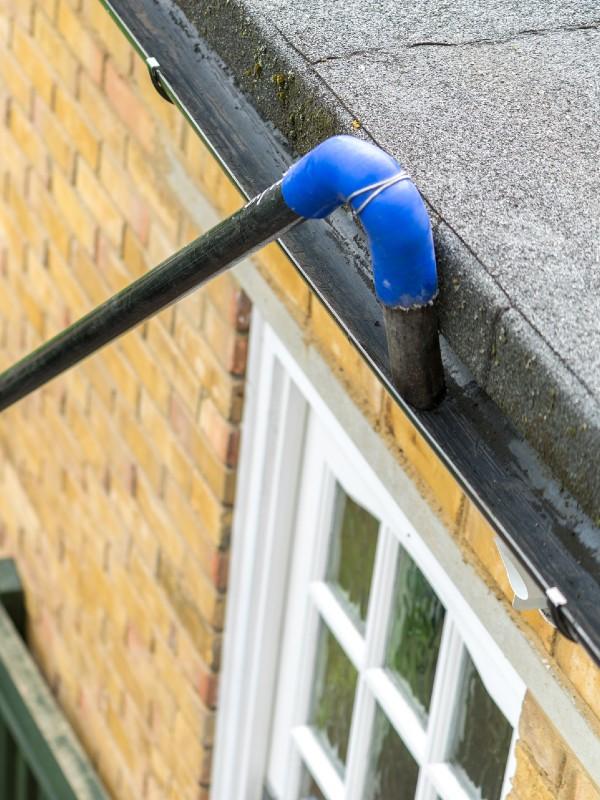
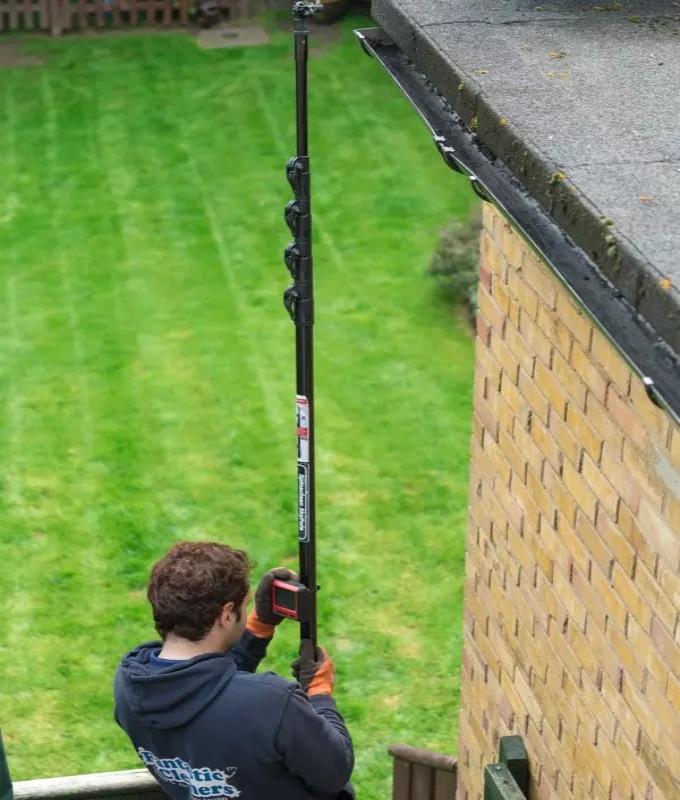
Terraces built into a slope give almost no level ground to foot a ladder, pavements are narrow and cambered, and resident permit bays leave little room to set down. A good deal of routine clearing is therefore done from ground level with a vacuum system on carbon poles and a camera at the head, which suits eaves gutters well. Parapet level usually still needs a tower or a mobile platform with a permit. The same pole access is what puts upper-floor glass within reach, and that work appears under what the visit includes.
Listed fabric and what may be changed
Much of the city centre is protected, and rainwater goods form part of the protected fabric. Cast iron ogee gutters and round downpipes are repaired, rebracketed and repainted rather than swapped for plastic, and replacing a run in a different material on a principal elevation is an alteration that needs consent. Even bracket positions matter, since new holes in ashlar are permanent. Sound practice is like-for-like: refixing into existing mortar joints, easing and rebedding rather than drilling fresh.
What actually fills them here
Three sources dominate. Limes and sycamores along the hillside streets drop enough leaf to bed a gutter in a single autumn; north-facing roof slopes shed moss continuously through winter, and moss is heavy once wet; and stone slate roofs shed a fine mineral grit that binds the rest into a mat. Blossom and seed in late spring adds a second, lighter fill that catches people out because it arrives well outside the season anyone expects to clear. Estates of modern housing collect an entirely different mix, described under gutter cleaning prices in Swindon.
How a visit is quoted and closed out
Pricing follows the shape of the building rather than a flat figure: the length of gutter run, the number of storeys, whether parapet or valley gutters are involved, and whether a platform is needed. A visit ends with the downpipes flushed and rodded where necessary, the outlets checked to confirm flow, and photographs before and after, which matter on a roof nobody can see. The general principles behind the work, and what a standard visit includes, sit on how it works.