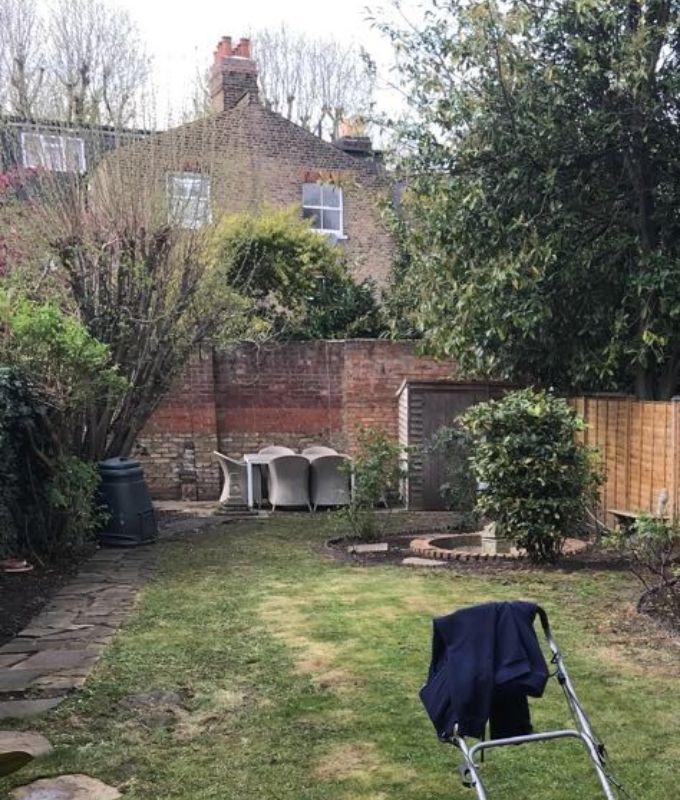
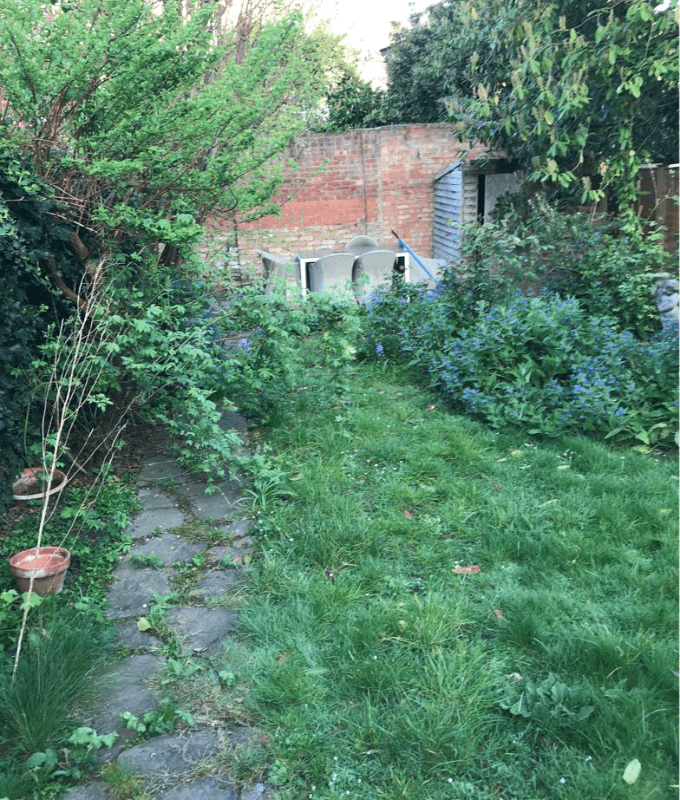
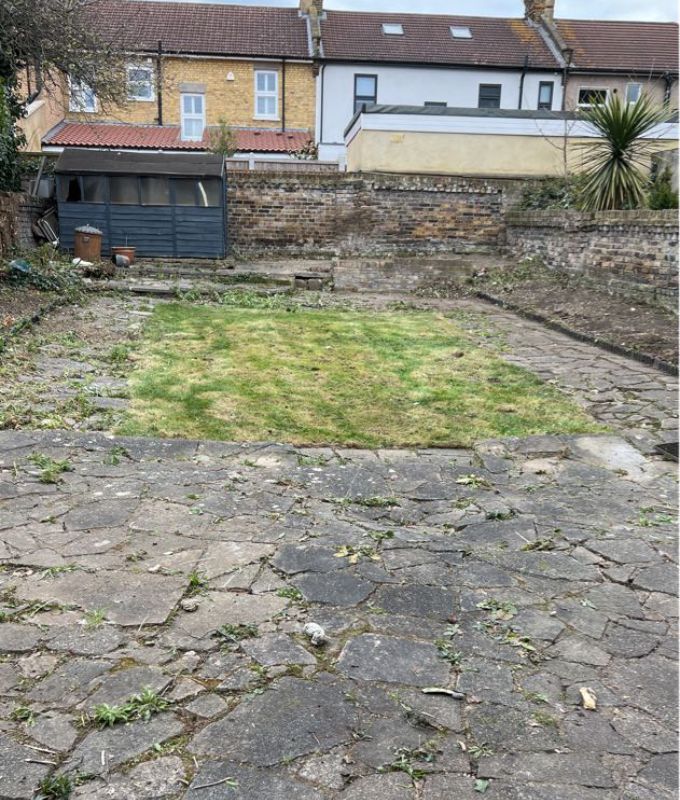
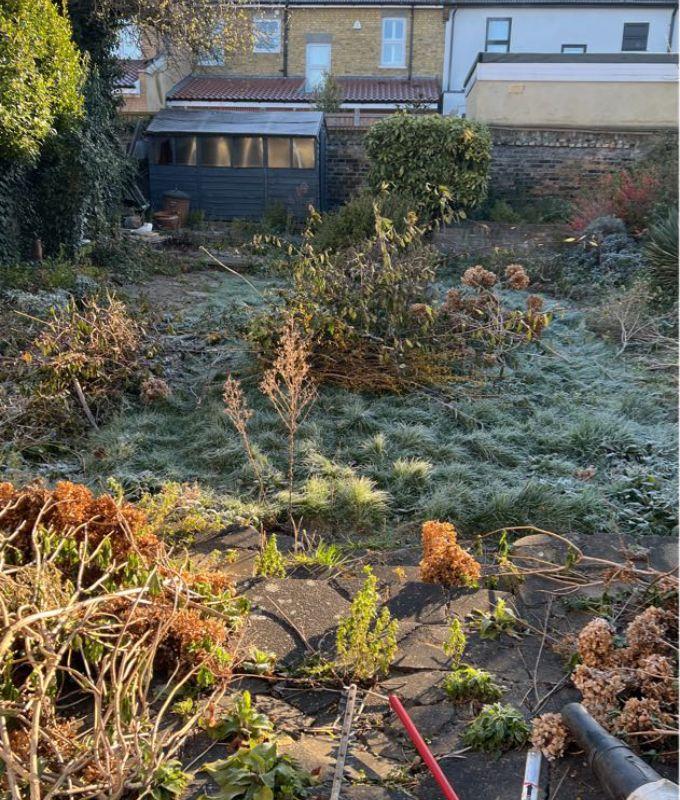
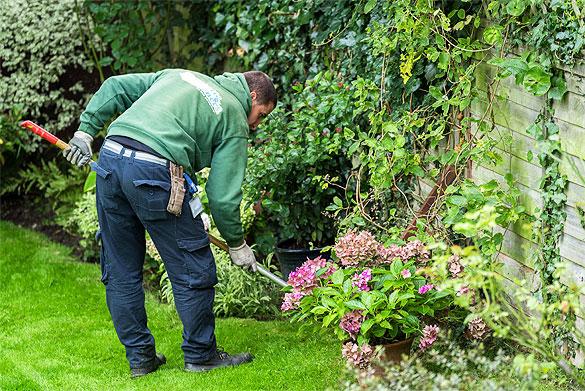
Gardens in Bath go upwards. The city is built across the sides of a valley, and BA1 in particular is full of Georgian terraces whose plots climb steeply behind them in a series of narrow terraces held up by Bath stone retaining walls. That geometry decides almost everything about how the garden is maintained: how tools arrive, where cuttings go, how water moves through the soil, and what can safely be done to the walls that are holding the whole arrangement in place.
Everything has to be carried
Most of these plots have no vehicle access at all. Equipment comes through the house or down a shared passage, and every barrow-load of arisings goes back out the same way. That practical constraint favours smaller, lighter machinery and means the volume of green waste generated has to be planned rather than discovered at four in the afternoon. Anybody removing that waste is carrying it commercially, which brings a registration requirement and a duty of care to dispose of it properly.
Retaining walls are structure, not decoration
Dry-stone and lime-mortared retaining walls in these gardens are doing real structural work, and they are sensitive to two things: water building up behind them and roots growing into them. Weep holes blocked by soil or self-seeded buddleia are a genuine problem rather than an untidy one. Ivy pulled off a lime-mortared face takes the pointing with it, so it is cut at the base and left to die back before removal. Nothing is ever power-washed against old lime mortar, and the same restraint applies to any chemical weedkiller used along the base of a wall, since lime pointing is porous and absorbs whatever is applied near it.
Terraces, drainage and thin soil
Soil on a terraced slope is often shallow over rubble fill, drying out fast in summer at the top of the garden and staying wet at the bottom where water collects against a wall. Mulching matters more here than on flat ground, because it holds moisture in the upper levels where irrigation is hardest to deliver. Cultivating a steep bed loosens material that then migrates downhill in the first heavy rain, so work is kept shallow and planting is used to hold the surface.
Trees and the permissions that sit over them
A large part of the city is a conservation area, and many individual trees carry protection orders on top of that. Giving written notice to the local authority before pruning or felling is a legal requirement rather than a courtesy, and the timing needs building into the plan because there is a statutory waiting period. Work in the canopy and anything involving a chainsaw at height belongs to affordable tree surgery services in Bath, which is a separate trade with its own certification and insurance.
Where maintenance stops and construction begins
Rebuilding a bulging wall, forming new steps, laying a path or re-terracing a collapsed bed is construction work needing foundations, drainage and, on a slope, a proper assessment of what is holding what. That sits with Bath garden design rather than with a regular maintenance visit, and attempting it as part of routine upkeep is how retaining structures get destabilised.
How a maintenance arrangement runs
Visits are priced by their duration and the number of gardeners, with green waste charged separately by volume because it has to be carried out and disposed of through a licensed route. A visit interval that works through the growing season is usually too frequent in midwinter, so the schedule is set seasonally rather than fixed year-round. Access arrangements, a water source and somewhere to stage cuttings are the three things worth settling before the first visit. Comparable work along the coast is outlined on Fantastic Services, and the general service description is on our main service page.