A sash window painted shut is one of the most common calls in this city, and it is also the job that most often gets done badly. The temptation is to force it, which splits the staff bead, tears the paint film off the sash and frequently breaks a cord that was sound. Georgian and Regency joinery repays patience: the paint seal is cut, the beads come off in order, the sash is eased out and the whole box is understood before anything is reassembled. Most work in BA1 has that character, where method matters more than force.
Cords, weights and the pulley stile
A traditional box sash runs on cords over pulleys to counterweights hidden in the frame. When a cord breaks, the sash drops and stays down, and replacing it means removing the staff bead, the sash, the parting bead and then the pocket piece in the stile to reach the weights. The replacement is waxed cotton cord sized to the weight, knotted rather than nailed at the sash end and set so the meeting rails align when closed. Getting the weight balance right is what makes a window stay where it is put.
Lath, lime and the wrong kind of fixing
Interior walls and ceilings in the older terraces are lime plaster on timber lath, and they do not behave like plasterboard. A plastic plug driven into a lath spreads it and the key behind breaks away, so the fixing pulls out with a patch of ceiling attached. The reliable approach is to locate the timber stud or joist and screw into that, or to use a toggle placed through a cleanly drilled hole rather than a hammered one. Heavy items belong on the structure, not on the plaster.
Fixing into stone
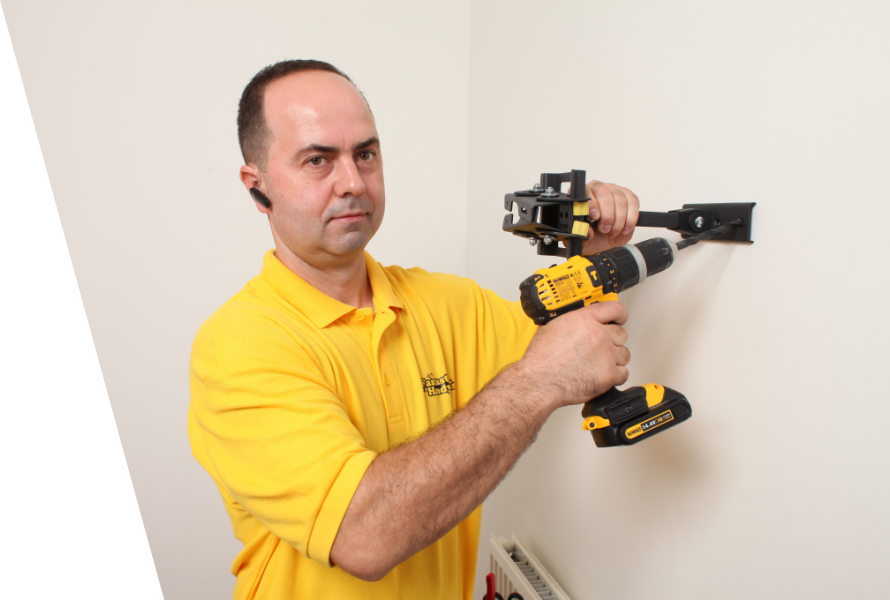
Walls here are usually ashlar on the face with rubble and lime mortar behind, an assembly that gives inconsistent resistance to a drill. The block can be sound for twenty millimetres and then void. Hammer action shatters a soft bed, so drilling is done on rotary only, into a mortar joint rather than the face of a dressed block wherever a fixing has to go, and made good with a lime-based mortar if it is ever removed. A resin anchor grips in a loose bed where an expanding plug simply spins. Drilling stone throws fine dust across a room, and after larger works the clean-down is the specification in what the service covers.
Shutters, architraves and panelled doors
Boxed shutters folded into the window reveal are still in place in a great many rooms, and after decades of paint they bind, drop on their knuckles or refuse to fold flat. Freeing them is careful work: cleaning the paint from the knuckle, replacing a worn pin, easing the leading edge by the smallest amount that works. The same logic applies to panelled doors that have been overpainted until the latch no longer reaches the strike. Stripping paint in older buildings warrants care, as pre-1992 coatings may contain lead.
Repair, alteration and consent
A large part of the city is listed or within a conservation area, and the distinction that matters is between repair and alteration. Like-for-like repair of existing joinery is ordinarily fine; changing the pattern of glazing bars, replacing a timber sash with a different material, or altering an internal feature in a listed building is not, and consent is needed. Anyone proposing work that changes appearance rather than restoring it should be raising that with the council before starting, not afterwards. Cast iron rainwater goods on these elevations are protected in the same way, and clearing them is separate work covered by the team covering Bath.
How a visit is organised
Work is charged by time rather than by item, in half-day or full-day slots, so a list is worth assembling in advance and ordering by what matters most. Parking on a permit street needs arranging before the date, and a room needs clearing where sash or shutter work is planned, since both create dust and need floor space. Glass cleaned up after joinery repairs is the job in our window cleaning in Bath, and the full range of tasks that fall to this trade is set out on the service in detail.