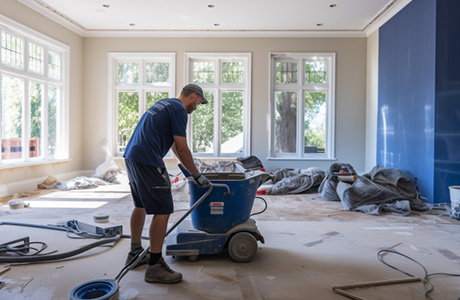
Joinery in Greenwich's older houses has been painted many times over, and each of those layers matters when a decorator's overspray or a plasterer's splash has to come off. SE10 holds a dense run of Georgian and early Victorian property, much of it in a conservation area, with panelled shutters, moulded architraves and staircases whose detail is already half lost under accumulated coats. Cleaning after building work in that fabric is largely a question of how much force is safe.
Paint spots on old mouldings
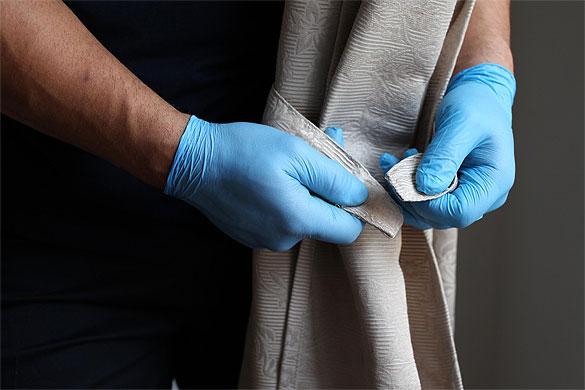
Emulsion spots on a gloss-painted architrave will usually soften with warm water and lift with a fingernail or a plastic edge. The same spots on a matt-painted wall cannot be removed at all without taking the wall finish with them, and the honest answer is that they need touching in rather than cleaning off. Knowing which of those two situations is in front of you, before any water is applied, is the difference between an improvement and a repair bill. Spots on varnished or waxed timber are different again and come off with the least aggressive solvent that will shift them, tested somewhere hidden first.
Sub-floor voids and what fell through
Suspended timber floors over ventilated voids are the norm in this stock. When boards come up for wiring or pipework, offcuts, screws and a surprising quantity of debris go down, and airbricks get blocked by spoil banked against the outside wall. Both are checked. A blocked airbrick reduces ventilation under the floor, and in a riverside district where ground moisture is already high, that is how a timber problem begins.
Basements, vaults and the damp corner
Many houses here have a lower-ground room or a coal vault under the pavement. Building work usually involves them and rarely finishes them properly. Dust settles heavily in a space with poor air movement, and washing it down without ventilation simply drives moisture into brickwork that cannot dry. Dry removal comes first, wet work is done with the space open and air moving, and anything stored down there is taken out rather than cleaned around. Larger items that need to leave the property entirely are moved by experienced single item moves in Lambeth.
Sash windows, shutters and original glass
Boxes, pulleys and staff beads collect plaster dust that jams a window within a season. Runs are vacuumed and brushed rather than washed, shutters are opened fully and cleaned in their recesses, and glass is scraped only where a pane is modern. Old crown and cylinder glass is uneven and scratches readily, so mortar is soaked off instead. Mechanisms that no longer run smoothly are a repair, not a clean, and fall to local specialists.
Access on a hill with permit parking
Streets rising away from the river are narrow, mostly permit-controlled, and frequently have steps up to the front door. Equipment is chosen for what can be carried in one trip, water is taken from inside, and waste leaves in sealed bags rather than being accumulated by the kerb. Where a property sits on a through route, work is timed so the van is not blocking traffic at school times. The general method for this kind of clean is set out on Fantastic Services.
What to have ready before the team arrives
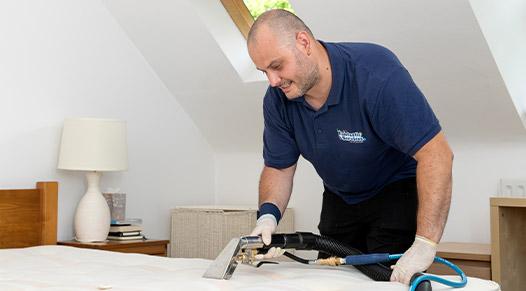
Three things shorten the visit more than anything else: electricity on at the consumer unit, a working cold tap, and the building empty of tools, materials and sheeting. Keys, entry codes or a neighbour who can let people in save an hour at the start. Dust sheets over furniture are lifted by the team rather than by the client, so that what is trapped on top does not end up on a clean floor. Rugs and fitted carpet are dealt with afterwards by carpet cleaning team in Greenwich, and the same service is available to the south through after builders cleaning for flats in Mitcham.