A shrub border planted when the house was built is now doing the opposite of what it was planted for. The viburnum that was meant to screen a fence has become a leggy thing with all its foliage above eye level and bare stems below; the laurel has swallowed the path; the philadelphus flowers only on the few shoots that reach the light. Borders like this are everywhere in WD17, and the usual responses are both wrong. Shearing the whole lot into a green wall makes it worse, and grubbing it out throws away thirty years of establishment that could still be recovered.
Reading a border before cutting it
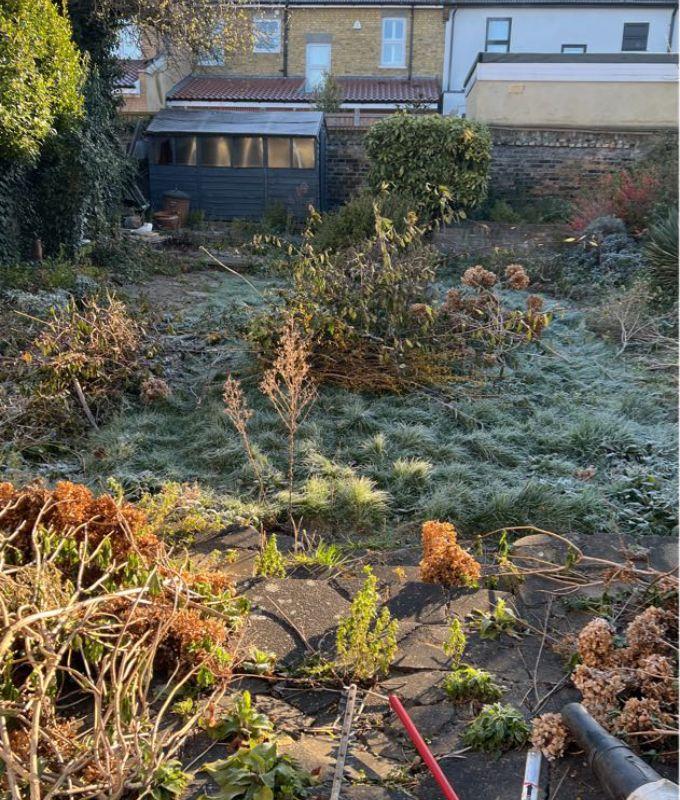
The survey is a matter of identifying what is actually there, since half the plants in an old border are no longer recognisable from their outline. Which specimens have outgrown their position and which have simply been starved of light by a neighbour. Where a plant has died out at the base but is sound above. What has self-seeded in and is now pretending to be part of the scheme. That last category is often the real problem: a holly or a cotoneaster that arrived by bird thirty years ago and has quietly taken the space three deliberate plants were meant to occupy.
Which shrubs tolerate hard pruning
This is the fact that decides everything. Yew, laurel, holly, hazel, dogwood, philadelphus, forsythia, viburnum, box and lilac all regenerate from old wood and can be taken back to a framework of stubs with reasonable confidence. Most conifers, including the cypresses used as screening, carry no dormant buds in the brown interior and will not regrow from bare wood at all, which makes a hard cut permanent. Ceanothus, broom, lavender and rosemary sit with the conifers in practice. Getting a plant into the wrong category costs a specimen.
Renewal spread across seasons
Where a shrub does regenerate, taking a third of the oldest stems out at the base each year for three years keeps the plant furnished while it rebuilds, and by the fourth year the whole framework has been replaced without the border ever looking bare. That approach suits a garden that is lived in. A single hard cut to the base is faster and produces a better-shaped plant in the long run, but it means a gap for two seasons and it needs feeding, mulching and watering afterwards to succeed. Which route is right depends on whether the border is being looked at or rebuilt.
The ground beneath
An old shrub border has exhausted, root-filled, dry soil under a layer of accumulated leaf litter, and the heavy clay-with-flints ground common here compacts badly around established root plates. Hard pruning without addressing that is half a job. Once light reaches the soil again it is mulched generously, and any gaps left for underplanting are improved individually rather than by digging over a bed full of roots. Shade-tolerant ground cover put in at this point fills the space before the weeds do.
Feeding a plant that has just lost its leaves
A shrub cut back hard has a full root system and nothing to feed it with, so the response depends on what is available at the roots. A balanced feed in spring, a thick mulch to hold moisture, and watering through the first dry spell make the difference between vigorous regrowth and a slow decline. The regrowth that comes is often crowded and needs thinning the following winter to the best-placed shoots, otherwise the plant rebuilds itself as a congested thicket.
What a renovation involves
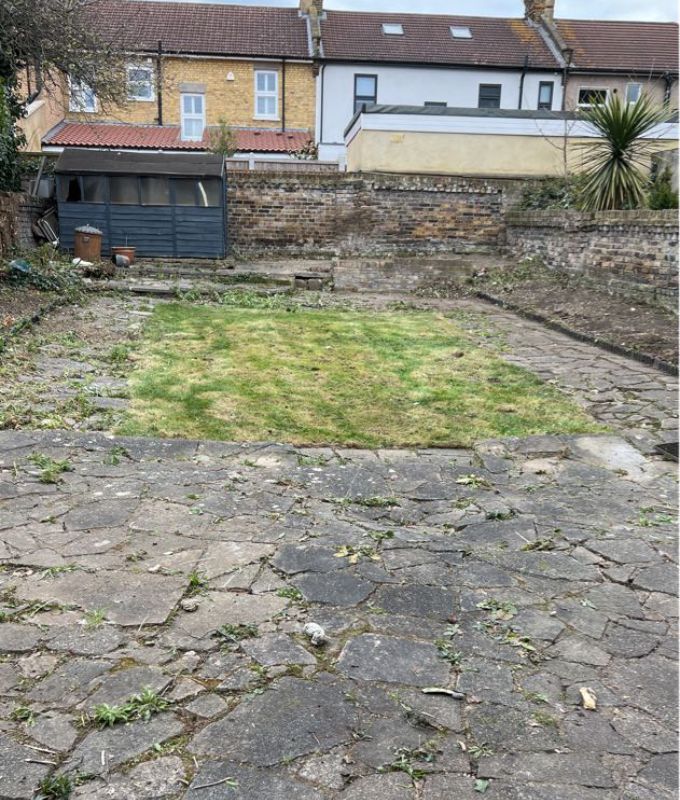
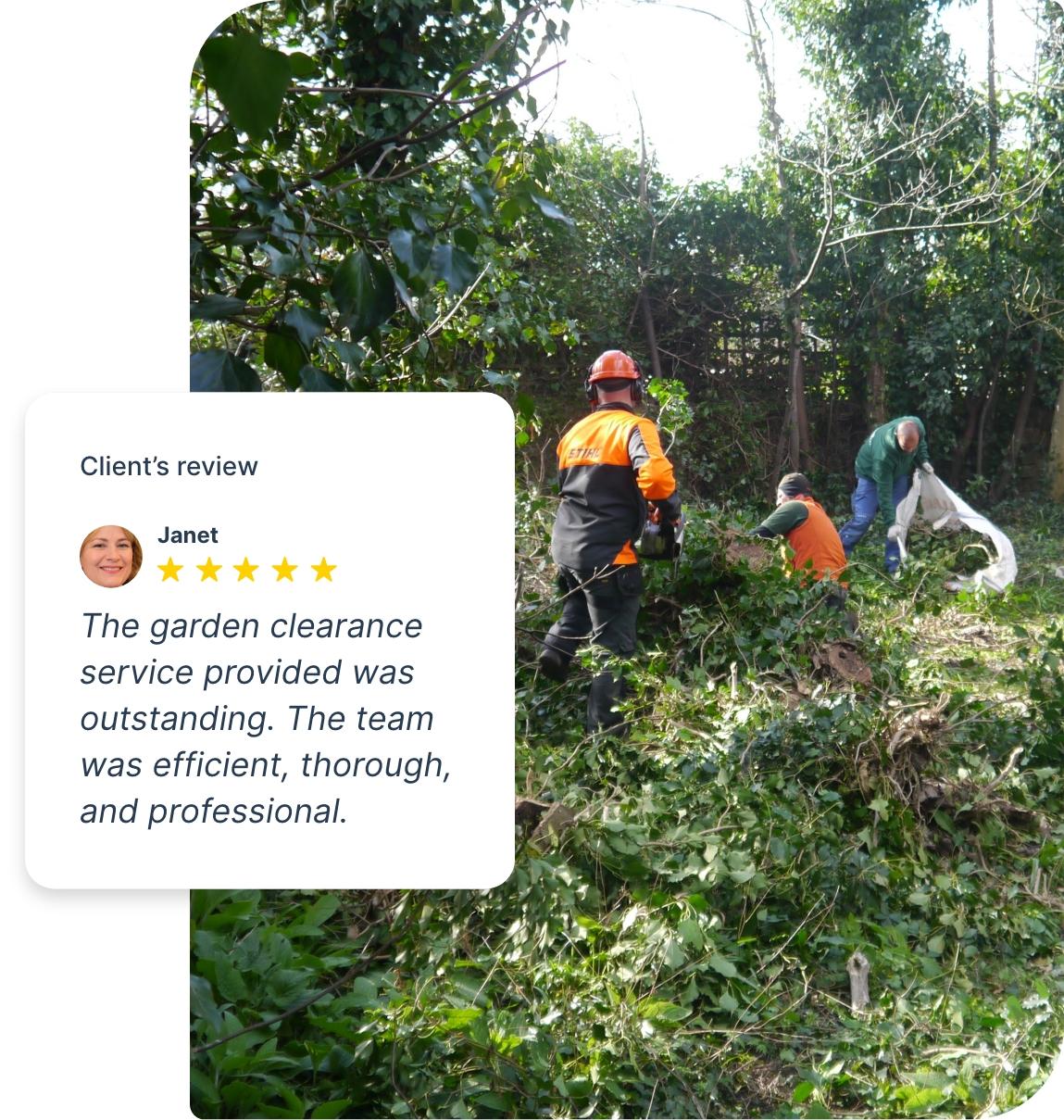
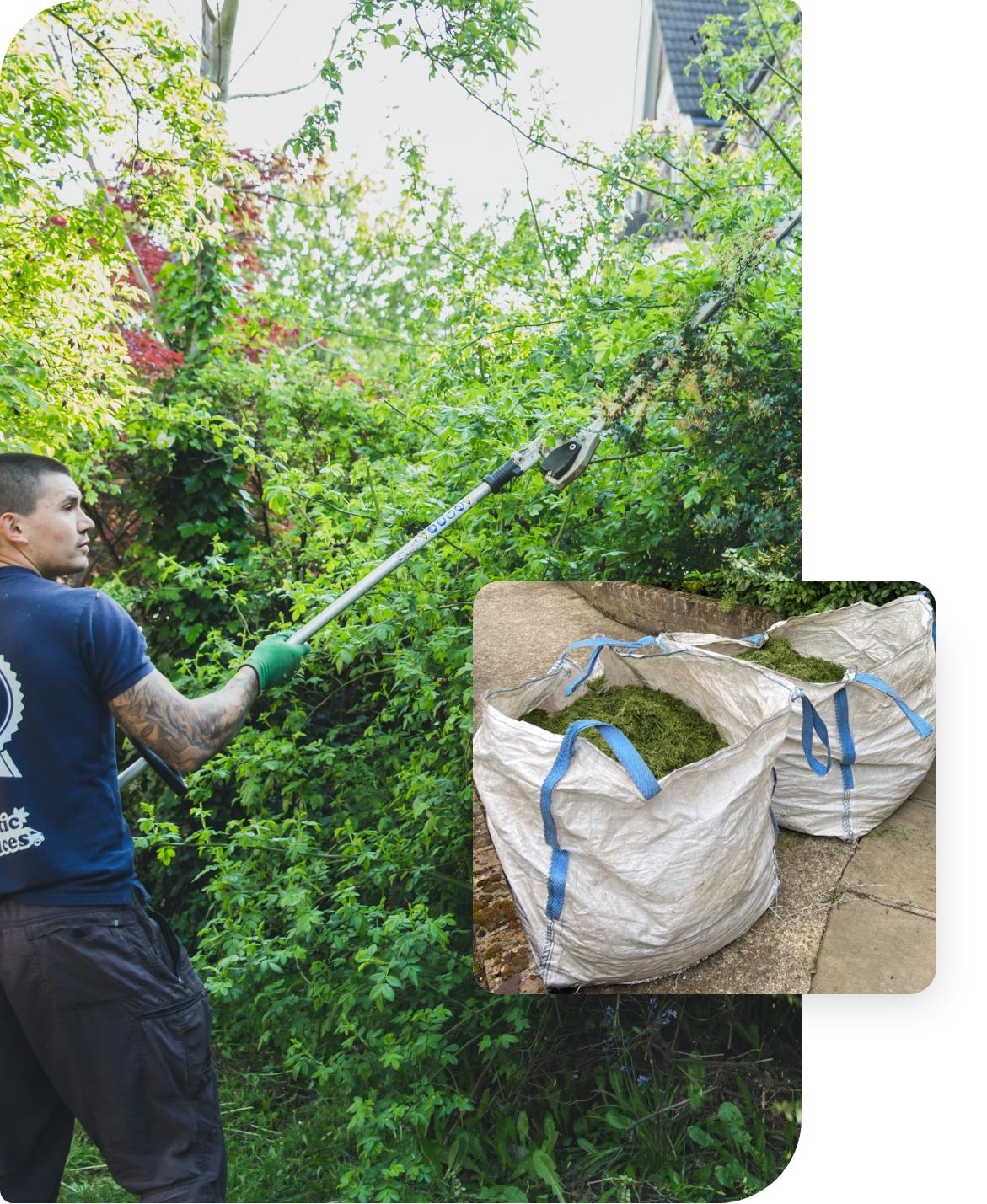
Border renovation is quoted by the hours and the volume of material leaving, since the cutting is quick and the handling is not, and it is programmed for the dormant season on deciduous material and after flowering on anything that flowers on old wood. A staged plan is set out at the start so the work over two or three winters is understood in advance. Paths and paving under a border that has been cut back are usually in poor condition once exposed, and our pressure washing in Watford restores them. Where the work is part of preparing a house to show, the interior is generally being handled at the same time by domestic cleaning services in Watford. Gardens on similar ground further east are covered by what the service covers, and the general framework for seasonal work sits on local garden maintenance.



















 Get the app


