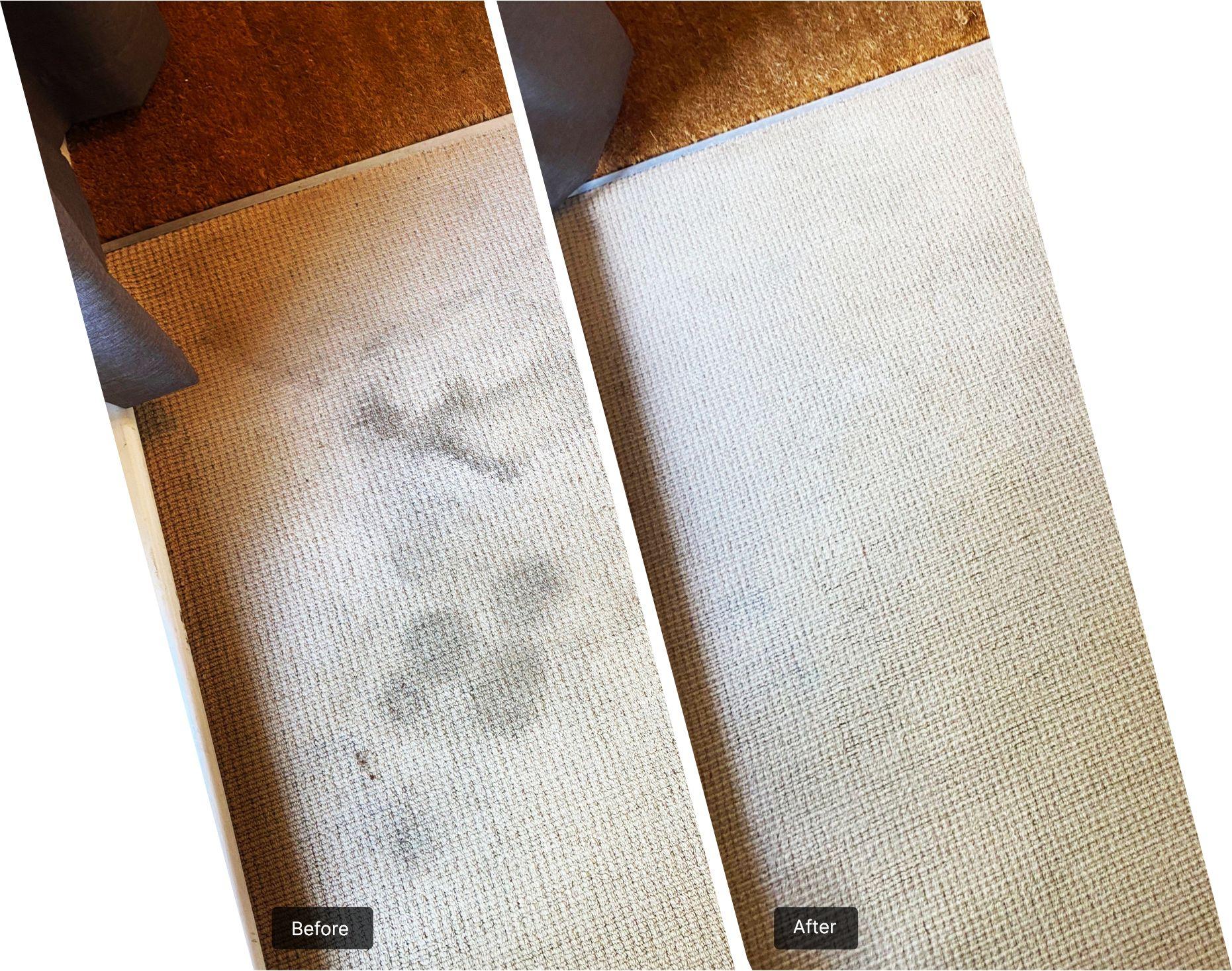
A carpet that looks worse two months after it was cleaned than it did the week before is a common complaint in EN1, and the machine is rarely the reason. What decides the outcome is whatever was left in the pile. Detergent that has not been flushed out dries slightly tacky, grit from the pavement sticks to it, and the traffic lanes grey far quicker than they did the first time. Rinse chemistry, not effort, governs that, and in this part of the Lee Valley the mains supply forms part of the calculation.
Why a cleaned carpet greys again so quickly
Cleaning solutions are built to hold soil in suspension so that it can be flushed away. When the flush falls short, surfactant dries onto the fibre and carries on collecting soil from shoes, only now from a surface with a faint tack to it. Two habits prevent that. The strength of the pre-spray is matched to the actual soil load rather than mixed at maximum out of routine, and the job finishes with a rinse that leaves the fibre slightly on the acid side.
Hard water changes the dose
Supply across this district is hard. Calcium and magnesium bind to the active ingredients in a detergent and blunt them, which tempts an operator into mixing stronger and using more, and more product means more residue. A conditioner in the solution tank absorbs the mineral load so that a normal dose behaves normally, and an acidic final rinse neutralises alkalinity and prevents the dull bloom that plain tap water can leave across a pale wool pile. The same supply, and the same habit of overdosing to compensate, runs north-west into trusted carpet stain removal in Barnet.
Dwell time does the work agitation cannot
Once a pre-spray is down it has to sit. The chemistry needs to wet the fibre, reach the oily film binding soil to it and break that bond. Going straight to the wand means the soil is still attached, and the only remaining tools are more heat, more pressure and more water. A rake or a rotary brush spreads the solution evenly through a cut pile and lifts the crushed lay while it does so.
How much water comes back out
Extraction is judged by what stays behind rather than by what went in. Dry passes after each wet pass and a slower wand speed recover far more moisture than raising pressure ever will. Carpet left damp rather than merely cool invites wicking, where deep soil travels back up as the fibre dries and reappears as a shadow of the mark that was treated. Air movers and a cracked window shorten that risk window considerably, and steady vacuuming afterwards protects the result more than anything else, which is why the work often sits alongside Cockfosters cleaning services team.
Sofas and armchairs hold more than the floor
The seat a household actually uses collects body oils, hair product and food residue at a rate no floor matches, and it shows as darkening along the front edge and across the head area. Fabric there is thinner and often glued rather than stitched, so it is worked with a hand tool at lower moisture. Where a suite is due attention anyway, a combined visit for a local pro near you saves shifting the furniture twice and lets the whole room dry as one.
Carpets at the end of a tenancy
Check-out inspections in local rental stock often turn on the floor covering, since it is the item most likely to have visibly changed over a year. A clerk records traffic lanes, the marks around beds and bins, and any burn or pulled loop. Professional treatment is a standing condition in many agreements, and the receipt can matter as much as the finish. Where a whole property is being handed back, floors are normally timed to follow end of tenancy cleaning throughout Enfield, so that they dry undisturbed once the rooms above them have been finished.
What a visit involves and how it is costed
Rooms are measured rather than counted, because a through-lounge and a box room are not the same piece of work, and the figure follows area, fibre type and how much pre-treatment the floor needs. Furniture two people can lift is moved and put back; heavier items are worked around, with protective blocks under feet that might mark damp wool. Clearing small objects off the floor and keeping a space free at the kerb save the most time, since hose run from van to door has a practical limit. Fibres, machines and inclusions are set out under fully insured carpet and rug cleaning.