Splitting a large Edwardian villa into flats is one of the most common W5 projects, and it creates a problem that a single-occupancy refurbishment never does: the dust belongs to everybody. Communal stairs, the entrance hall, the shared meter cupboard and the neighbour's doormat all take a share of it, and the leaseholder doing the work is the one answerable for the state they are left in. The clean at the end therefore has a scope beyond the front door of the flat itself.
Dust does not respect a flat's front door
Fine particulate moves with air, and a stairwell behaves like a chimney. Unless the working flat is sealed with taped sheeting and a route in and out is established, plaster fines reach the top landing within a day and settle on every banister rail in the building. Containment during works is cheaper than remediation afterwards, and where containment failed the communal parts have to be cleaned dry first, top landing downwards. The general principle is laid out on the after builders cleaning service.
What a lease usually asks for
Most leases in converted villas require communal areas to be reinstated to their prior condition, limit contractor hours, and expect notice to other leaseholders. None of that is cleaning work in itself, but it decides when a team can be on site and how long a stairwell can be blocked by equipment. A written record of the state of the common parts before works start is worth more at the end than any amount of argument about who left what.
Stair carpet in a shared hallway
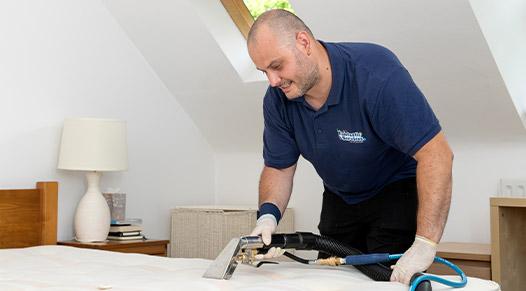
Communal stair carpet is the surface that suffers most and the one most often forgotten. It takes every boot that went up to the works, holds fines at the base of the pile, and looks acceptable to a vacuum while still releasing dust each time somebody walks on it. Extraction on stairs is slow, hand-tool work and cannot be rushed, and it is normally handled as a local professional on a separate visit once the trades have finished for good.
Working around a household that never moved out
Plenty of Ealing refurbishments happen with the family still in residence, sleeping in the one finished bedroom. That changes the plan completely: rooms are cleaned and released in sequence, a clean route is kept between the kitchen and the bathroom, and equipment is set down where a child will not walk into it. Occupied projects take longer and need firmer scheduling than empty ones. The same pattern shapes local after builders cleaning across Wimbledon, where large villa conversions are equally common.
Clearing the flat before the clean
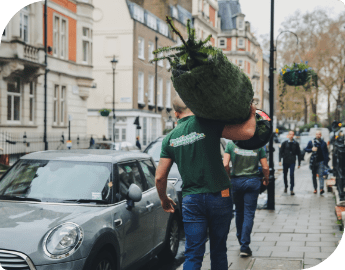
Nothing slows a builders clean down like furniture stacked in the middle of every room. Old kitchen units, packaging, a sofa that will not go back up the new staircase and the offcuts nobody wanted have to be out first, and the awkward items rarely fit in a car. A part-load run is covered by local specialists, with a licensed carrier note, and it is worth doing the day before rather than the same morning.
Fixings, doors and the last five per cent
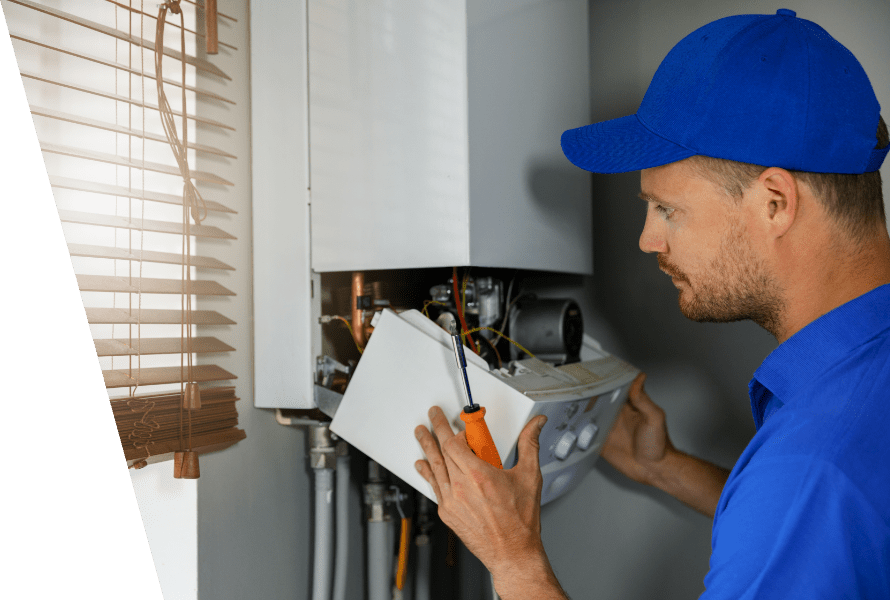
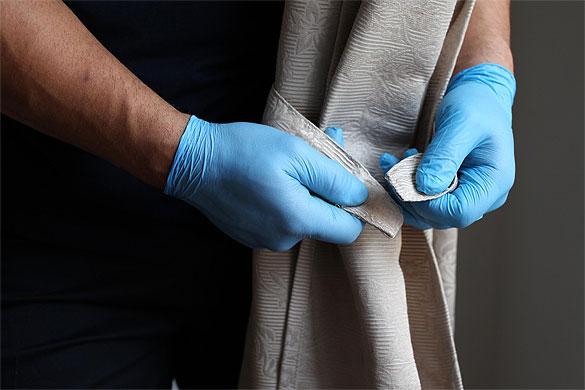
Once the dust is off, the remaining defects show themselves: a cupboard door that will not close square, a bathroom seal that has shrunk, a curtain pole that was never refitted after plastering. These are quick jobs for someone with the right tools and no part of a cleaning visit, so they are noted at handover and picked up under trusted shelf and curtain fitting in Ealing rather than left to be noticed months later.
What the visit includes and what it needs
A quote reflects the floor area, the number of bathrooms and kitchens, and how much residue is actually present, which is why a photograph or two beats a description. On the day the team needs running water, power at socket level, and access to the communal parts if they are in scope. Any protective sheeting the builders left should stay down until the team arrives, since lifting it early scatters what it has been catching.