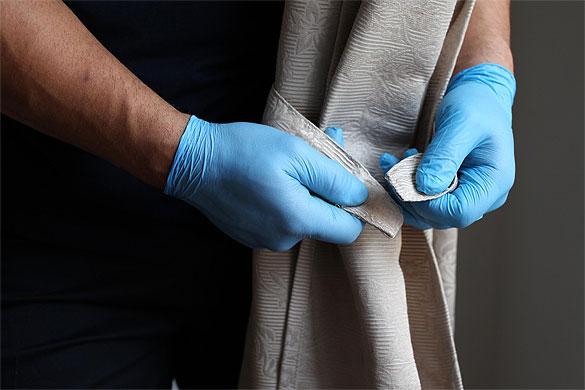
The finishes are what make a W8 handover clean difficult. A refurbished stucco-fronted house might hold honed marble, unlacquered brass, hand-applied lime-based paint, waxed oak and an original cast-iron balustrade in the same hallway, and each of those is ruined by something that is perfectly safe on the next one. Choosing a single product for the whole property is the fastest route to damage, which is why surveying the materials comes before any decision about how the residue is removed.
Marble, limestone and anything acid-sensitive
Calcareous stone dulls on contact with acid, and the acidic cleaners marketed for cement film and grout haze will etch a honed marble threshold in seconds. Cement residue on stone is instead softened, lifted mechanically with nylon pads and flushed with plenty of clean water at neutral pH. Grout haze is best removed while still fresh. Where a mason has sealed the stone, the sealer decides what can be used, so the specification is worth asking for before anyone opens a bottle.
Paint finishes that mark rather than wipe
Flat chalk-based and clay paints are widely specified in these houses and behave nothing like vinyl emulsion. Rubbing at a plaster spot burnishes the surface and leaves a shiny patch that shows from across the room, and water leaves a tide mark. Dry removal with a soft brush, light pressure and acceptance that a small touch-in may be needed is better than polishing a wall by accident. The general principle behind that restraint is set out on experienced post-renovation cleaning.
Brass, bronze and unlacquered ironmongery
Unlacquered brass is chosen to patinate, and alkaline builders residue will blotch it unevenly. Handles, escutcheons, window furniture and door knockers are treated separately from the surfaces around them, cleaned with a neutral solution and dried immediately, since water left in a keyhole or behind a backplate creates a green bloom within days. Aged bronze and blackened steel are left alone beyond dusting; brightening them is a restoration decision, not a cleaning one.
Light wells, vaults and the basement stair
Lower-ground work fills a light well with grit and fills the vault with everything the contractors put there. Drainage gullies clog with cement washings and sand, and a blocked gully under a light well is a flooding risk the first time a storm arrives. Gullies are cleared by hand, not flushed through with more slurry. The same lower-ground pattern shows up in neighbouring boroughs, and after builders cleaning throughout Hammersmith handles a comparable run of basement conversions.
Runners, fitted carpet and the stair edges
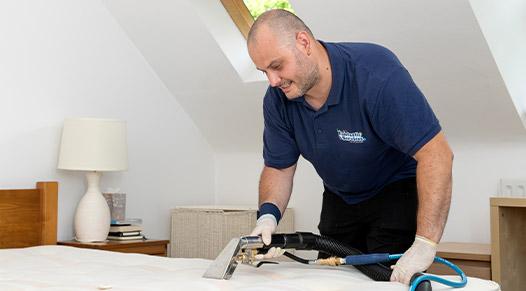
Stair runners and wool carpet take the heaviest traffic during a refurbishment and hold fines in the pile and in the underlay beneath. Vacuuming lifts the surface only. Proper extraction on a wool carpet needs controlled moisture, a neutral or slightly acidic rinse and rapid drying, which is a separate discipline from builders cleaning and is arranged as Kensington carpet cleaning service once the last trade has left the house.
Protection, packaging and the exit route
Correx, dust sheets, protective board and the crates that fittings arrived in add up to a large volume, and much of it is contaminated enough that it cannot simply go in a bin. Removal in one organised load with a licensed carrier, handled by West London man and van specialists, keeps the pavement clear and avoids the parking penalties that come with an unattended van on a single yellow.
What happens on the day, and what to have ready
A quote is based on floor area, the number of wet rooms and the materials present, and a materials schedule from the architect or contractor makes it far more precise. Water, power and light are needed throughout, including in the vaults. Any remaining protective film stays in place until the team arrives, and defects that emerge once the surfaces are clear are recorded at handover and quoted under flexible handyman in Kensington.