Loft conversions dominate HA1 building work, because the 1930s semi that fills much of the district was built with a roof volume worth converting and a plot that cannot easily be extended sideways. The job is structurally tidy and cleaning-wise it is anything but. Old insulation is disturbed, decades of roof-void dust comes down the new stairwell, a dormer opening fills the garden and the landing with debris, and the whole thing happens directly above bedrooms that the household is still sleeping in.
Mineral fibre and roof-void dust
A loft that has not been touched since it was insulated holds a fine, dark deposit alongside loose mineral wool fibres. Both irritate skin and airways, and both travel the moment a hatch is opened or a joist is cut. Removal is done with filtered extraction and sealed bagging rather than a brush and a dustpan, working from the far end of the void back towards the opening, and the filter is changed part-way through instead of at the end, because a loaded filter simply puts the load back into the air.
The new staircase is the dirtiest route in the house
Forming a stair to the loft means cutting into a landing ceiling and carrying every sheet of board, every length of timber and every bag of waste up through the middle of the house. The landing carpet, the existing stair and the first-floor doorways take all of it. Cleaning runs downward, flight by flight, with the balustrade and the underside of the new treads done before the carpet, so nothing settles onto finished work.
Dormer openings and what falls outside
Cutting a dormer or a rooflight sends slate fragments, mortar, felt offcuts and nails down onto the roof below, into the gutters and across the garden. Gutters are the part most often forgotten, and a gutter holding mortar crumb will overflow at the first heavy rain, usually onto the newly pointed wall beneath. Ground beneath the opening is swept carefully for nails, particularly where there is a path, a drive or a lawn children use.
Bedrooms below the works
Fines travel down through the ceiling line, around new pipework and through the loft hatch, and they settle on top of wardrobes, inside them where a door was left ajar, and into bedding. A clean confined to the new room leaves a household living with the rest of it. The survey therefore covers the first floor as well, and soft furnishings are dealt with rather than shaken out. Deeper fibre cleaning for a neighbouring district sits with carpet cleaning throughout Ruislip.
Finishing off the new room
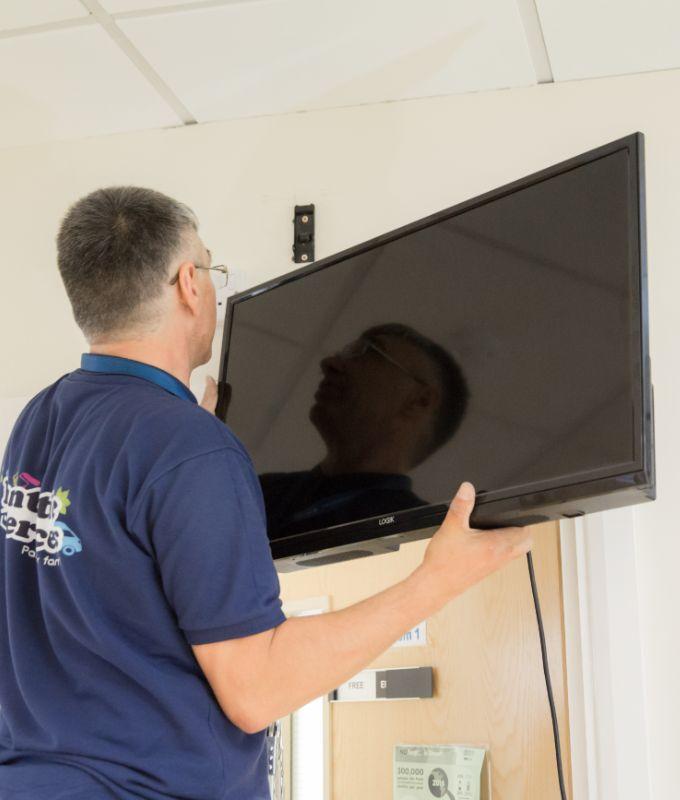
A converted loft arrives with a list: a wardrobe to build into the eaves, a blind to fit to a rooflight, a rail to hang, a handrail bracket to fix. That work goes to shelf and curtain fitting in Harrow, and it is better done before the final clean if drilling is involved, or the fine plaster dust it creates lands on everything already finished.
Furniture, storage and the things that lived in the loft
Everything that was stored in the roof had to come out, and it is usually still sitting in a bedroom or the garage. Some of it goes back, some of it goes to storage or disposal, and moving it in quantity is a van job rather than a car job - handled through professional single item moves in Harrow. It is worth deciding what returns before the clean, not after.
Booking, access and the practical side
Parking matters in this area, so a permit or a suspended bay saves time and carrying. Scope covers the loft room and en suite, the stairwell, the first-floor landing and the rooms that took the worst of the dust. Charging follows hours and team size rather than a room rate, because a conversion with a shower room is a substantially longer job. Coverage further out is listed as our Abbots Langley team, and the wider description sits on professional construction dust removal.